

Sometimes even hardcore sucking doesn’t mean what you think it means. Yes, this is a post about Kirby, the most dedicated sucker in the history of video games — but a brief aside before I get into it.
This week, you can listen to the second Retronauts episode about my big Mario history project. It’s a good conversation, especially toward the end when we’re freed from the tyranny of the order the games were released and able to get into the nitty-gritty of the supporting characters. So consider this, right at the top of the post, me jostling you to listen to me speak words out loud in addition to reading them.
If you listen, you will hear a Super Mario-related matter come up that I promise to investigate further. I am doing that, but since this investigation involves emailing people who have never heard of me, I can’t write that post yet. The post I’m choosing to write instead is something that I bring up right at the end of the episode, in reference to my item about Prince Florian from Super Mario Bros. Wonder and how sometimes something might really seem like it should be this one thing, but despite all signs pointing to yes, the reality is that it’s not actually that one thing. In the case of Prince Florian, it really seems like his existence should be a nod to Prince Haru, effeminate dreamboat and a character appearing in the 1986 Super Mario Bros. anime. It’s not, however, and in the episode (and in the original item) I explain why a few coincidences might make you think this is the case.
I then go on to compare the Prince Florian example to what I think is the greatest, most flagrant example of this in all of video gamedom, and that’s how Kirby got his name.
Support this site: on Patreon! • on Kofi!
Surely you know of Kirby, the pink puffball that I don’t mention on here all that often, even though I like him and even though he’s an important part of Nintendo history.
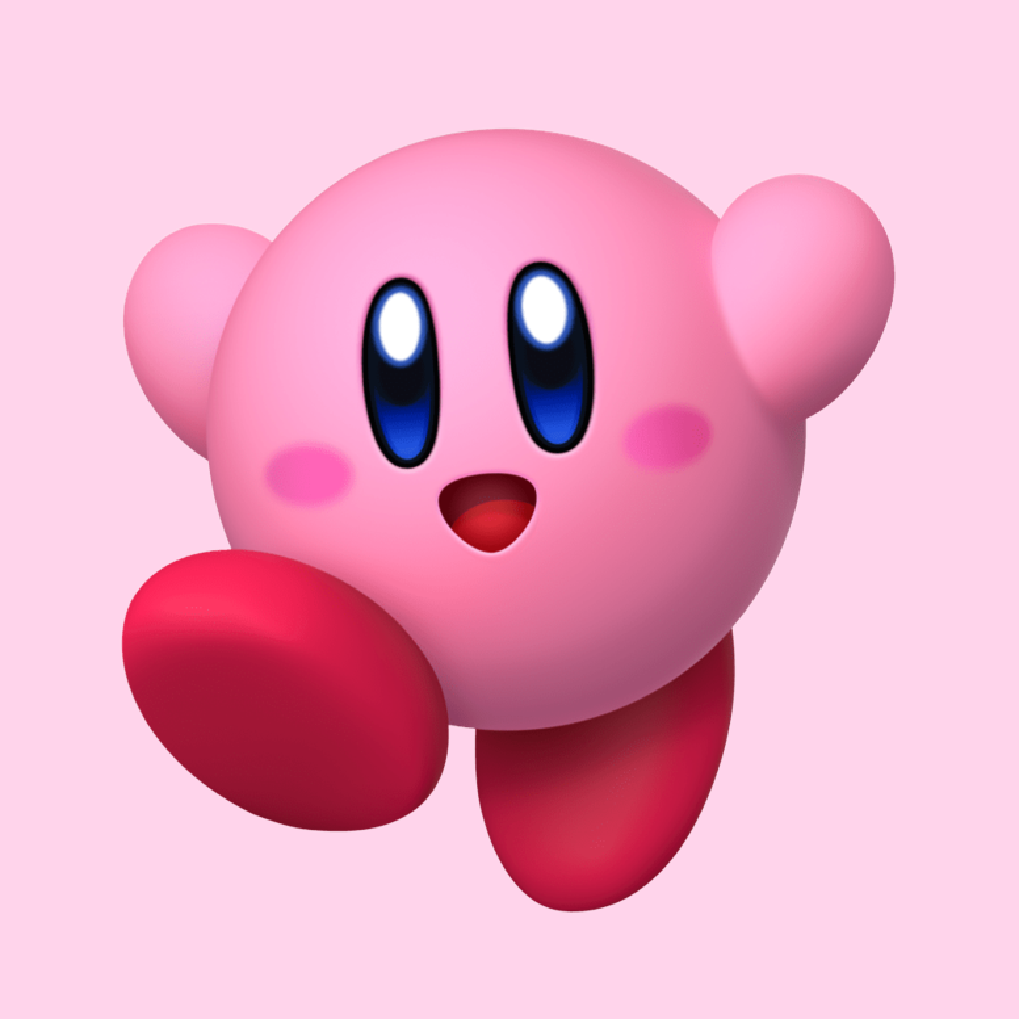
My pink, round boy is perfect.
The video game career of Smash Bros. impresario Masahiro Sakurai actually began with him creating Kirby as a simplistic-looking placeholder for the game that would become Kirby’s Dreamland. In the earliest stages, this character’s name was to have been Popopo (ポポポ) — and indeed this would seem to answer a question that’s been on my wanted list for a long time: What’s with the triple-syllable names of Kirby series baddies King Dedede and Lololo and Lalala? It would seem that they were just named this way to mirror the main character and then just retained their names when Popopo became Kirby.
So why did the character’s name change?
Early on, developer HAL Laboratory had intended to publish the game. But according to a 1999 interview with Sakurai, Nintendo stepped in and offered to publish it instead in an effort to help it find a larger audience. Part of that plan meant picking a name that would appeal more to a non-Japanese audience, and so Kirby was ultimately selected — but not for the reasons most people who know a thing or two about the pop culture landscape might guess.
As near as I can tell, the first source to note the origin of the name is a 1993 roundtable interview that appeared in the official guidebook for Kirby’s Adventure, the NES follow-up to the Game Boy original. After claiming the character’s original name was Twinkle Popo (and not Popopo, sans twinkling), Shigeru Miyamoto reveals that the name was chosen in honor of John Kirby, whom he terms “an important lawyer at Nintendo of America.” And how! In fact, Kirby led Nintendo’s team in the 1984 lawsuit from Universal Studios over whether Donkey Kong’s existence constituted infringement on Universal Studio’s ownership of the 1933 King Kong. Of course, Nintendo proved victorious, and as thanks, the company rewarded Kirby with a sailboat — named Donkey Kong, natch — and then years later made him the namesake of a pink puffball who fights enemies by sucking them into his vacuum maw.
According to this 2002 BBC piece, one of the reasons that Kirby won out over other contenders was that it sounded harsh in a way that made for an amusing contrast for the soft character. As an English-speaker (and English-listener), I can’t quite wrap my head around that one. To me, there’s nothing about that name that sounds harsh. If anything, it sounds cute, but the katakana for his name would be カービィ or Kābī, and I suppose that does sound somewhat less cute.
What’s interesting about these explanations for Kirby’s name is that none of them mention Kirby the vacuum cleaner company. (Did you think I was done talking about vacuum cleaners after the Luigi’s Mansion post? Ha!) Though the company has existed in one form or another since 1914, Kirby-branded vacuums have been in existence since the 1930s and have been sold all around the world — including Japan, though I’m not clear how easily you can go into a department store there and just buy one. That’s something, even if the Kirby company is not as famous as, say, Hoover, which is practically synonymous with vacuum cleaners in the way Kleenex is with tissues, and which has a commercial jingle that implies the singer is deeply in love with her suction device.
Call this commercial a product of its time if you want, but you can’t say this woman does not have really big feelings about her vacuum.
Lack of soulful ballads notwithstanding, Kirby has endured for nearly a century, and so there’s a very good chance that most people have seen a vacuum cleaner bearing the company name. None of this matters as far as Kirby’s Dreamland is concerned, however, because it’s apparently just a coincidence that two different entities named Kirby would be known for epic suckage. But anyone who was familiar with the vacuum brand and who also encountered a video game character whose primary form of interaction with the world was inhaling stuff should be forgiven for thinking that Kirby was named for the company and not some lawyer. They’d be wrong.
The takeaway here, if I want to make a bigger issue about this, is that sometimes we encounter situations where it seems like two pieces are supposed to fit together. It might even seem like a safe bet that they do. But they don’t, and as enticing as this connection might have seemed, we have to abandon it when we’re presented with new information that proves that the potential good fit was actually just happenstance. I speak of matters that are unrelated to the origin of video game elements or even to pop culture in general, and I suppose the moral to this fable isn’t all that different to the one I presented in my story about how Justin Bailey never existed, Metroid truthers be damned.
But okay, since this post began with a podcast episode all about Mario, I can maybe use this anecdote to point toward an answer to a minor mystery that I know I brought up on some podcast recently. (I wish I could remember which. It might have been Retronauts?) The fortresses of Super Mario World feature this boss that is fire-spitting, triceratops-looking rhino thing called Reznor in the English localization of the game. In the early days of the internet, I remember reading hearing and there that there was some debate about whether the name was a nod to Nine Inch Nails frontman Trent Reznor, in the way many characters in Super Mario Bros. 3 that were named after musicians, or if they were named for Reznor-brand industrial heaters. It’s the former; Dayvv Brooks, the Nintendo of America staffer who named the Koopalings also named Reznor, and he admitted in an edit to the Super Mario Wiki page that it was a deliberate nod to Nine Inch Nails. (Reznor’s Japanese name is ブイブイ or Buibui, which the wiki posits is a nod to Boom Boom, who served as the fortress boss in Super Mario Bros. 3.) But in a weird reversal to the dueling Kirbys situation, it sort of is accidentally a nod to the heater company as well, because that company was founded in 1888 in Mercer, Pennsylvania, by George Reznor, Trent’s great-grandfather. I’m sure neither Dayvv Brooks or any of the people debating this on late 1990s Mario fan sites back in the day had any idea, but it’s one instance in which everyone ends up right without realizing it.
Does this disprove the point I was trying to make? No, surely it doesn’t. This all holds together, I’m sure.
Support this site: on Patreon! • on Kofi!
Miscellaneous Notes
I really tried to think about other examples of video game lore where what seems there must be a connection but they’re just not, only I guess they’re harder to come by than I guessed. The only ones I could think of were fairly uninteresting. Link, for example, is left-handed because Shigeru Miyamoto is a lefty and wanted some southpaw representation in a video game. It has nothing to do with the fact that the German word for “left” is links, and Link’s name has a wholly different origin story. Similarly, Pikachu has nothing to do with the pika, a little mouse-like animal. Pikachu’s Japanese name breaks down to a combo of the Japanese onomatopoeia for the noise of something sparkling (such as electricity), ぴかぴか or pikapika, and チュー or chū, the noise a mouse makes. That means the pika part is actually representing electricity and not anything mouse-like. Oh well.
If there was one other instance I could point to, I suppose it would be the introduction of Nabbit to the Super Mario series in 2012 and the introduction of the Ravio, a similarly purple rabbit-like character to the Legend of Zelda series in 2013.
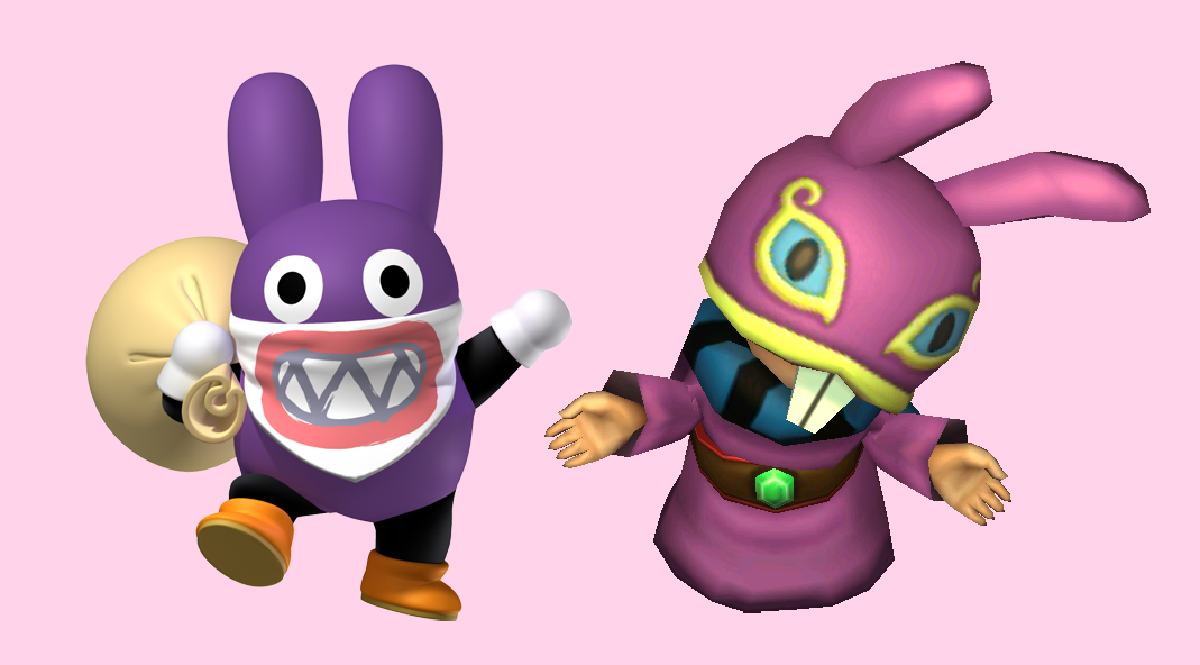
Attack of the rabbit dorks that no one asked for. Left: Nabbit. Right: Ravio.
But yeah, it was all just a coincidence. In a 2013 Nintendo Direct, Satoru Iwata explained that Nabbit and Ravio weren’t meant to have anything to do with each other, though perhaps some cross-pollination was at play.
When this screenshot was posted on Miiverse, some people commented that the character next to Link looks like Nabbit from New Super Mario Bros. U and New Super Luigi U. He sure does look like Nabbit, doesn't he? Well, unfortunately, he has nothing to do with the Mario series. In fact, his name is Ravio, hence the name of his shop. The Zelda and Mario series are created on the same floor by members of development teams that sit right next to each other, so perhaps they inspired one another unknowingly.
I feel like the notion of Kirby being named after a vacuum cleaner company works like the opposite to the idea of Pac-Man being named after a hockey puck or the ridiculous and very fake-sounding story about how Mario got his name. To me, the latter two seem like they’d be hard to believe and should set off most people’s bullshit detectors, but they’ve become widespread because of the book Game Over, which was influential just by virtue of coming out in 1993 and informing a lot of people’s notions of industry lore. Kirby being named for the company makes a lot more sense and requires a lot fewer grains of salt to go down. It’s just that it’s not true either.
Although my primary reference for the name Kirby will always be the Scream character Kirby Reed, I was curious to know if people were aware that the actor Kirby Howell-Baptiste, perhaps best known for her role on The Good Place, dropped her last name and just goes by Kirby now? I find this very strange. Like, there already is a mononymous Kirby and he’s a video game legend. You can’t take that from him.
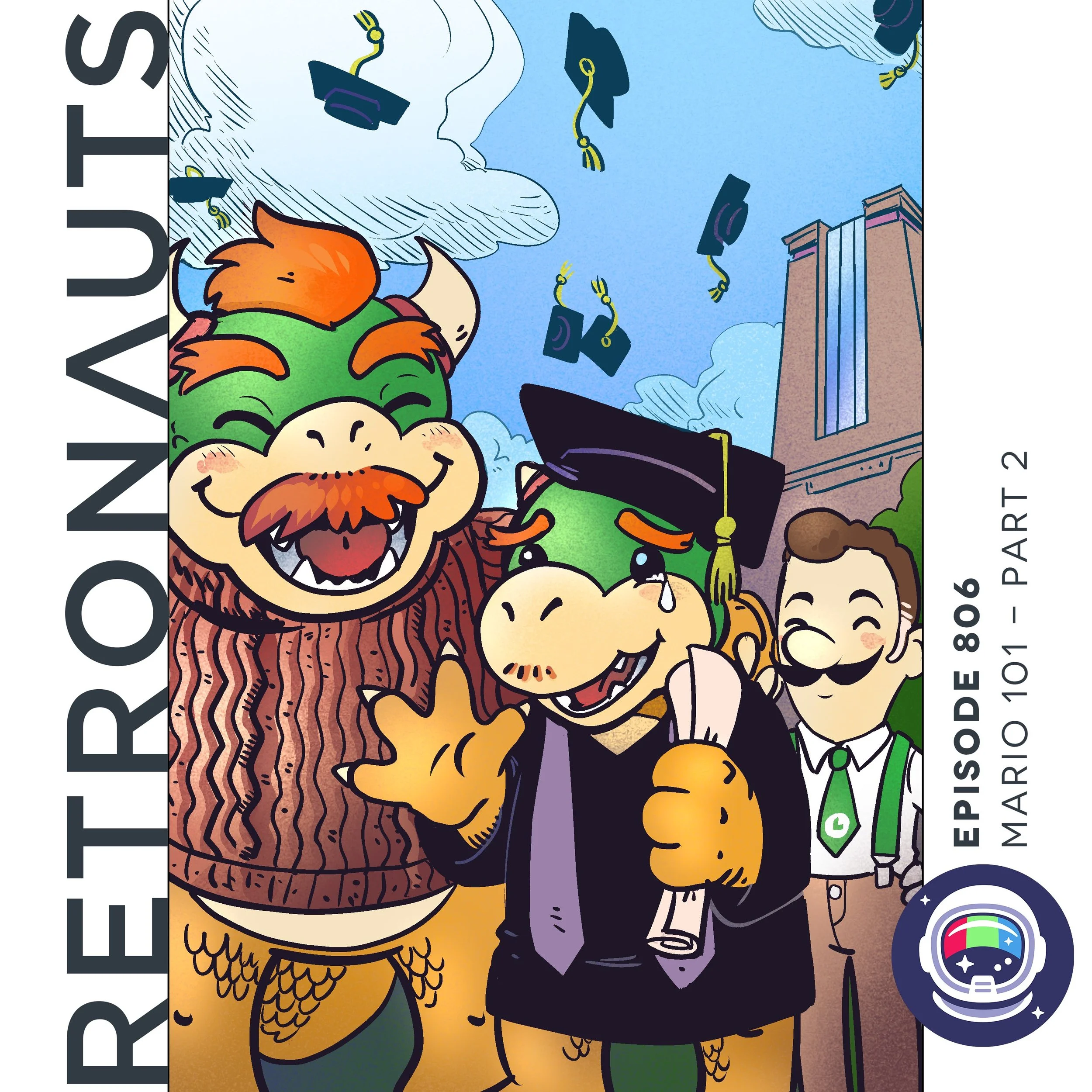
Did you notice that the art for my Retronauts episode has Luigi being Bowser Jr.’s stepdad? I asked the artist, Nick Daniel, and he confirmed this. Yes, Luigi and Bowser are gay for each other. No, I did not request this, but I do support their love.
And finally, did you know that Kirby’s gender is unspecified? Apparently he uses male pronouns in the west, but at least according to a Japanese pamphlet celebrating the character’s twentieth anniversary, Kirby’s gender is unknown as is his origin.
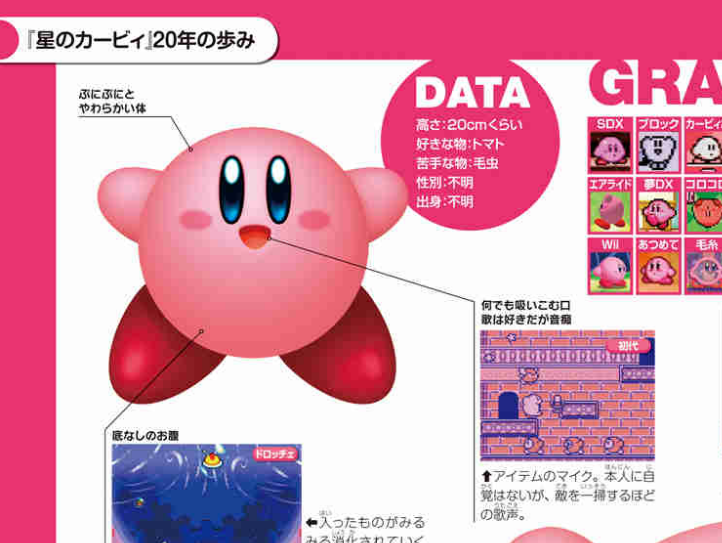
Translation: Height: approximately 20 centimeters; Favorite thing: tomato; Least favorite thing: caterpillars; Gender: unknown; Origin: unknown.
But doesn’t he just come from Popstar?