
Why Do Orcs Look Like Pigs? But Only Sometimes?
This is a story about hulking beast-men who lurk in the woods, waiting in the shadows to ravage men who stray from the path. But despite that description, this will not be erotic fiction. No, it’s about orcs and the game of cultural telephone that has resulted in divergent evolution within Japan and outside it. Depending on who’s telling the story, sometimes these monsters have a distinctly porcine appearance. Sometimes they don’t. Yes, it’s a matter of orc and pork — but again, despite how that might sound, this text was not written with the intention of being erotic.
(Your mileage may vary, of course.)
Between the second and third Legend of Zelda games, an iconic enemy underwent a change that you maybe didn’t notice. The first two games pitted Link against the Moblin, a bulldog-faced biped that attacked with spears. But when it returned for the third game, A Link to the Past, its jowls were replaced with a blunt snout. What was once a dog was now a pig.
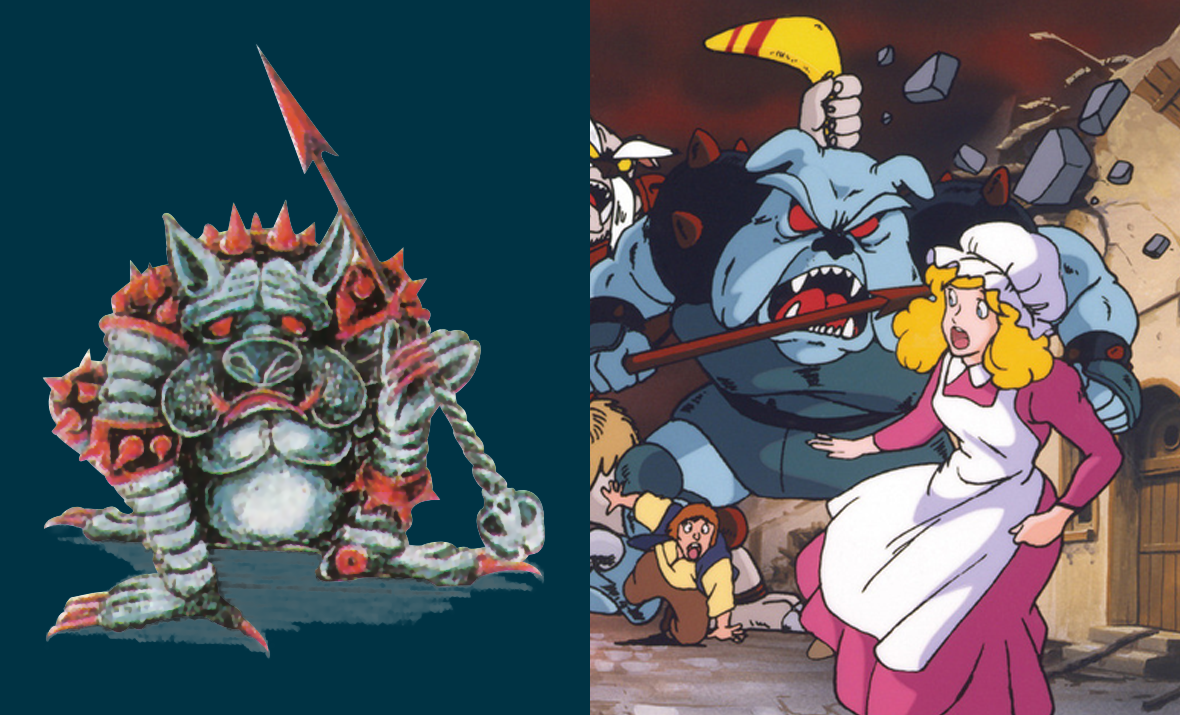
Left: Illustration of a dejected-looking Moblin from the Legend of Zelda instruction book. Right: An angry-looking one from the Zelda II instruction book.
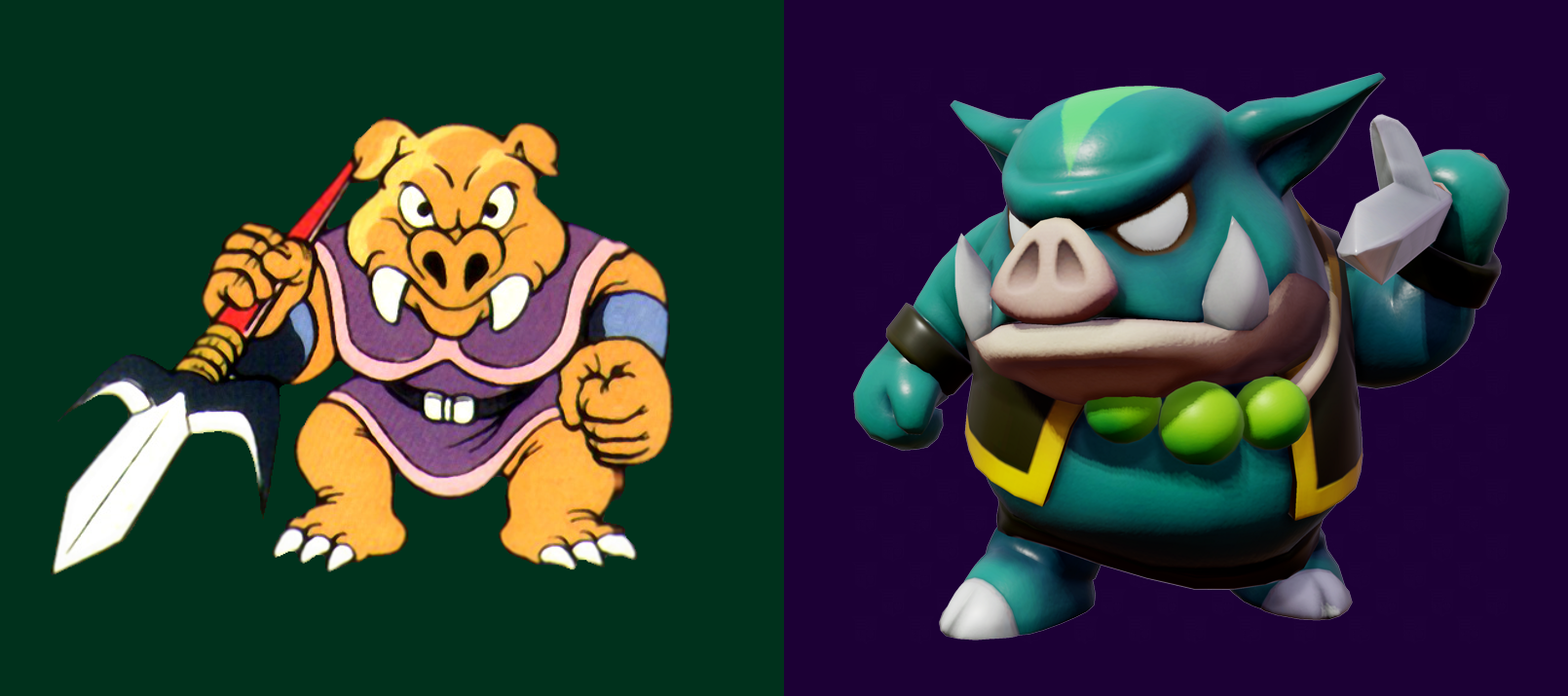
Left: Illustration of the newly pig-faced Moblin in A Link to the Past. Right: The Moblin model from Echoes of Wisdom.
The obvious explanation for this transformation would be that they’d been restyled to match their evil leader, Ganon, who had a pig-like appearance going back to the first game. And while that may be the case, the change also put this version of the Moblin in league with a certain version of the orc, a creature found in many fantasy worlds — sometimes looking like a pig, sometimes looking like a ghoul, and sometimes looking like spinach-colored adonis. So why the inconsistency? And when did the orc get the option of being a big, mean piggy man or a green bodybuilder? And shouldn’t the pig versions have been given the option of being sexy, with rippling muscles tempting passers-by in addition to frightening them?
(Again, you are not meant to find this erotic.)
< Support this site: on Patreon! • on Kofi! >
As a term, orc was popularized by J.R.R. Tolkien, specifically in The Lord of the Rings. It appears a few times in The Hobbit. The first example, spoken by Elrond as he identifies some ancient swords, seems to suggest that orc and goblin are synonyms.
“This, Thorin, the runes name Orcrist, the Goblin-cleaver in the ancient tongue of Gondolin; it was a famous blade. This, Gandalf, was Glamdring, Foe-hammer that the king of Gondolin once wore. Keep them well!”
Later, however, dialogue that Gandalf speaks to Bilbo seems to suggest that orcs are similar to but not exactly the same.
“Before you could get round Mirkwood in the North you would be right among the slopes of the Grey Mountains, and they are simply stiff with goblins, hobgoblins, and orcs of the worst description.”
For what it’s worth, The Hobbit mentions goblins a lot more often than orcs. Conversely, the Lord of the Rings mentions goblins only a few times and instead focuses more on orcs, which it describes as something like devolved, beastly humanoids with a taste for meat — including that of other humanoids. They figure centrally into the story, and if you saw the cinematic adaptations, you probably noticed that they look and act not unlike how someone might imagine an ogre. This may or may not be an accident. The word ogre is of uncertain origin, though most dictionaries guess a relationship with the Italian orco, “demon, monster,” which in turn comes from Orcus, a Roman god of the underworld conflated with Pluto.
Tolkien, who studied language and created whole dictionaries for Elvish, traced his name for these beastly humanoids back to Old English. Beowulf, for example, makes a single mention of orcnéas, which can be translated a number of ways, including “demon corpses.” In his translation of the epic poem (finished in 1926 but not published until 2014), Tolkien translates orcnéas as “haunting shapes of hell.” In this following passage from Beowulf, they’re listed alongside ogres (eotenas) and elves (ylfe) as being descendents of Cain, alongside Grendel, the story’s first antagonist.
Grendel was that grim creature called, the ill-famed
haunter of the marches of the land, who kept the moors, the
fastness of the fens, and, unhappy one, inhabited long while
the troll-kind’s home; for the Maker had proscribed him with
the race of Cain. That bloodshed, for that Cain slew Abel, the
Eternal Lord avenged: no joy had he of that violent deed, but
God drove him for that crime far from mankind. Of him all
evil broods were born, ogres and goblins and haunting shapes
of hell, and the giants too, that long time warred with God —
for that he gave them their reward.
But in Tolkien’s own translation guide for names in his Middle Earth books, he notes Beowulf’s sense of orc is usually treated as a synonym for other Old English words: þyrs, meaning “monster, demon or giant,” and heldeofol, literally “hell-devil.” He also explains that this sense of the word orc is unrelated to a modern homophone referring to various large aquatic animals, though Etymonline disagrees. (This other orc is related to our word orca.)
As a result of the long-lived popularity of The Lord of the Rings, orcs were part of Dungeons & Dragons going back to the earliest incarnation in 1974. They were only described, not pictured, until the 1977 monster manual, which as near as I can tell is the first instance in which they’re given pig-like faces.
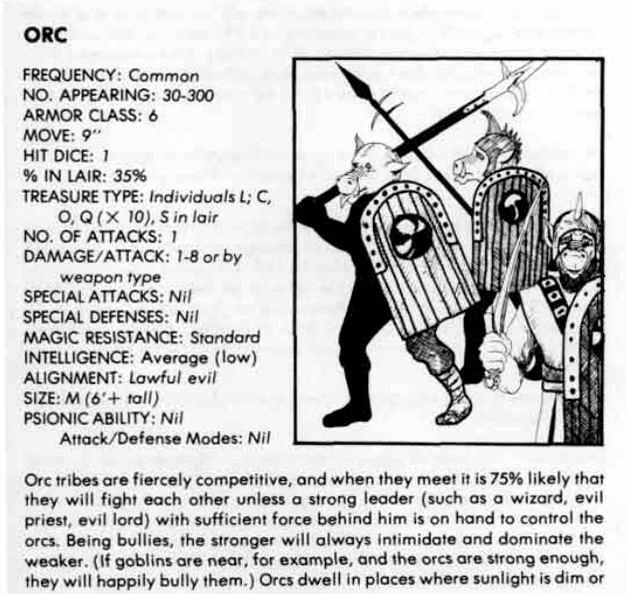
It’s not clear exactly why the orcs were drawn this way for their big D&D debut. If you research this online, you’ll find some people trying to tie it to Tolkien himself. In a 1958 letter to Forrest J. Ackerman, who had inquired about adapting The Lord of the Rings as an animated film, Tolkien does describe orcs as being “flat-nosed.” That could mean a few things, honestly, and given some of the racial language in that passage, and I’m not sure that he’s describing a pig’s nose so much as that of a certain human ethnicity. Regardless, the letter wouldn’t come to public attention until the publishing of The Letters of J.R.R. Tolkien in 1981, three years after the monster manual was published.
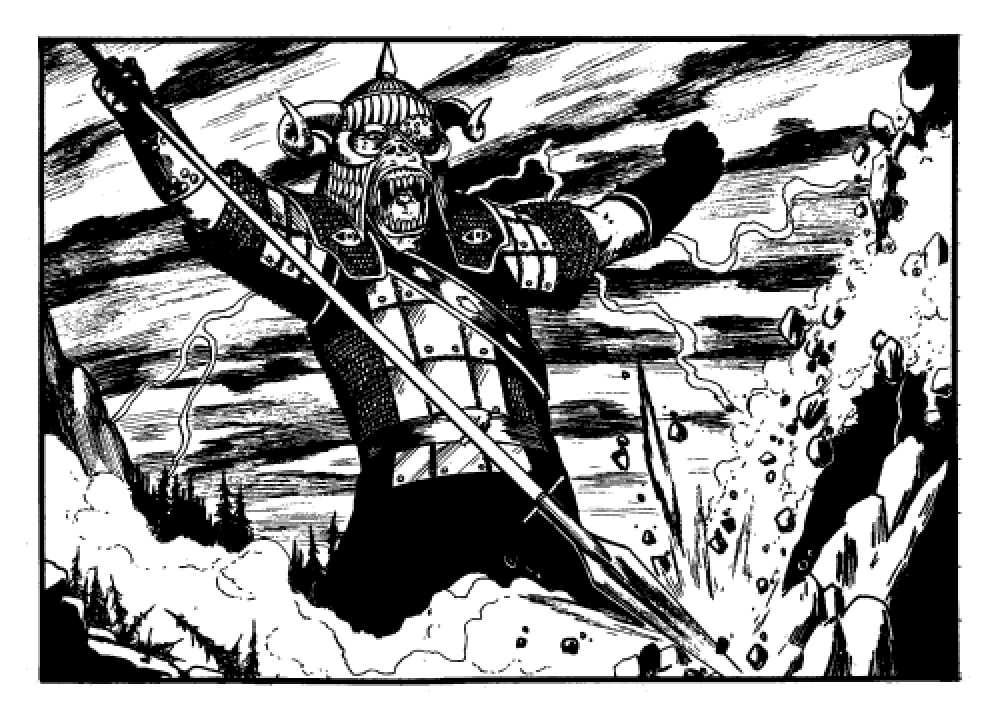
The pig-like appearance wouldn’t be consistent even within the world of D&D. For example, the June 1982 issue of Dragon magazine writes extensively about orcs, describing their culture and social structure in depth but never mentioning a porcine appearance. The article “The Half-Orc Point of View” even explains that orcs don’t look like any one thing — as yes, despite the title, it is describing orcs here and not half-orcs.
They vary widely in physical appearance, but generally seem to retain a vaguely human look, tinged with a hint of something… else.
The illustrations don’t look particularly piggish either, the closest being an illustration of the orcish god Gruumsh, who looks more like an ape here.
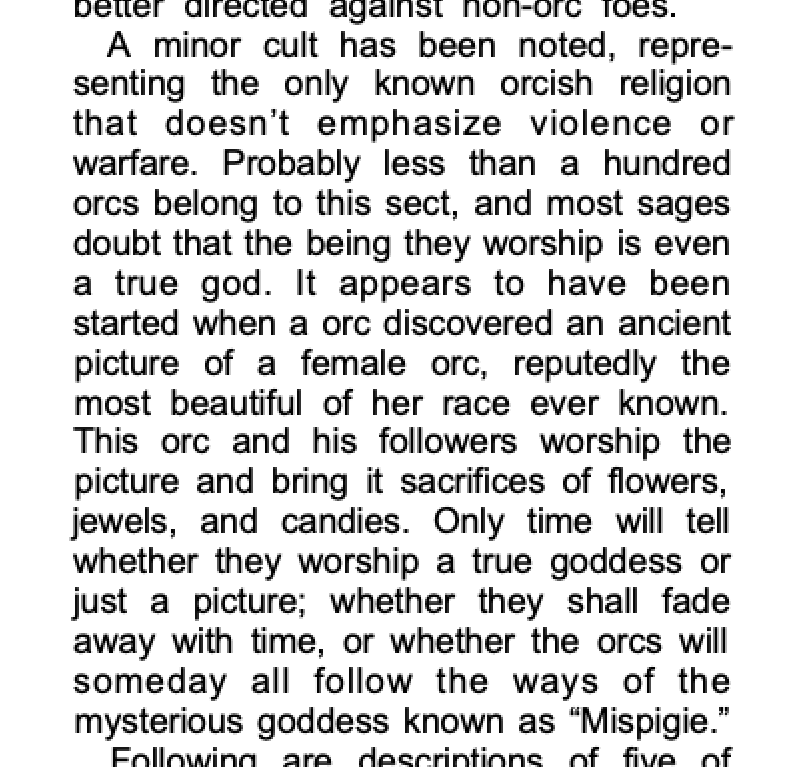
In fact, the only mention of anything swine-adjacent would seem to be a passage in the piece “The Gods of Orcs,” in which author Roger Moore describes a less warlike subset that worships a female leader as being the most beautiful orc who ever lived. Her name, I’m assuming, is a little joke: Mispigie.
In the 1983 version of D&D, it’s stated that the orc is “an ugly human-like creature and looks like a combination of animal and man,” seemingly suggesting that the porky orcs shown in the 1977 monster manual were just one depiction of a vast and varied species. The 1993 monster manual would seem to bring the pig nose back — or at least something upturned enough to resemble a pig nose — but The Complete Book of Humanoids, published the same year, would not. It seems like an aspect that various versions of D&D can either leave or take — and that might be curious, considering that the boar-like tusks show up more regularly. Someone with a deeper knowledge of the game can tell me overall how common the porky orc is in the series as a whole, but I think my research has at the very least proven that it’s not a given — and it certainly hasn’t been an aspect associated with orcs in other western works of fantasy.
In Japan, however, the orc evolved differently. Again, sources vary on exactly why. Some credit the popularity of Dungeons & Dragons in Japan, with players seeing those early porcine designs for orcs and this formative for all future conceptions for how orcs should look. Others credit the western-developed dungeon-crawler Wizardry, which found outsized popularity in Japan. This one is a little harder to verify. Sprites from the original versions of Wizardry aren’t readily available online as other classic games are, so I had to watch playthroughs in order to see how orcs looked early on. What I found didn’t look necessarily all that piggish. In fact, the orc appearing in the PC-88 port, which I’m guessing is the one Japanese players were most likely to encounter, looks to me more like a Smurf with nasal deformities, but here’s a higher-resolution re-creation I made for this post.
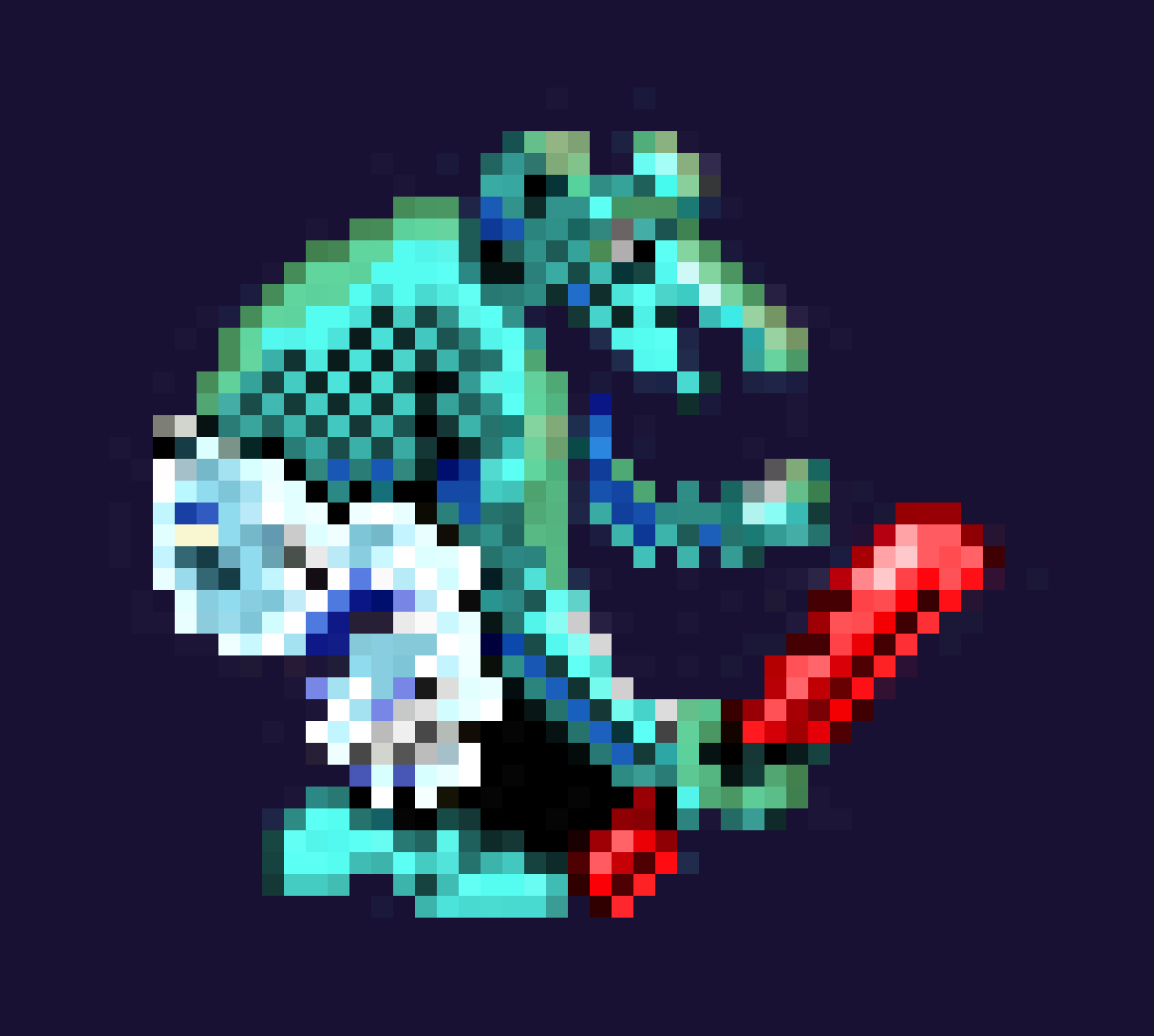
Visual details do often get lost in pixel art, and after posting to Bluesky, I learned that NES port redrew its illustrations to make clearer that this orc was supposed to be more piggish.
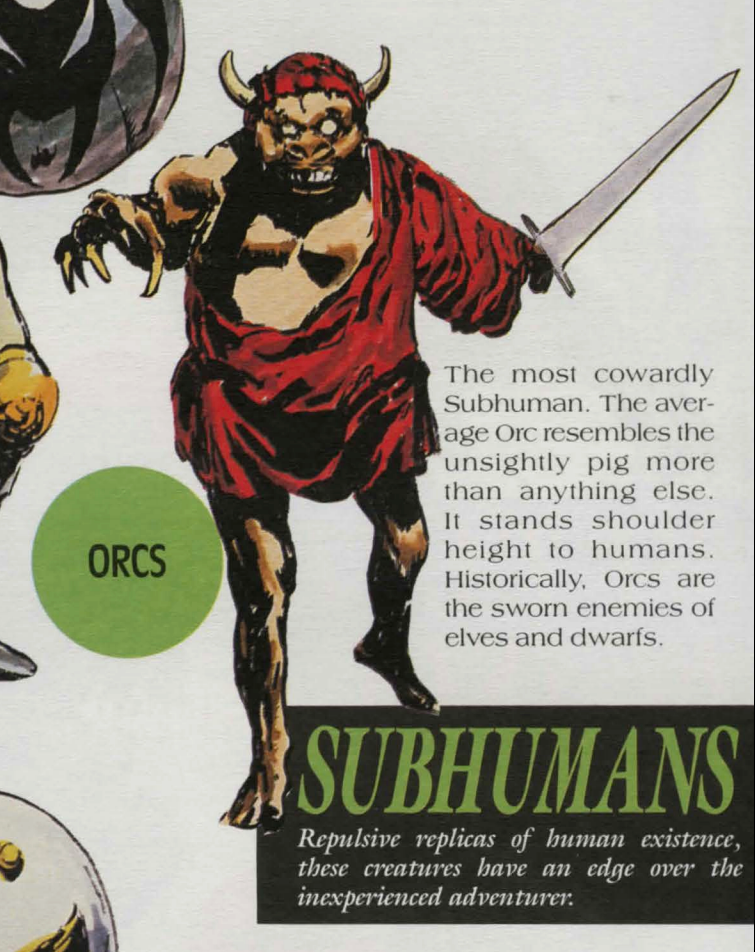
Whichever method ended up being the gateway drug — D&D directly or D&D being interpreted through Wizardry — Japan developed a long-term addiction to the porky orcs, and as a result, this version of the creature abounded in anime, manga and Japanese-produced video games.
< Support this site: on Patreon! • on Kofi! >
That’s why we have Dragon Quest’s distinctly pig-nosed orc enemy, which first appeared in 1987’s Dragon Quest II.
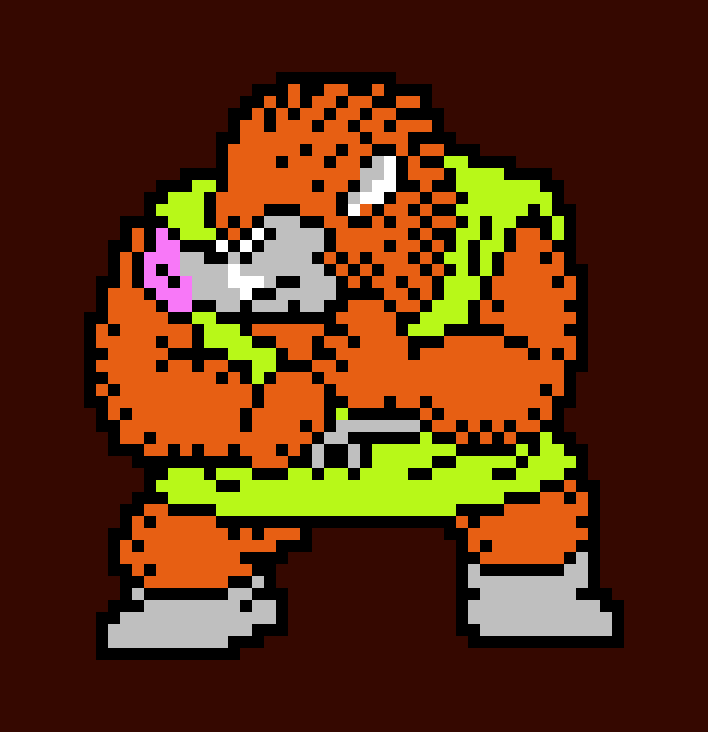
But they’re not the first in a video game! They’re preceded by the adorable orcs in Taito’s Bubble Bobble-adjacent series, the Fairyland Story, released in 1985. And there very well might be one before this, but I couldn’t find it.

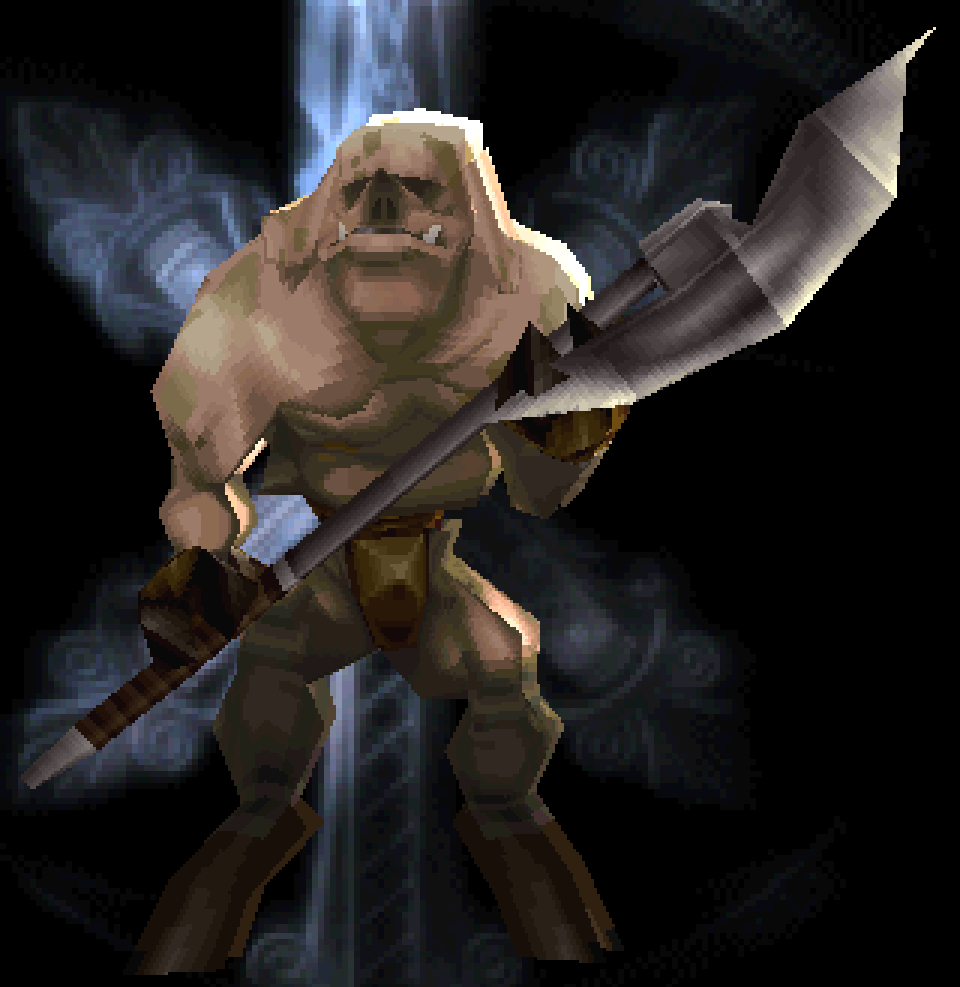
There’s also a pig-nosed orc enemy in 2000’s Vagrant Story.
And there’s a barechested, pigheaded orc enemy in 2001’s Golden Sun.
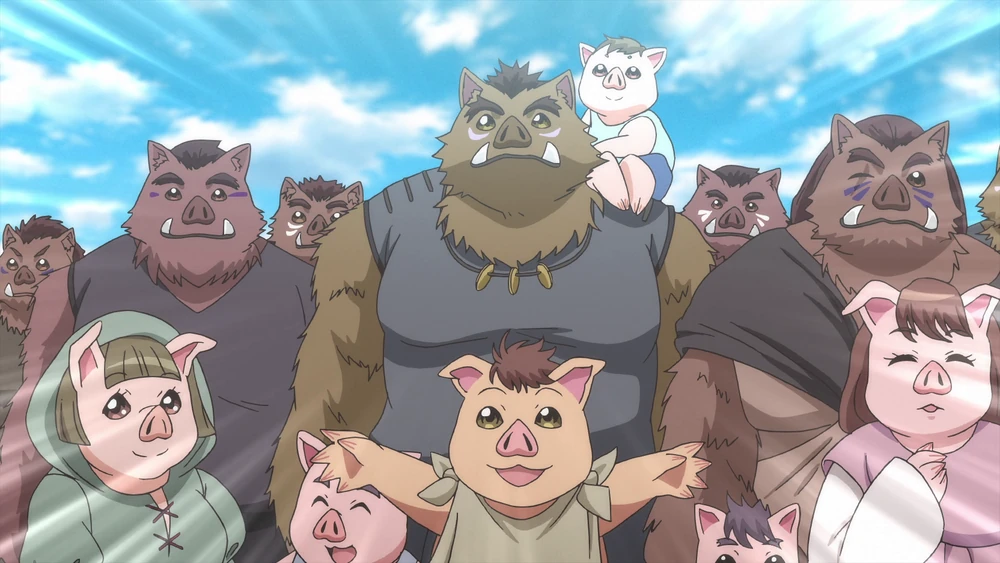
There’s also a population of orcs that figures into Tsukimichi: Moonlit Fantasy, a light novel series that debuted in 2013.
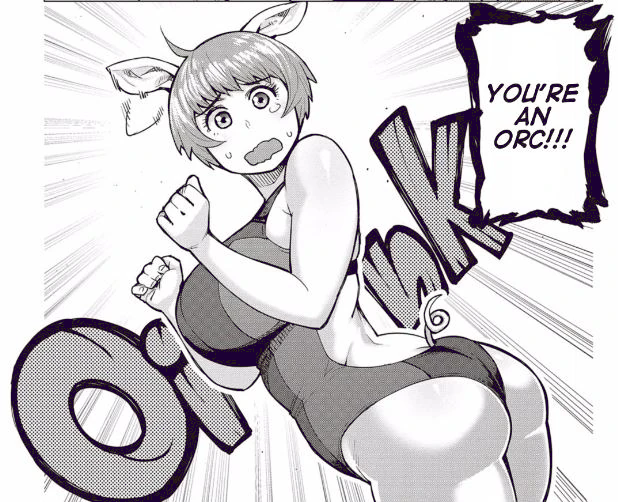
And don’t forget Oku, the curvy orc girl in the manga Plus-Sized Elf, who doesn’t have the nose but does have a pig’s ear and tales
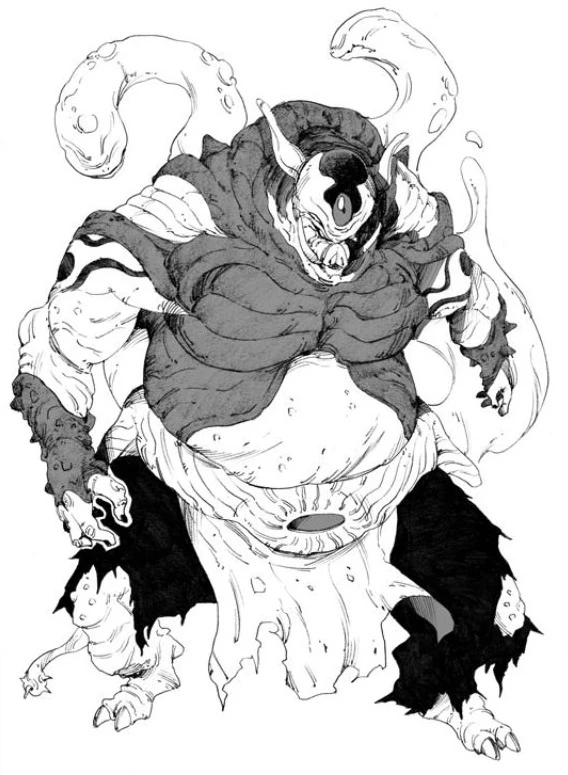
But then there is also the very Ganon-like Orc Lord in The Time I Got Reincarnated as a Slime.
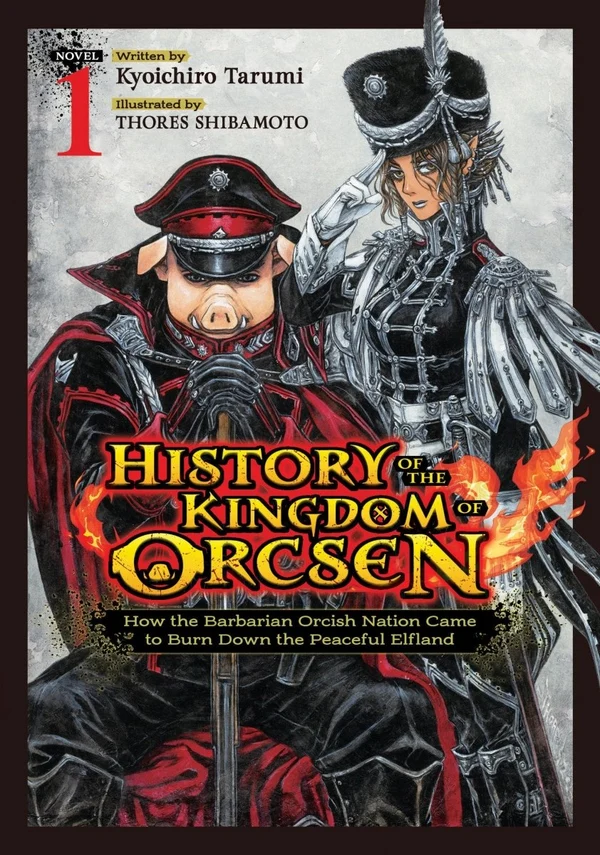
There’s even a manga called History of the Kingdom of the Orcsen that’s all about pig-faced humanoids.
And who could forget Delicious in Dungeon, which features an array of orcs that are as varied as swine subspecies are in real life.
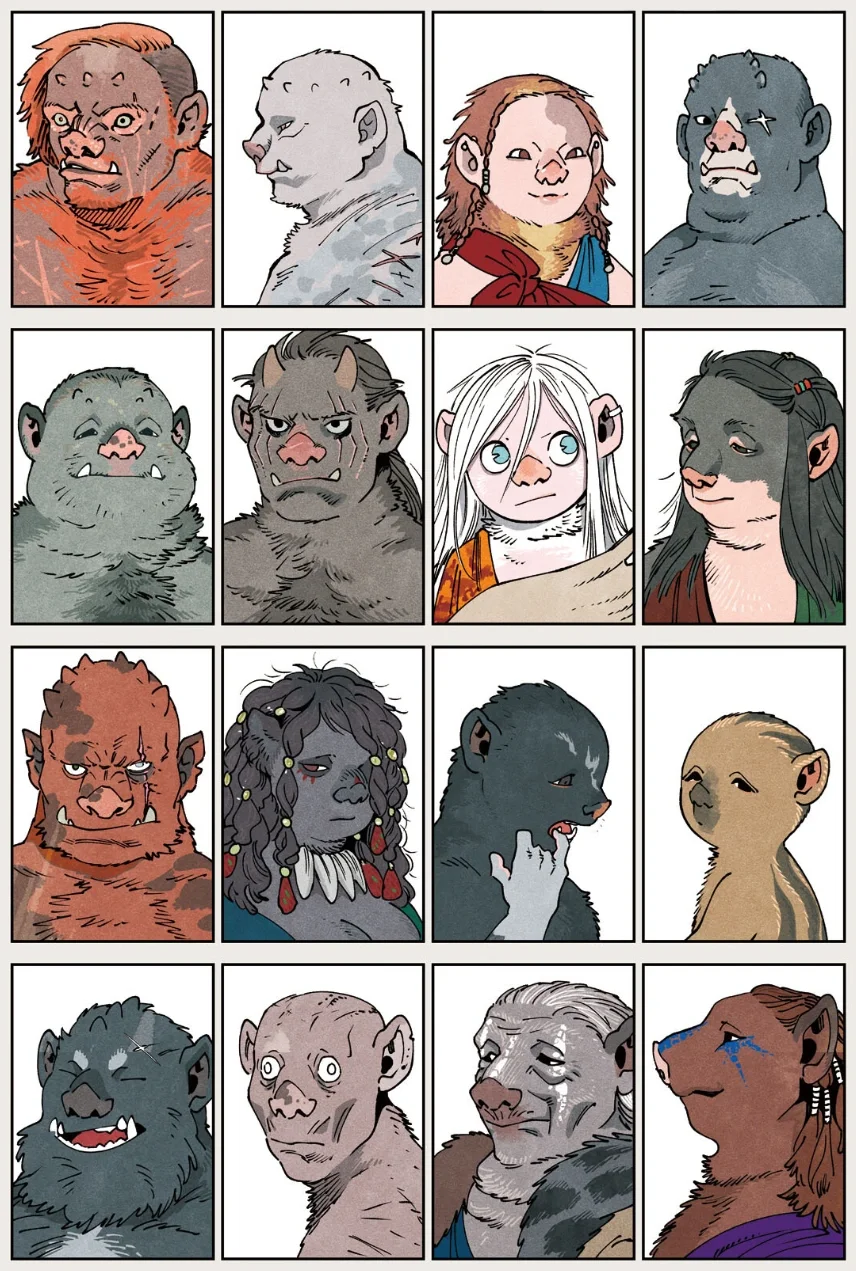
That’s just to name a few. This is not an exhaustive list.
This trend never caught on as much in the west, however. I’m a little out of my element on this portion of the history, but it seems like the two projects that most informed the western conception of orcs post-D&D were the tabletop RPG series Warhammer, first released in 1983, and the video game series Warcraft, first released in 1994.
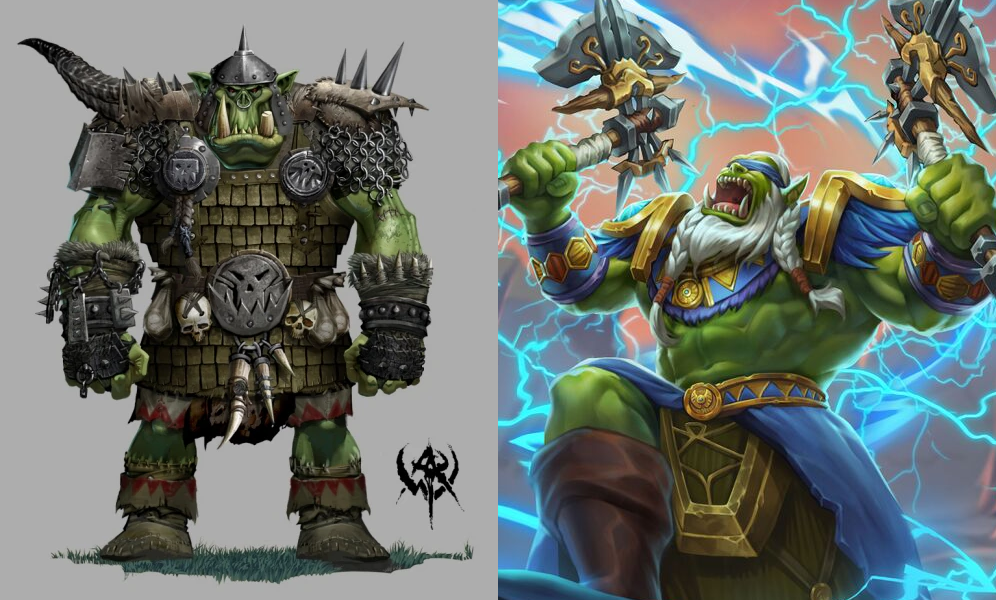
Though the green skin isn’t always a given, the bulging superhero-style muscles are, and this is the point in the post where I think you actually are supposed to find all this erotic. The fact that the male orcs often have bestial-looking faces is, for some, what allows them to overlook the eroticism of these physiques and, for others, the icing on this sexy green cake. It depends on what kind of gamer you are, I guess. (The orc fetish subculture takes on a whole different level when it comes to queer men, and I’m going to talk about that in the miscellaneous section at the end of this post. Yes, there will be a visual aid!) But the popularity of this version of the orc eventually bled over into Dungeons & Dragons, whose orcs can now look a lot more human, a lot more conventionally attractive and a lot more like half-orcs used to look.
Below, check out the official orc illustration offered in the fifth edition of the series, released in 2014, and then the illustration included in the update to that edition, released in 2024. It’s like night and day — or, perhaps more fittingly, like caveman and something resembling a modern human being.
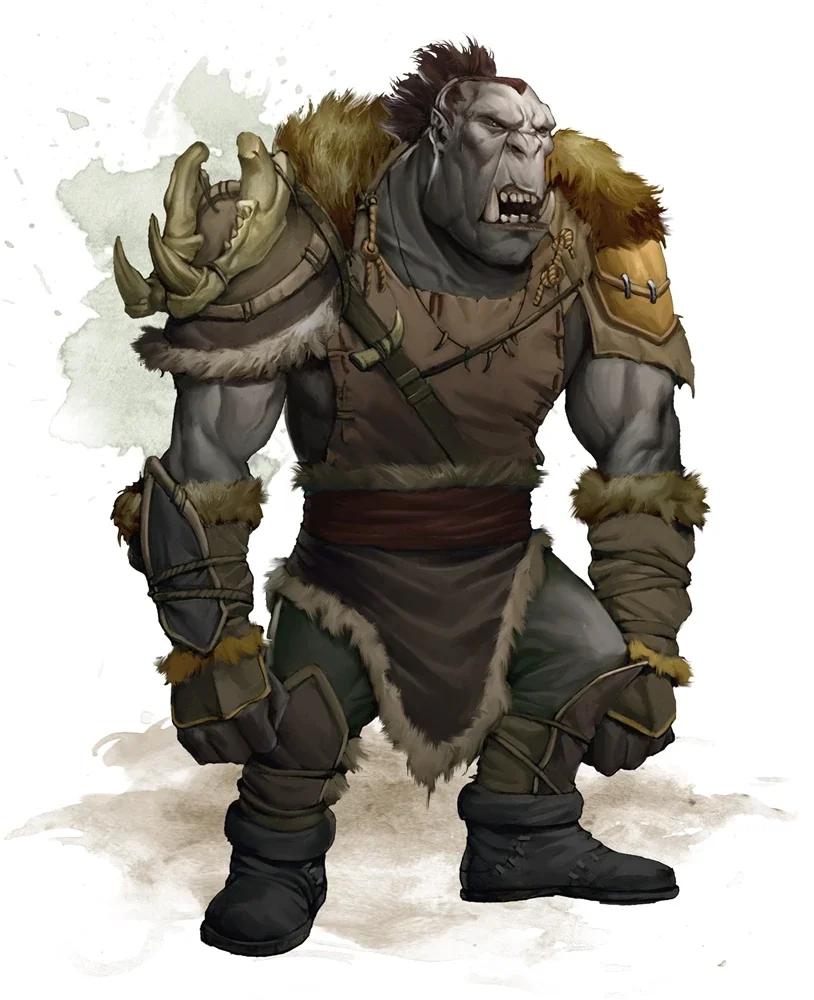
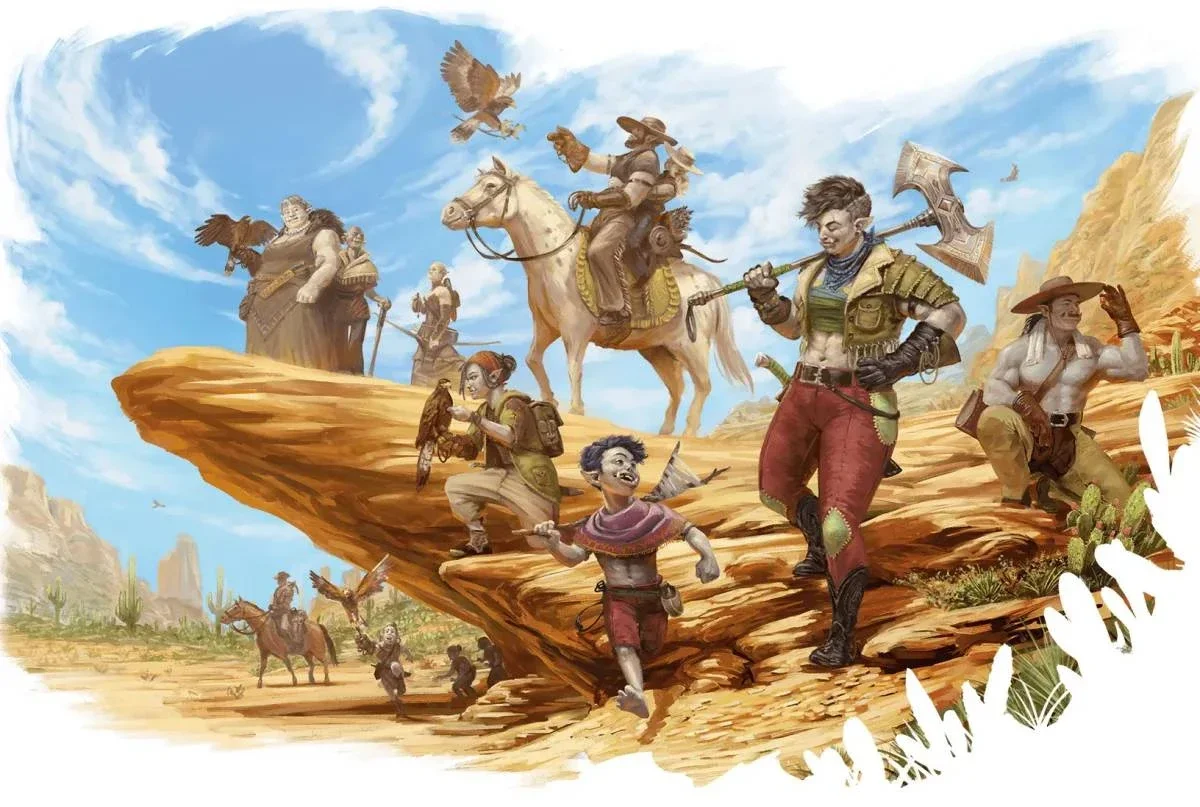
I’m not a D&D guy, and I’m sure longtimers have big feelings about this progression. Regardless, I think the evolution from shambling ghouls to pig-faced beastmen to Shrek-colored dreamboats is an interesting one to investigate. I myself began to become aware of this shift only while watching The Mighty Nein, the second of the Critical Role animated series. Its central party includes Fjord Stone, who basically looks like a Disney prince in green cosplay makeup.
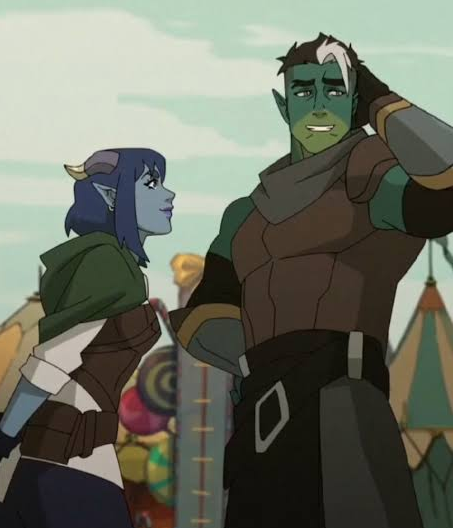
Granted, Fjord is a half-orc, but I think that fact just shows that the visual distinction between half-orcs and full orcs is blurring. In another series, a full orc could easily look as human and as handsome.
In case you’re wondering if emerald fever has spread to Japanese media as well, let me introduce you to Bash, the orc protagonist to Orc Eroica, the manga adaptation of which debuted in 2020.
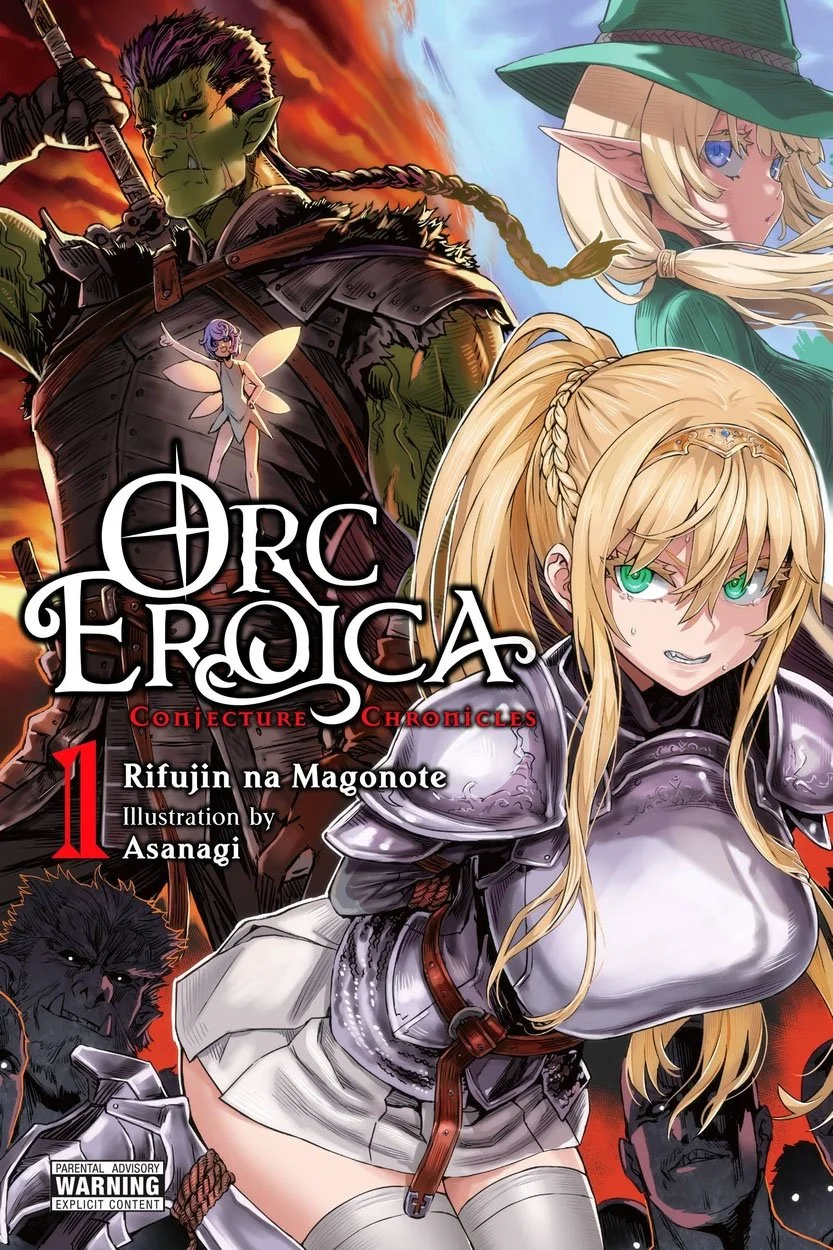
And no, that’s not Orc Erotica but Eorica, as in heroic. But I’m guessing the similarity between those two words was not lost on whoever chose the localized title, just in case you happen to be the kind of person who might find orcs erotic.
None of this actually solves why Zelda’s Moblins changed from dog-faced brutes to pig-faced ones, of course. As I said early on, this might have occurred just to make them more quickly recognizable as the foot soldiers of Ganon, like the Koopa Troopas and Bowser. On an etymological level, there’s nothing in the Moblin’s name that should make them one or the other. Their name in the Japanese version of the games is モリブリン or Moriburin, which in turn is just 森 or mori, “forest,” and a katakana rendering of the English goblin, ゴブリン or goburin. And that’s only compounded by the introduction of Bokoblins starting in Wind Waker; as I explained in my big post about the linguistic underpinnings of Hylian, boko also means “forest,” more or less. But I’d guess that an additional reason it felt right to make Moblins more pig than dog had a lot to do with a longstanding precedent in Japanese pop culture for mean, primitive humanoids with pig heads.
I don’t mind. I for one am always down to see more pork in my orc — in the erotic and non-erotic senses, I guess.
Miscellaneous Notes
I got the idea to write this post listening to the Super Mario Moment episode about Mario & Luigi: Bowser’s Inside Story, with special guest Johnny Brandon from the awesome YouTube channel Bears in Games Neo. The conversation suggests that Bowser’s Inside Story might be the horniest Super Mario game, and I’m inclined to agree. Listen to the episode if you’re not clear how fetish-coded Bowser’s Inside Story is, but specifically the inspiration for this post comes around the 50:30 mark, during conversation about Midbus the midboss, who, it should be noted, is both porky and orc-y.
Initially I was also going to tackle the evolution of kobolds, which I mentioned in my Secret of Mana piece as being little men who live in the earth, in the style of dwarves and gnomes. In a lot of Japanese media, however, they have canine heads. One day I’ll write out that history as well.
One theory for how orcs got pig-like faces states that it comes from an old sense of the word orc that just means “pig.” The closest to anything I could find was that orc means “piglet” in Old Irish, but I’m guessing that it’s just a coincidence. Ditto orc being close to oink.
Finally, here’s that personal aside about gay culture and orcs. I’m probably revealing too much about my extracurriculars in saying this, but the place I most often see orc representation is in gay spaces online. They’re especially popular within bear subculture, and I suppose it’s easy to understand why; male orcs are big, beefy guys, and even when you’re dealing with the more human-like versions, they’re often exuding a rougher, tougher energy than a lot of the other humanoid species you see in a fantasy space. For a lot of guys, being gay comes with some assumptions about how you’re supposed to look and act. They’re not realistic for everyone, however, and it is empowering to admit that and just do your own thing — style-wise, mannerism-wise, body-wise — even if that means appropriating some elements of hetero culture. You’re no less gay, in the way that the modern version orcs are no less sentient or civilized, and so you’re an outsider but in a way you can take pride in, if you want. So yeah, sometimes a guy will take a pic where he’s showing off muscle and belly but also wearing a set of orc teeth without there being any other tie to gaming or a fantasy setting or more of a sense of cosplay. Although I didn’t always, I get it now. Sometimes you’re an orc and that feels good. Sometimes you realize you want to let your inner orc out. Yes, sometimes it’s even erotic.
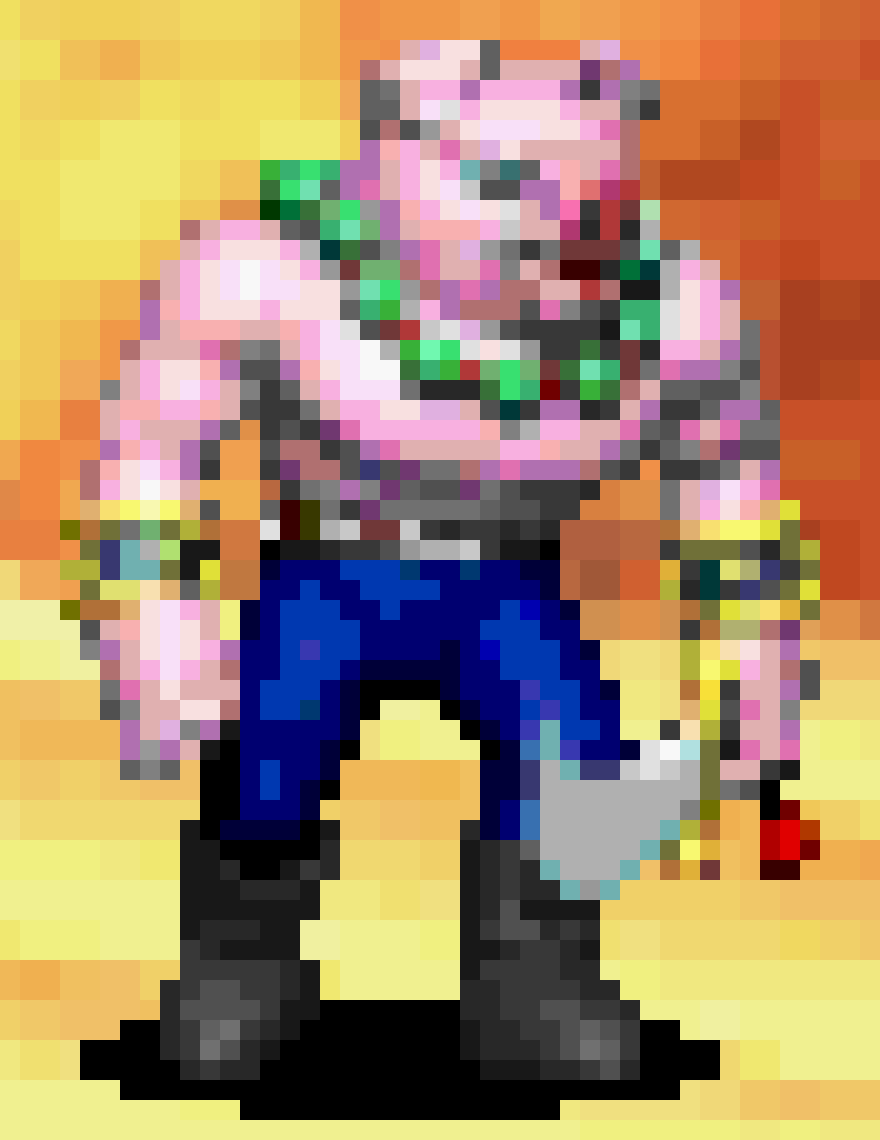
I was planning on writing up this last bit anyway when AdultJunkDrawer reached out with a rendition of that Smurf-looking Wizardry sprite that hit all the marks: big, burly, belly and a clearly rendered pig nose.
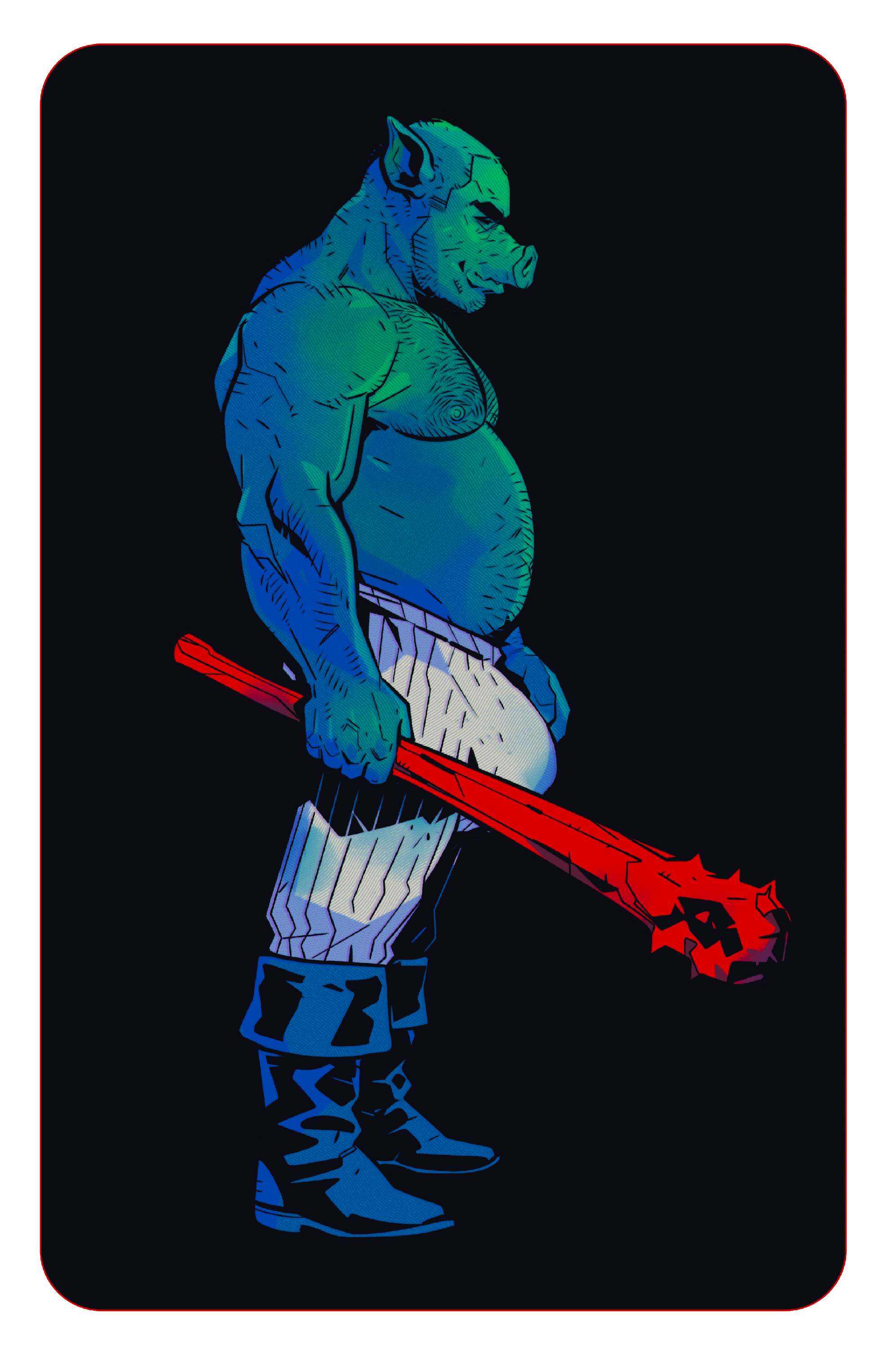


Now that I look at the sprite again, I can’t not see this. But maybe I’m seeing what I want to see. And maybe I’m also seeing an idealized form that’s not the norm — and maybe a little bit monstrous.
< Support this site: on Patreon! • on Kofi! >
“It came from Dungeons & Dragons,” previously: