

Mario 101: Part Two

16. Before it was Koopa Troopa, it was Shellcreeper — and before that it was “Mr. Turtle.”
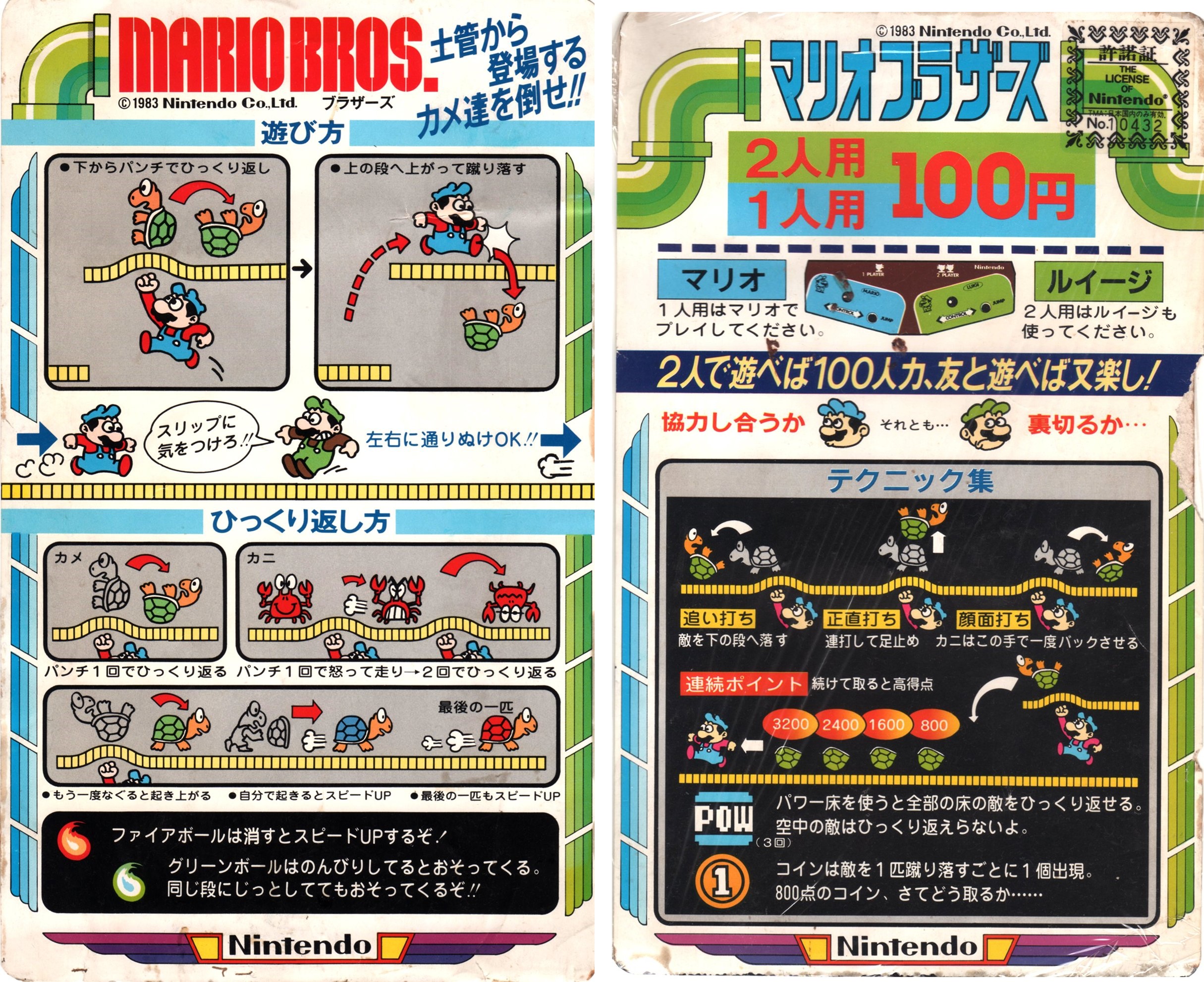
The arcade title Mario Bros. pits the title characters against each other and also a host of sewer-dwelling enemies, including a green-shelled turtle that most people would recognize as a Koopa Troopa, even if it was only referred to as Shellcreeper in this pre-Super Mario Bros. phase. (Also, you can’t stomp on it in this game.) And while that name does appear in on-screen text in the original Japanese release of the arcade version, the instruction cards refer to it only as カメ (kame, “tortoise”) — with the Famicom version released later in 1983 even referring to him more properly as カメさん or Kame-san — Mr. Turtle, if you’d rather. And it’s still on Nintendo’s official website with this name.
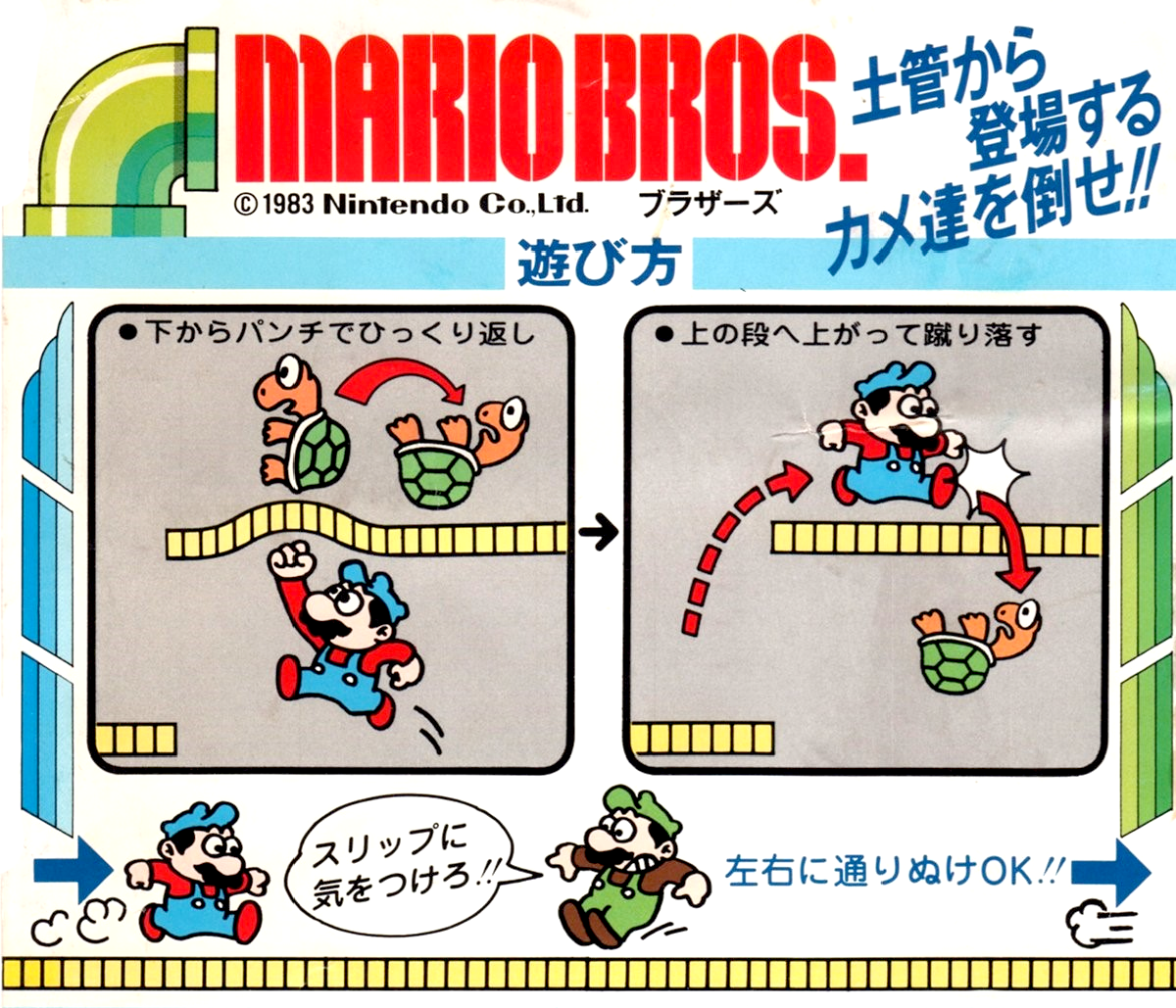
The blue text in the top-right corner says “Defeat the turtles that emerge from the pipes!” (Via Super Mario Wiki.)
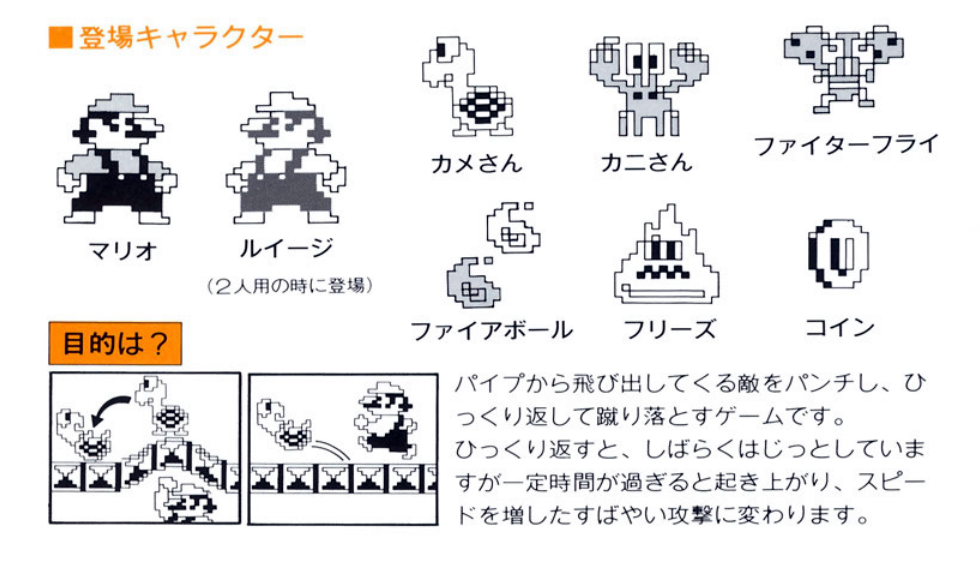
The Shellcreeper is カメさん or Kame-san, “Mr. Turtle” and the Sidestepper is カニさん or Kani-san, “Mr. Crab.” Fighter Fly, curiously, does not get a respectful title and is just ファイターフライor Faitā Furai.
17. And Bowser was originally Boss Creeper.
I can’t find documentation that the English name for the Mario Bros. turtles was used in Japanese media before Super Smash Bros. Brawl, when their trophy bio rendered it as シェルクリーパー or Sherukurīpā. But the term was clearly used in Japan way beforehand, because early in the development of Super Mario Bros., Bowser’s name was Boss Creeper (ボス クリーパー or Bosu Kurīpā) because he was the boss of what the previous game had called Shellcreepers. And in fact, in the earliest known sketch of the character, he really looks more like an angrier version of the Mario Bros. turtles than he does the big horned beast we know and love today.
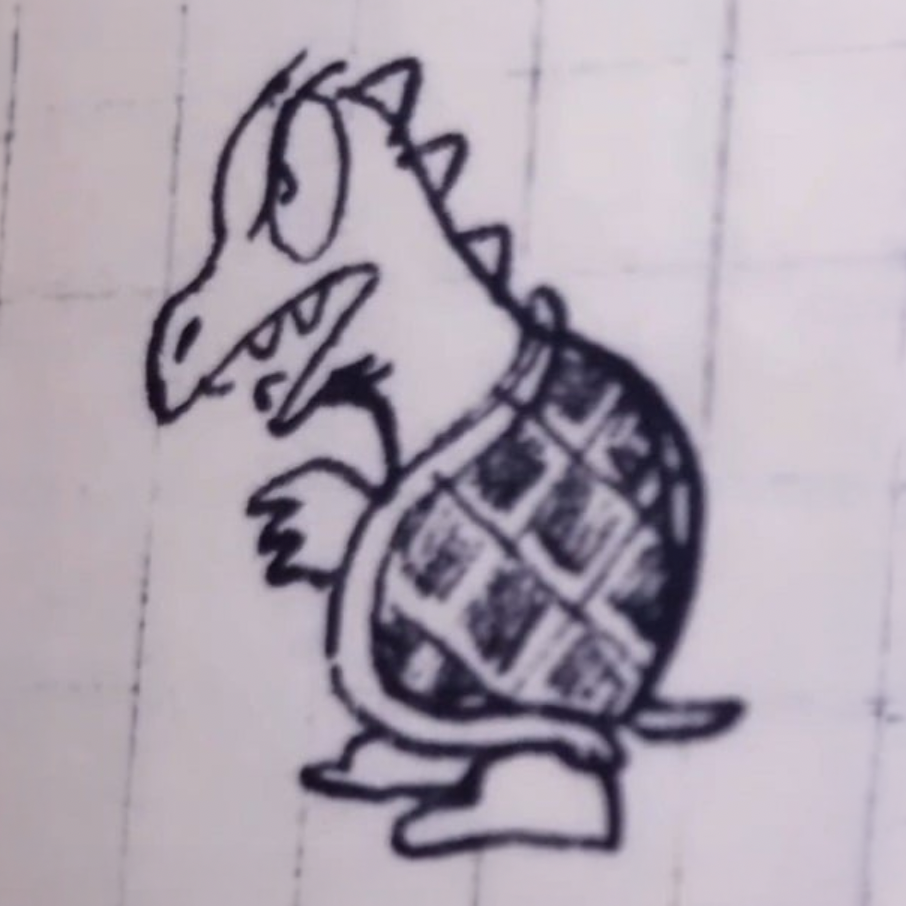
As the series would develop subsequently, many common enemies would get a “boss” version in a king: King Bob-Omb, King Boo and Whomp King most famously. Starting with Super Mario Sunshine, however, Piranha Plants would get the character English-speakers call Petey Piranha and Japanese-speakers would call ボスパックン or Bosu Pakkun — which is to say not a king, exactly, but something that could be seen as the series retained that original “Boss _____” naming structure even if it was ultimately never used in an actual game.
18. We don’t know how Bowser got his name.
In Japan, Bowser has always been Koopa. As I explain in more detail in this post, one inspiration for the character was the Bull Demon King, the villain in Saiyuki, a 1960 anime adaptation of Journey to the West.
To reflect the character’s bovine origins, Miyamoto decided to name the character after a Korean beef dish. According to a 2000 Famitsu interview (among other sources), the three candidates were yukke (ユッケ), a raw beef dish typically rendered in English as yukhoe; binbinba (ビビンバ), a rice dish often served with beef and typically rendered in English as bibimbap; and finally and kuppa (クッパ), a rice soup that doesn’t necessarily have beef and which is typically rendered in English as gukbap. If you’re wondering how the one that’s not strictly a beef dish ended up getting chosen, per that feature in Nintendo Dream magazine, it’s because Miyamoto mistook it for bulgogi, which is more commonly associated with beef. Oh well. Initially rendered in Japanese games as Kuppa, the villain’s name was finalized as Koopa from Super Mario World on.
At least Koopa/Bowser was given ox horns to tie him to his origins even if his name didn’t quite get there. And no, in case you’re wondering, apparently no one has asked him why he chose to associate Korean beef dishes with the character as opposed to the beef dishes of any other nationality.
A recent Time Extension interview with Leslie Swan, former localization manager for Nintendo of America, claimed that many of the western names introduced for the English-language manual for Super Mario Bros. were created by an external ad agency. And as of the posting of this, I have not been able to determine what agency it was or if anyone who worked there is able to recall the logic for what names should get swapped out and for what reasons. I have talked to a number of Nintendo of America staffers who remember it differently, with some questioning if Swan is correct for thinking these names were created by an out-of-office team. Whatever the case, it would seem to be that someone decided that 大魔王クッパ (Daimaō Kuppa) or Great Demon King Koopa wasn’t an appropriate name for North American gamers. Obviously, he became Bowser, and the name has stuck, but we don’t know why that name was picked.
Here are the most popular theories for where this name might have come from:
He is named after singer John “Bowzer’ Bauman from the band Sha Na Na. I don’t think this one is correct, especially because the notion of naming Super Mario enemies after singers and bands didn’t start until the English localization of Super Mario Bros. 3.
He is named after some kind of army tank. I also don’t think this one is true. The logic here is that because this tank was allegedly capable of firing artillery, it has something in common because Bowser also breathes fire. This is almost certainly untrue, however, because the kind of tanks referred to as bowsers are almost always carrying water, though they might sometimes carry fuel. Either way, it’s not that kind of tank.
He is named after the common pet name. I can’t speak for other English-speaking nations, but I can at least attest that Bowser was sort of a stereotypical dog name in the U.S. back in the day, kind of in the way that Fido and Rover were as well. In the 80s especially, Bowser also became shorthand for an unattractive person — “a real bowser,” in the way you might also call that person a dog — and I can’t only think that the timing of the North American release of Super Mario Bros. at least lines up for when this slang was common. Bowser doesn’t look like a dog, especially, but he does look snarling and fearsome.
There are other theories out there, but they all seemed too implausible or not interesting enough to merit a mention. It is my personal mission to get to the bottom of this one day. Priorities, I know, but do hit me up if you know anyone who can give insight as to how and why new names were picked to replace the Japanese originals.
And if you’re curious about why you might have known this character as King Koopa back in the day, I have a post about that.
19. The Koopa “branding” doesn’t really exist in Japan.
While Koopa is the big bad’s Japanese name, the west uses Bowser and Koopa both, often with the former being his first name and the latter being his last name. But the original English manual for Super Mario Bros. calls Bowser the “king of the Koopa,” making it also seem like the name could be a generic term for any of the evil turtle characters.
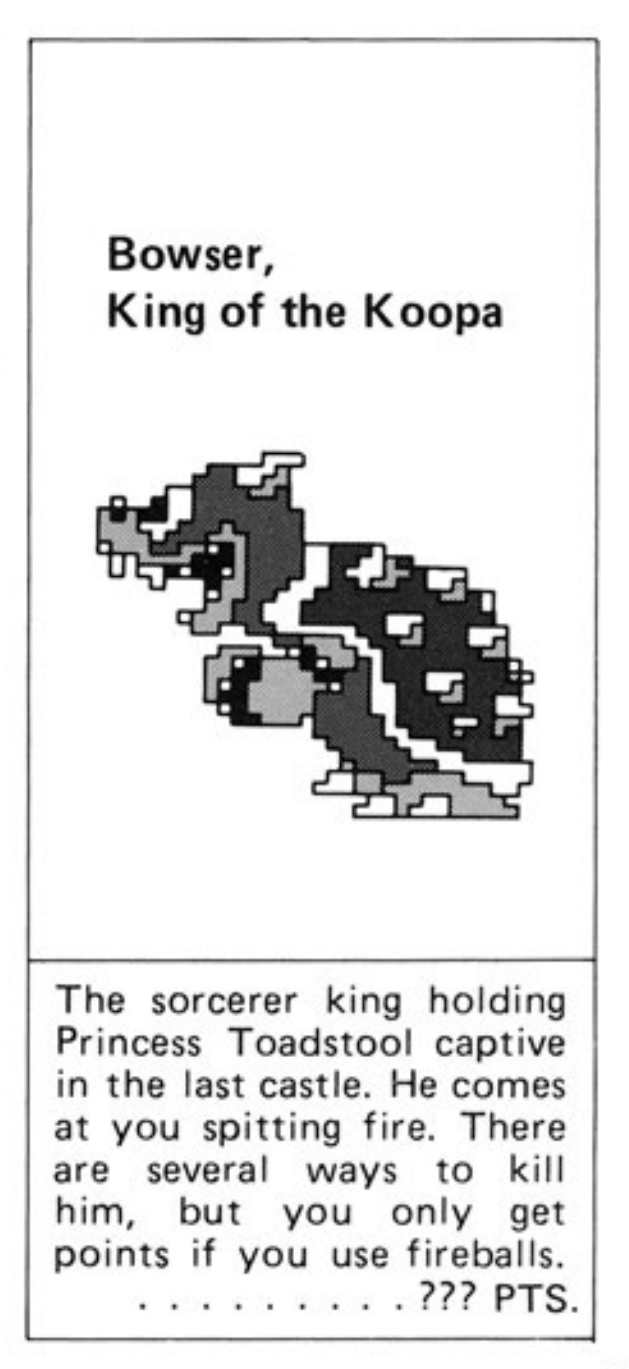
It’s one of the early localization decisions that stuck — you know, unlike Bowser being an evil sorcerer, which the series has kind of forgot about. But as a result, the name Koopa still comes up a lot. The base unit of Bowser’s army is the Koopa Troopa, for example. And as a result of that perfect coinage, the army of Bowser is sometimes referred to as the Koopa Troop — including in the original English version of Super Mario RPG. Even characters that aren’t supposed to be related to Bowser use that last name — for example, Kammy Koopa in the Paper Mario games or Kylie Koopa in Mario & Luigi: Partners in Time.
In Japan, this doesn’t really exist. The Koopa Troopa is wholly unrelated: ノコノコ or Nokonoko, from a Japanese term meaning “the state of being indifferent to one’s surroundings and walking around.” And there are terms for the collective whole of Bowser’s horde of baddies, but they lack the rhyming zing of what we call it in English. The original Japanese version of Super Mario RPG, for example, calls it クッパグンダン (Kuppa-gundan) or “Bowser corps,” which gets the point across well enough, I suppose. Super Mario 3D Land and Super Mario 3D World, meanwhile, use クッパ軍 or Kuppa-gun, “Bowser’s army.” And Kammy and Kylie aren’t named in a way that demonstrates a connection at all; Kammy’s Japanese name is カメックババ or Kamekkubaba, “Old Woman Magikoopa,” and Kylie’s is ノコディ or Nokodi, possibly “Lady Nokonoko.”
Overall, the English version really captured the way a megalomaniac like Bowser would plaster his last name on anything and everything. The Koopalings are a little bit more complicated, and I’ll start discussing them in item no. 62.
An ironic aspect to all this is that what ended up happening in English-speaking regions was the opposite of what was planned when Bowser was first named Boss Creeper. Calling him Boss Creeper made him an extension of the Shell Creeper, the generic turtle enemies in Mario Bros. He was named for them. Once Super Mario Bros. was localized in English, the Koopa Troopas ended up becoming extensions of Bowser and were named for him, even if they were technically the evolved version of the Shellcreeper and pre-dated Bowser.
20. The Koopa Kingdom doesn’t really exist in the games.
Back in the day, western Super Mario fans had this idea that there was this theoretical municipality opposing the Mushroom Kingdom, and it was the Koopa Kingdom. To a degree, this concept still exists today, and I suppose it just makes sense: Bowser leaves his home in the Koopa Kingdom to raid the Mushroom Kingdom and kidnap Princess Peach. And while Japan has terms for Bowser’s turtle-shelled followers — among others, there’s カメ族 (Kame-zoku or “Turtle Tribe”) and クッパ一族 (Kuppa-ichizoku or “Bowser Tribe”) — there’s not an equivalent term for the land where they all live when they’re not out ransacking.
Weirdly, Nintendo had the chance to take players to the Koopa Kingdom but seemingly decided not to — and not even at the last minute but after the fact. The eighth and final area in Super Mario Bros. 3 is called Dark Land in English and basically that in Japanese — according to the Japanese instruction manual, 暗黒の国 or Ankoku no Kuni, which you could translate as Dark Land or something like Country of Darkness. Whatever the name, it’s definitely where Bowser’s forces are headquartered. The closing credits to the Japanese version of the game, however, offer alternate names for the eight lands, and it terms this one Castle of Kuppa, which is as close as we get in any game to the actual Koopa Kingdom.
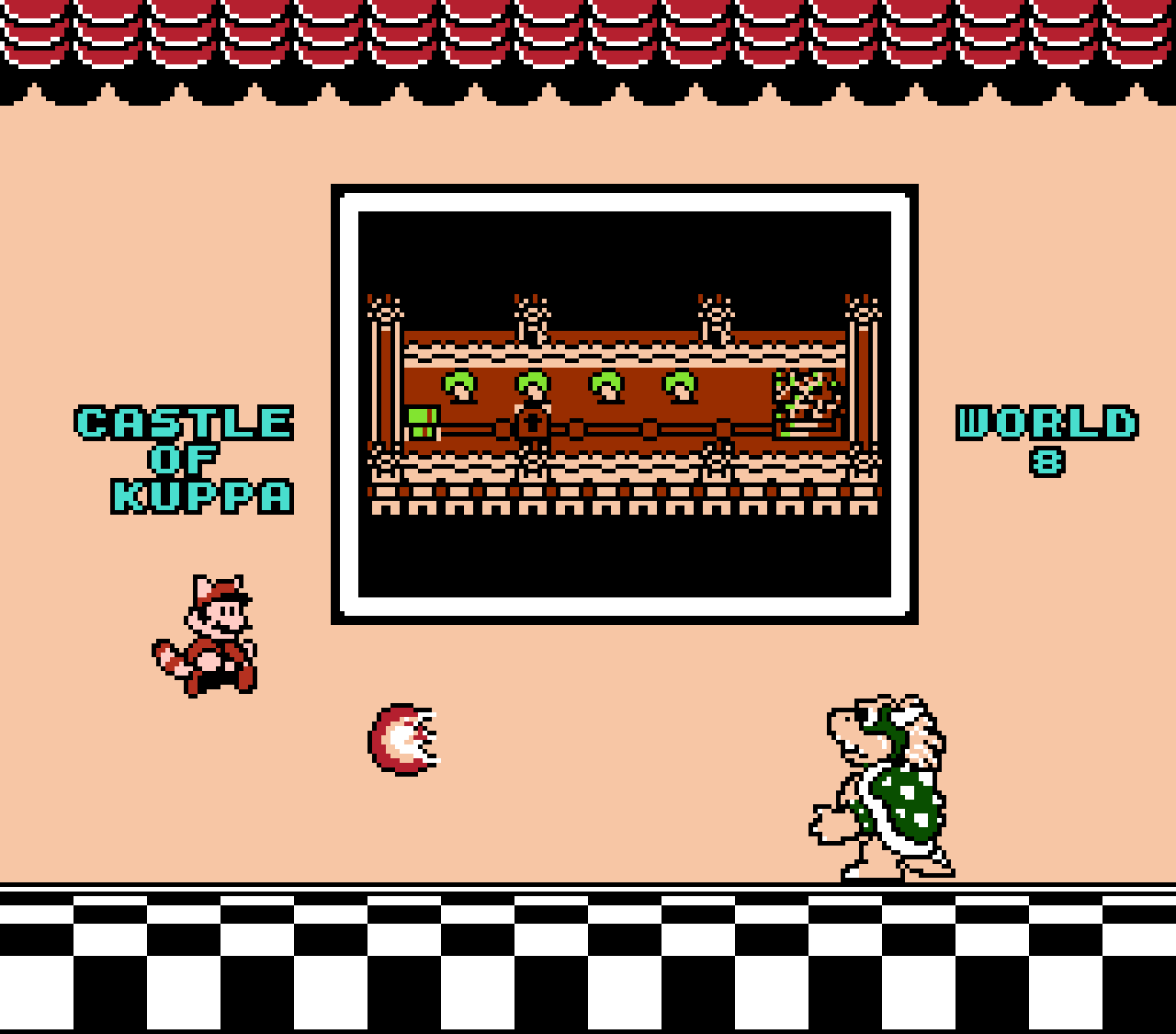
This actually remained in the first western release of Super Mario Bros. 3, albeit with the spelling changed, but a later release seemed to retcon this, with the eighth and final world just being called Dark Land — which is actually an ironic name, since the place is literally on fire. As a result, the closest we’ve gotten to seeing Bowser’s homeland was changed to be less obviously that, perhaps with it being an outpost that he’s merely conquered, like the Valley of Bowser in Super Mario World.
Regardless of the name change to something less Koopa-specific, there is something… unseemly about the way Bowser’s castle is depicted on the final map screen. The inexplicable presence of mushrooms leading up to it seems to suggest some connection between him and the Mushroom Kingdom, especially because his castle is made to be the same sickly shade of pink. These weird-looking mushroom sprites don’t appear anywhere else in the game, so it seems like they were placed on this map for a specific reason, but I couldn’t imagine what that reason could be.
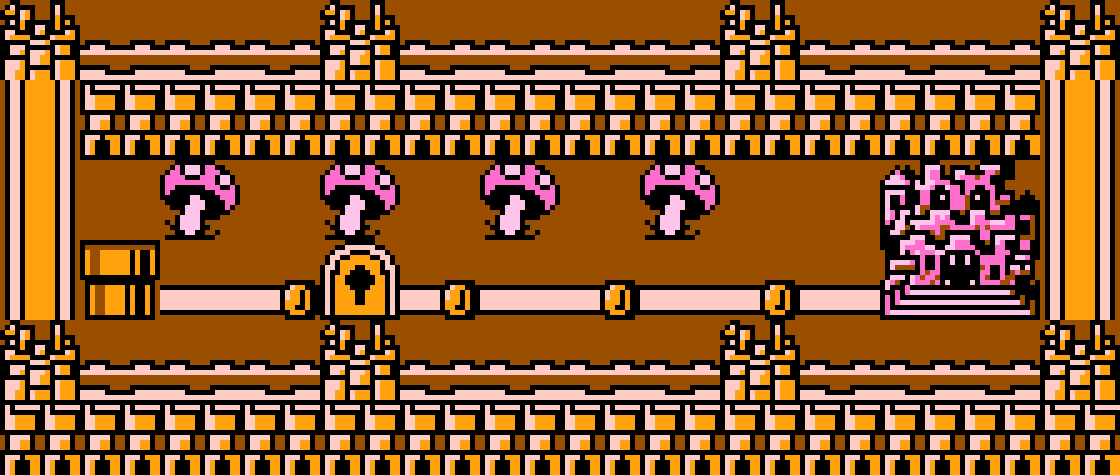
I guess it makes sense that when people adapted the game for the DiC cartoon, The Adventures of Super Mario Bros. 3, they took a look at this hot, spooky place and just decided, “Oh, it’s the Koopa Kingdom.” It might even be this cartoon’s fault that the concept of a Koopa Kingdom exists at all in the west, but it’s wild to me that in forty years of Bowser’s relentless campaigns against the Mushroom Kingdom, Nintendo has never decided to explore where it is that he and his soldiers hail from.
EDIT: It has been pointed out to me that the Super Mario All-Stars and Super Mario Advance 4 remakes of Super Mario Bros. 3 both revert to the original, non-boring world names. I do not have an explanation for why this happened.
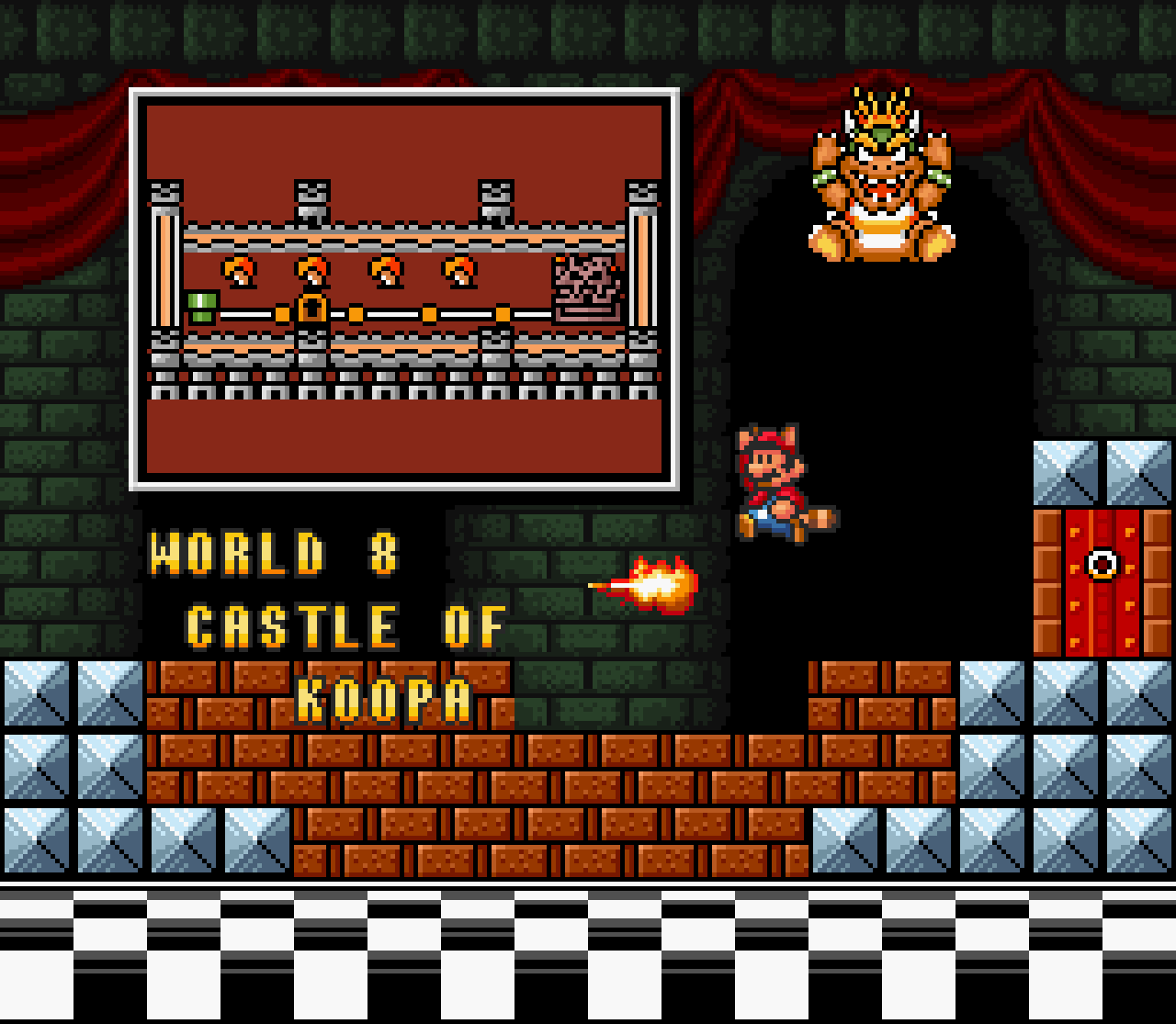
Via the Video Game Museum.
I suppose this could imply that these are the correct names for these areas, but even if that’s the case, there’s still some semantic difference between the Castle of Koopa and the Koopa Kingdom. It’s still not clear in the context of any one version of Super Mario Bros. 3 that we’re supposed to think this is where all the evil turtlefolk come from.
21. Koopa ≠ Kappa, as tempting a connection as that might seem.
Someone who knows a little bit about Japanese culture would be forgiven for assuming that the turtle-like enemies in the Super Mario games were named to reference the Kappa of Japanese folklore. After all, the Kappa are water-based creatures that are not infrequently localized as turtles for English-speaking audiences. (Animal Crossing’s Kapp’n is an example of this, in case you wondered why he’s always going on about cucumbers.) The fact that the Koopa Troopa looks vaguely like a Kappa makes the connection seem even more likely — until you remember that in Japan, they’re called Nokonoko and not any variation on the name Koopa.
Because the Kappa is a prominent creature in Japanese stories, it’s possible that it has influenced the various turtle-shelled enemies in the Super Mario games in a way that I’m just not seeing, I suppose, but there are actually two instances of explicit Kappa representation that would seem to indicate that Nintendo views its characters as being different creatures altogether. For one, the king of the third land in Super Mario Bros. 3 — the seaside kingdom, where the castle is placed about where Nintendo’s headquarters in Kyoto would be on a map of Japan — is transformed into what looks like a non-Koopa turtle that is actually a Kappa.
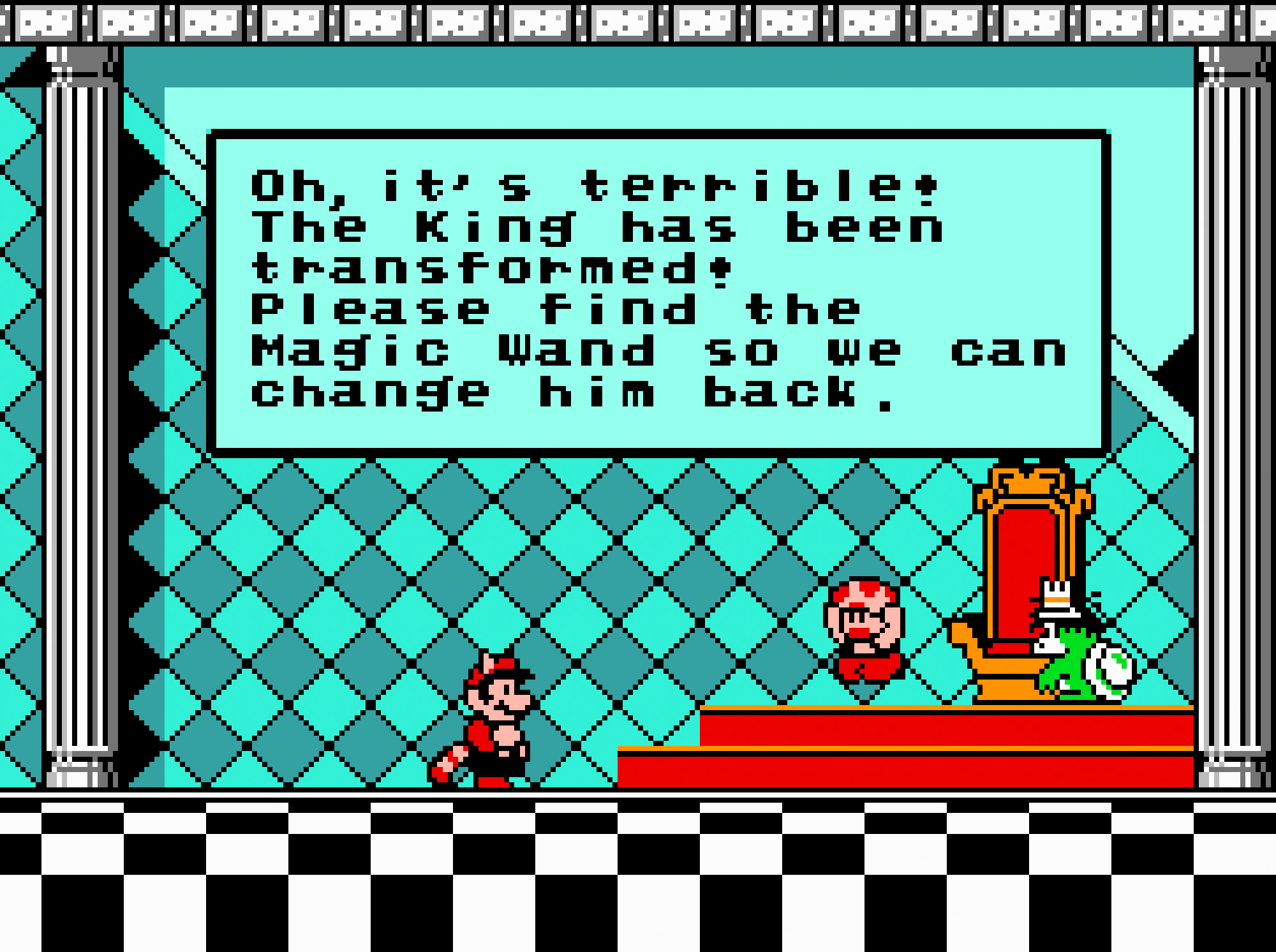
In fact, the only one of SMB3’s kings to get official art — in human form or transformed — is that king, though in this form he’s depicted as looking somewhat more Koopa-like. He actually looks a bit like a cross between Wart and a Koopaling. The fact that both the illustration and the in-game sprite have him wearing a crown makes it difficult to read him as a Kappa, since it covers up the trademark indentation on the top of his head. (One of the defining features of a Kappa is the bowl-shaped divot in their skull that is full of water. If they lean over at the water spills out, they die.)
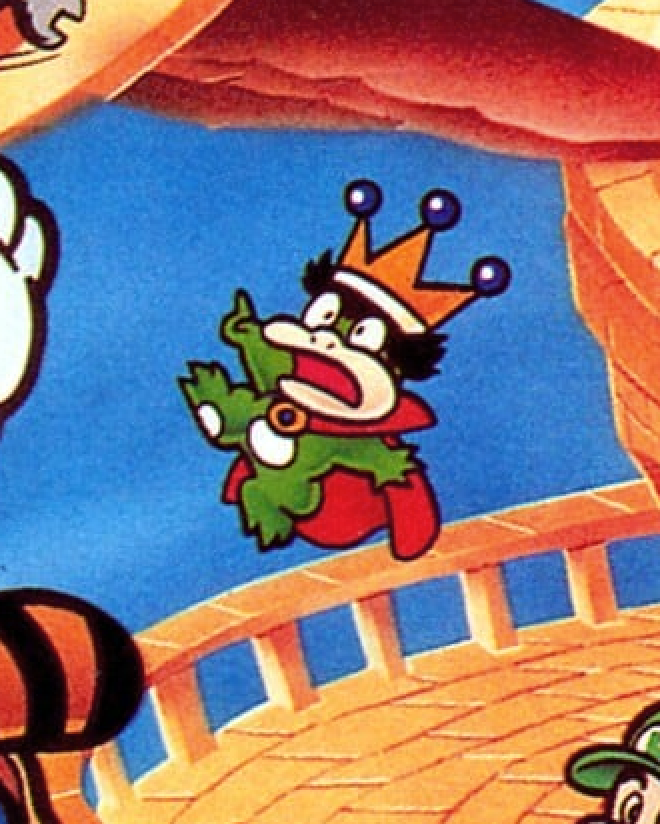
And then the Yoshi’s Island area in Super Mario World includes a geographical formation that the instruction manual points out as Kappa Mountain because it looks like a reclining Kappa — with the small pond at the top of the smaller nearby hill being very visible.

According to Supper Mario Broth, the pond in the Kappa’s “head” was at one point intended to be a playable stage. Oh, what could have been.
22. And Kinopio ≠ Pinocchio, even if that would make sense.
There’s a certain type of anagram wordplay you’ll see in Japanese pop culture in which the characters in a thing’s name can be rearranged to form a word that references the original thing in some way. A notable video game example would be the name of Captain Olimar, the hero of Nintendo’s Pikmin series. The katakana rendering of his name is オリマー or Orimā, which is very similar to that of Mario’s name, マリオ, because with his big potato nose, Olimar is meant to look like Mario. It would seem that there is something along these lines going on with Toad’s Japan name, キノピオ (Kinopio), but it’s apparently not the case.
A longstanding interpretation of the name Kinopio points out that it’s an anagram of the katakana rendering of the name of Pinocchio (ピノッキオ or Pinokio), the theory being just as Pinocchio is a piece of wood that came to life, Toad is a mushroom that came to life. That might sound farfetched, but the original Super Mario Bros. would seem to incorporate a few western fairy tales into its world. However, that aforementioned Nintendo Dream article has Miyamoto implying the similarity was not intentional.
Interviewer: But once there was a misprint in [this publication] that spelled it “Pinocchio.”
Miyamoto: Yes, there was. We figured there would be people who would make that mistake, but we went with the name anyway.
Of course, the name Kinopio was adapted from the Japanese word キノコ or kinoko, “mushroom.” Weirdly, the etymology of this Japanese term still keeps it somewhat close to Pinocchio, at least symbolically. It began as a compound of 木き or ki, “tree,” the possessive particle の or no, and 子こ or ko, “child” — a wooden child, if you will, and that is what Pinocchio is. In any case, the series would get a far more explicit Pinocchio shoutout in the form of Super Mario RPG’s Geno and Super Mario Odyssey’s Pokio, so they’re down to reference this character, obviously, but Toad’s Japanese name just is not that.
23: Toad wasn’t meant to be female, rumors notwithstanding.
For the most part, the 1986 theatrical anime Super Mario Bros.: The Great Mission to Rescue Princess Peach! hews closely to the source material in terms of character design. Luigi’s overalls are the wrong color, but basically everyone else looks how they appeared in official Nintendo materials that accompanied the Japanese Super Mario Bros. 2. At two points in the story, however, Mario and Luigi rescue Toads that would seem to stand in for the ones that in the original game tell Mario that the princess is in the other castle. These captive Toads are inexplicably female.
I go into it more in this post, but my theory for how why the movie features these female Toads — years before any game would, mind you — stems from a misreading of Toad’s original sprite, which tries to depict his trademark vest but ends up making it look like a bikini top.

There’s also a sentiment out there that the original end-of-the-dungeon Mushroom Retainers in Super Mario Bros. were meant to be female. It’s more common among Japanese gamers, but at the very least the anime is a potential explanation for why Japanese gamers got this idea in their heads. As for their non-Japanese counterparts who didn’t see the anime during their formative years, I can only conclude that they also read the chunky pixels as depicting a character that looked feminine.
Female Toads wouldn’t appear in the series proper until Super Mario RPG in 1996, and then Toadette wouldn’t debut until Mario Kart: Double Dash!! In 2003.
24: The female Toads aren’t the only instance of a character being created as a result of misread pixels.
I suppose if it had never occurred to you that anyone might see Toad’s Super Mario Bros. sprite and interpret him to be female, then the previous item might have seemed like a random one for me to include. However, it’s not the only instance of someone misreading pixel art and inventing an entirely new character. Have you ever encountered Mario’s friend, Stop Watch?
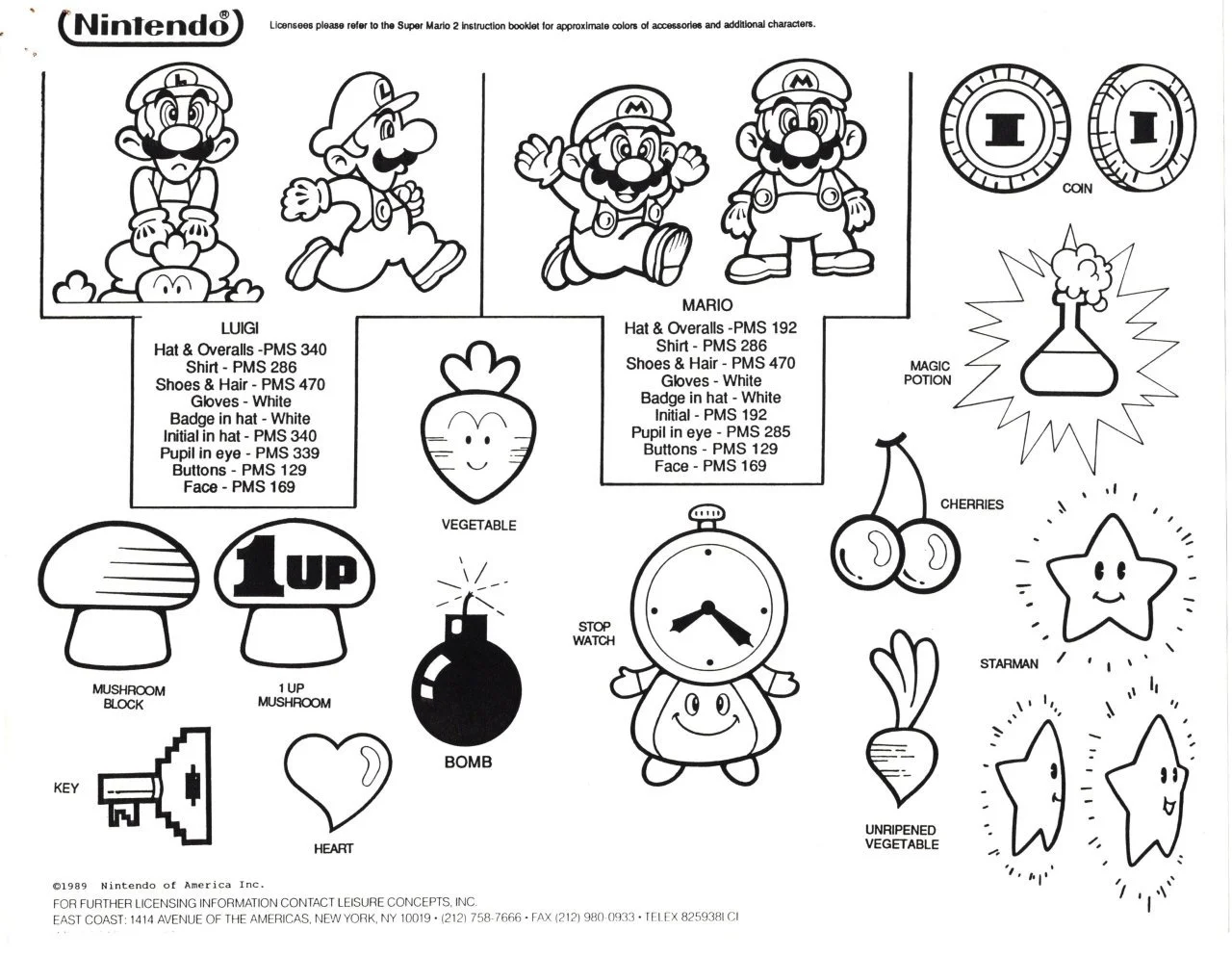
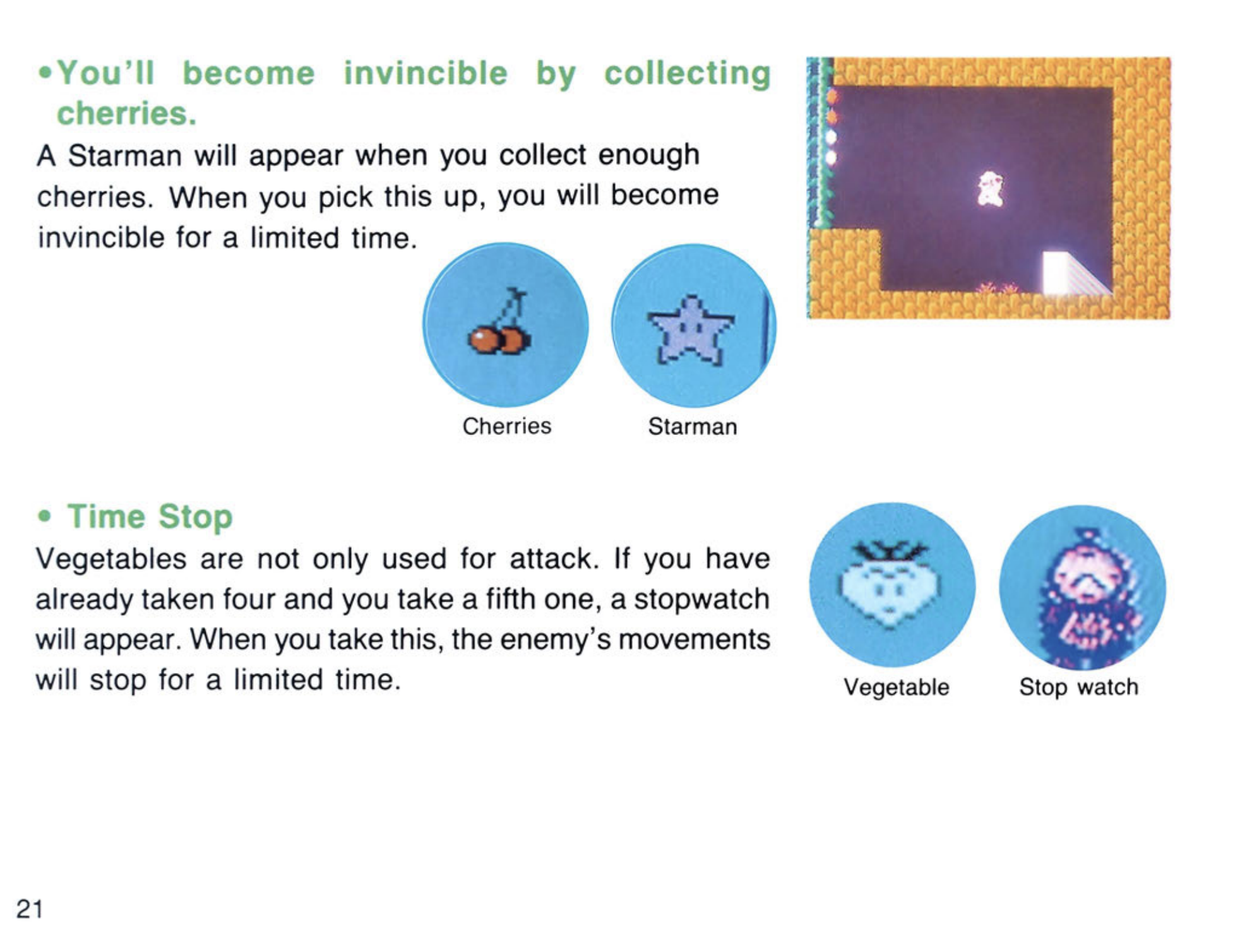
He showed up in various Super Mario Bros. 2 materials as a result of someone misinterpreting a screenshot showing the stopwatch item in the game’s instruction manual. The stopwatch is unique in that unlike every other item, which can be seen onscreen for longer, it only appears for a few seconds. It’s plucked from the ground like a vegetable, and it only appears above the head of the character who pulled it up for a split second. As a result, it couldn’t be photographed on its own, and the image that made it into the manual shows Mario squatting beneath it.
As it’s explained in this Supper Mario Broth post, it seems like whoever was drawing art for Super Mario Bros. 2’s official materials incorrectly interpreted Mario’s mustache as a big grin and assumed that the one called Stop Watch was some monstrous creation that had a round body with a face on its chest and then a whole clock growing out of its head.
I’d like to think this makes Stopwatch the most obscure Super Mario character — and by virtue of the existence of T.T. in Diddy Kong Racing, the most bizarre anthropomorphic clock character.
25: Toad laughs at your quaint notions of gender.
To go back to no. 23 for a second, Nintendo has for the most part refused to gender Toad, as an individual character or as a species. That is either admirable or annoying, depending on your approach to this kind of lore. There are two official statements about this. In one 2014 interview, Miyamoto said that even the existence of an apparently feminine Toad should not be taken as an indicator of the original Toad’s gender.
Actually, when we made the original Toad, we didn’t really have in mind whether Toad was a boy or a girl. We just made the character, and then ever since, Toadette has started appearing in games. I think people have come to take the impression that Toad was a boy because Toadette was a girl, but obviously, there’s lots of different Toads that have been in a lot of different games.
In the other interview, also from 2014, Captain Toad producer Koichi Hayashida admits that the people who make these games didn’t really think about Toad’s gender: “This is maybe a little bit of a strange story, but we never really went out of our way to decide on the sex of these characters, even though they have somewhat gendered appearances.” The takeaway that some ran with actually appears not in a quote from Hayashida but in text written by the reporter, Alexa Ray Corriea, saying that the Toads are “a genderless race that take on gendered characteristics.” That plus the subhed for the post, “Mario World's Toads choose their own gender characteristics, according to Captain Toad’s producer,” prompted some fans to conclude that these were also Nintendo’s official declarations about Toad and gender, but I’m not sure that’s technically true.
Again, there is a whole mega-post on Toad and gender that goes into this and the previous two items in greater detail.
26: Peach wasn’t named so much for the food as the color.
Despite the many characters named after food not only in the Super Mario games but also many other Japanese franchises, Princess Peach is apparently an exception. According to that 2022 interview with Miyamoto in Nintendo Dream magazine, she got that name because peaches are pink. “You associate little girls with princesses, and you associate pink with little girls,” he said, although he doesn’t sound 100 percent sure on this one, adding, “I think that’s where her name came from. Hmm… .”
I originally ended this post surmising that Japan’s idea of the color peach was different than the one we have in the west, which has more orange in it. After this post went live, it was brought to my attention via Bluesky that Japanese doesn’t exactly have a single word for pink the way English does. Instead, it has 桃色 or momiro, literally meaning “peach color.” And yes, the range of colors this refers to is slightly redder than what English-speakers mean when they refer to something being peach-colored.
All that said, it is interesting how it took until Super Mario Bros. 2 (if you were outside Japan) or Super Mario Bros. 3 (if you were in Japan) to actually see her colored pink in-game, even if that was the original plan.
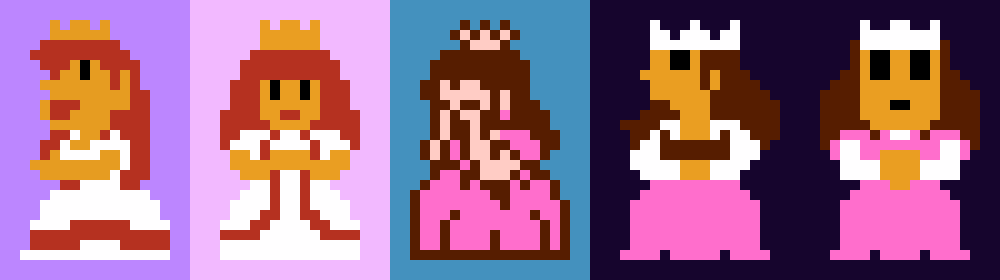
Left to right: The white-gowned, “blocky monster” Peach as seen in the origonal Super Mario Bros., the marginally improved sprite from The Lost Levels, Peach crying about her depictions so far in the ending sequence in Super Mario Bros. 3, and finally two rather disturbing “void eye” versions of Peach as seen in a preliminary design document.
27: The localized English games have a peculiar aversion to the princess’s name.
The English-language instruction booklet for the original Super Mario Bros. explains that the woman awaiting rescue at the end of the game was Princess Toadstool, not Princess Peach. In reworking the game for North American players, Nintendo swapped the Japanese name for one that apparently made more sense as the reigning monarch of the Mushroom Kingdom. Despite my best efforts to find who made this decision, I have not as of yet. Again, in a 2025 interview with Time Extension, longtime Nintendo localization manager Leslie Swan says it came from an external ad agency to which Nintendo outsourced that work, but I’ve talked to a number of Nintendo staffers who remember it differently.
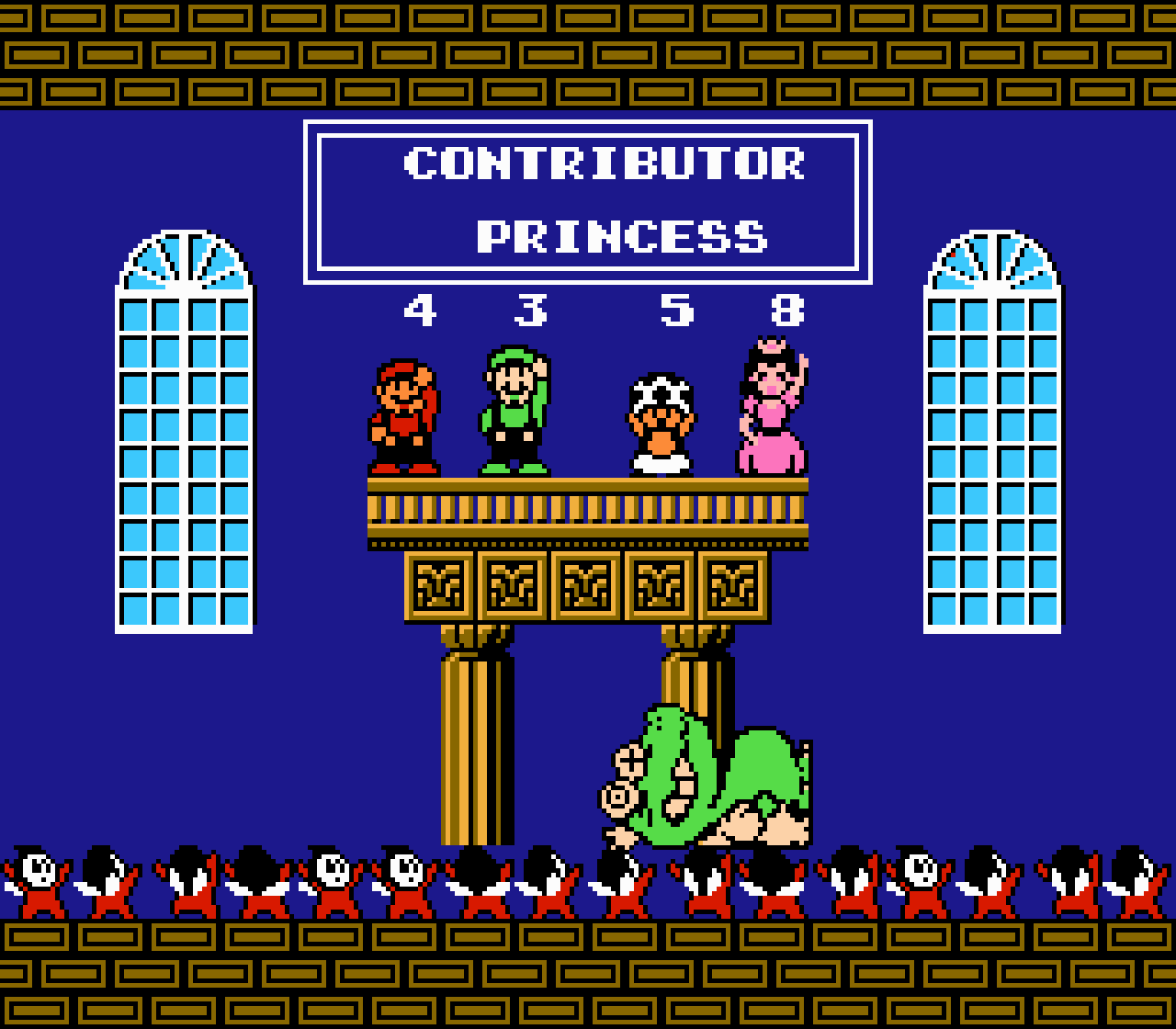
Oddly, the English versions of early Super Mario games seem hesitant to use that name, despite it being canon until the advent of the Nintendo 64. In the English version of Super Mario Bros., for example, the rescued Mushroom Retainers say “But our princess is in another castle,” but that’s probably because they say the same thing, in English text, in the Japanese version as well. Super Mario Bros. 2 could have referred to her by name in the ending sequence, wherein the character who clears the most levels gets a shoutout, but the game goes with the option of just referring to her as “Princess,” as if that’s her name, even though there’s enough space to write out Toadstool.
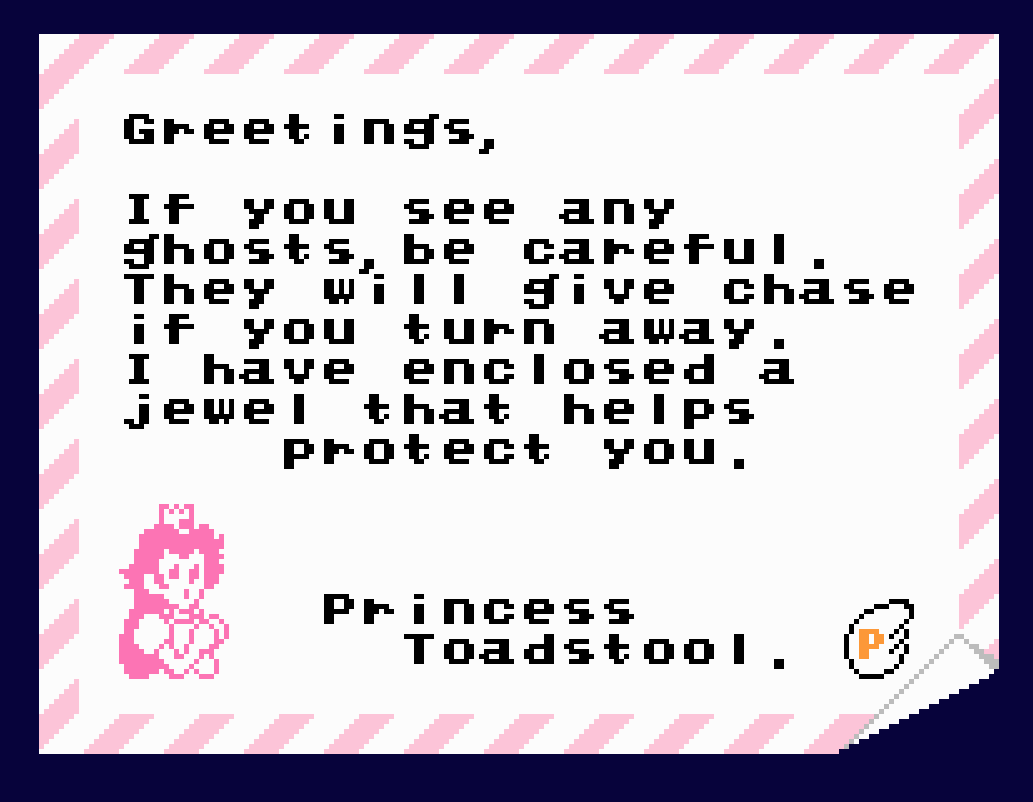
It actually takes until Super Mario Bros. 3 to get any on-screen mention of the character’s name, and it’s still fairly subtle; you only see it in the signature of the letters she writes to Mario every time he clears a world.
And that’s the last time it’s used in the English version of a Mario game until Super Mario RPG. The ending to Super Mario World only refers to her as “the Princess,” Super Mario Kart refers to her as “Princess” — again, even though there’s space to write out her actual name.
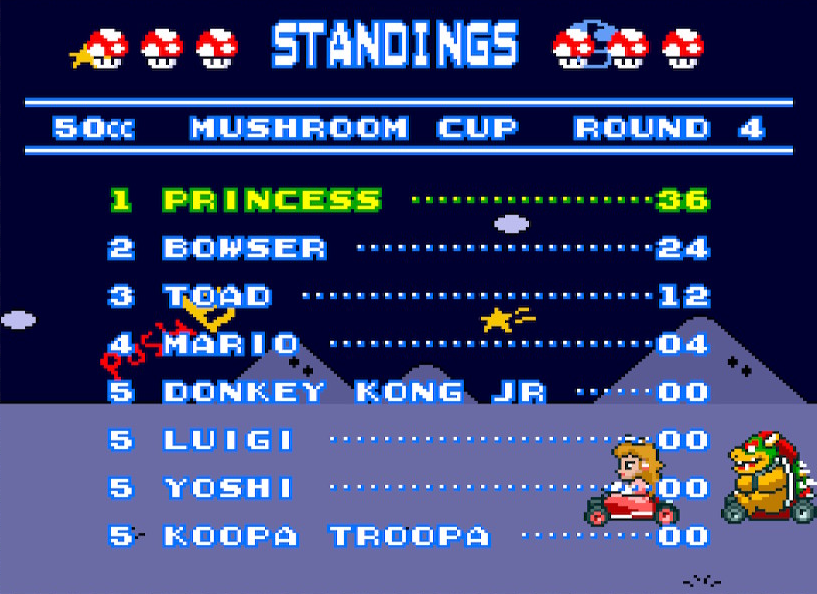
It’s not a space constraint, as both “Donkey Kong Jr” and “Koopa Troopa” use more letters than “Toadstool” does.
The first game to actually refer to her as Toadstool as if that were her actual name is Super Mario RPG — and ironically it’s also the last, because in the intro to Super Mario 64, she famously signs her cake invitation as Princess Toadstool, with Peach scrawled on the side in what we might interpret as her telling Mario (and us) to call her by her personal name rather than a formal title. She’d be Peach henceforth in every subsequent English localization. It’s perhaps meaningful that Leslie Swan provided Peach’s voice in the Super Mario 64 intro, seeing as how she served as Nintendo’s localization manager and this was the company’s effort to abolish a longstanding localization split.
What I’m curious about is if Nintendo of America realized at some point that they’d given the heroine of their biggest series a real clunker of a name. It doesn’t sound especially princess-y, her provenance notwithstanding. What’s more, it’s very close to what they decided to call Toad, and it might be confusing that the character named after an actual mushroom was the pretty pink princess and not the guy who actually has a mushroom for a head. In the Time Extension interview, Swan only implies that Miyamoto prefers the name he gave the character in the first place.
One day, Mr. Miyamoto just said, “Is Peach a bad name?” And I had to tell him, “No, but you know she is called Princess Toadstool in the U.S.” I remember he said, “Well, I really like Peach as her name.” So I came up with the idea to say, “Why don't we call her Princess Peach Toadstool?” Then we could refer to her informally as Peach.
And yes, if you’re wondering, that formal introduction only happened outside Japan. In the original Japanese version of Super Mario 64, there’s no jaunty signature in pink — and you don’t hear Swan’s voice.
28: Peach’s trademark hairstyle is probably not a Farrah Fawcett flip.
For years, I saw the way Peach’s blond locks curled away from her face as reminiscent of Farrah Fawcett’s iconic ’70s hairdo. But looking at the evolution of Peach’s design between the Japanese release of Super Mario Bros. and the Japanese sequel, which we in the west call The Lost Levels and which finalized her design, Peach underwent many designs, with more than one artist completely redesigning her. Of note for the purposes of this item is a licensed 1986 picture book that features art by Eiji Imamichi showing Peach with a bob, perhaps meant to suggest a mushroom head. It also gives her a hair color that’s more realistic than the honey blond she’d sport in the NES era and the banana blond beyond that.
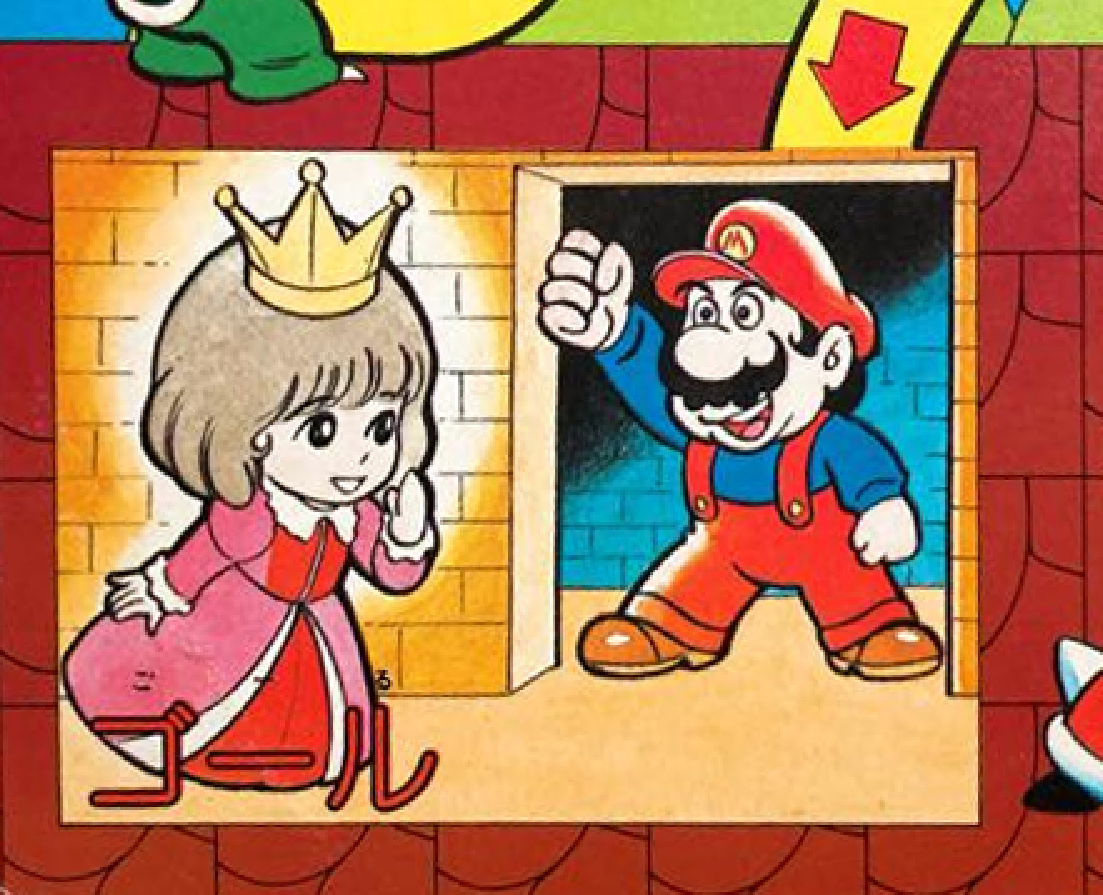
This color combined with Miyamoto’s original illustration of Peach as she appeared on the Japanese box art for Super Mario Bros. made me see her instead as a reference to a real-life royal who would have been contemporary of a reference around the time Super Mario Bros. was released in 1985: Princess Diana.
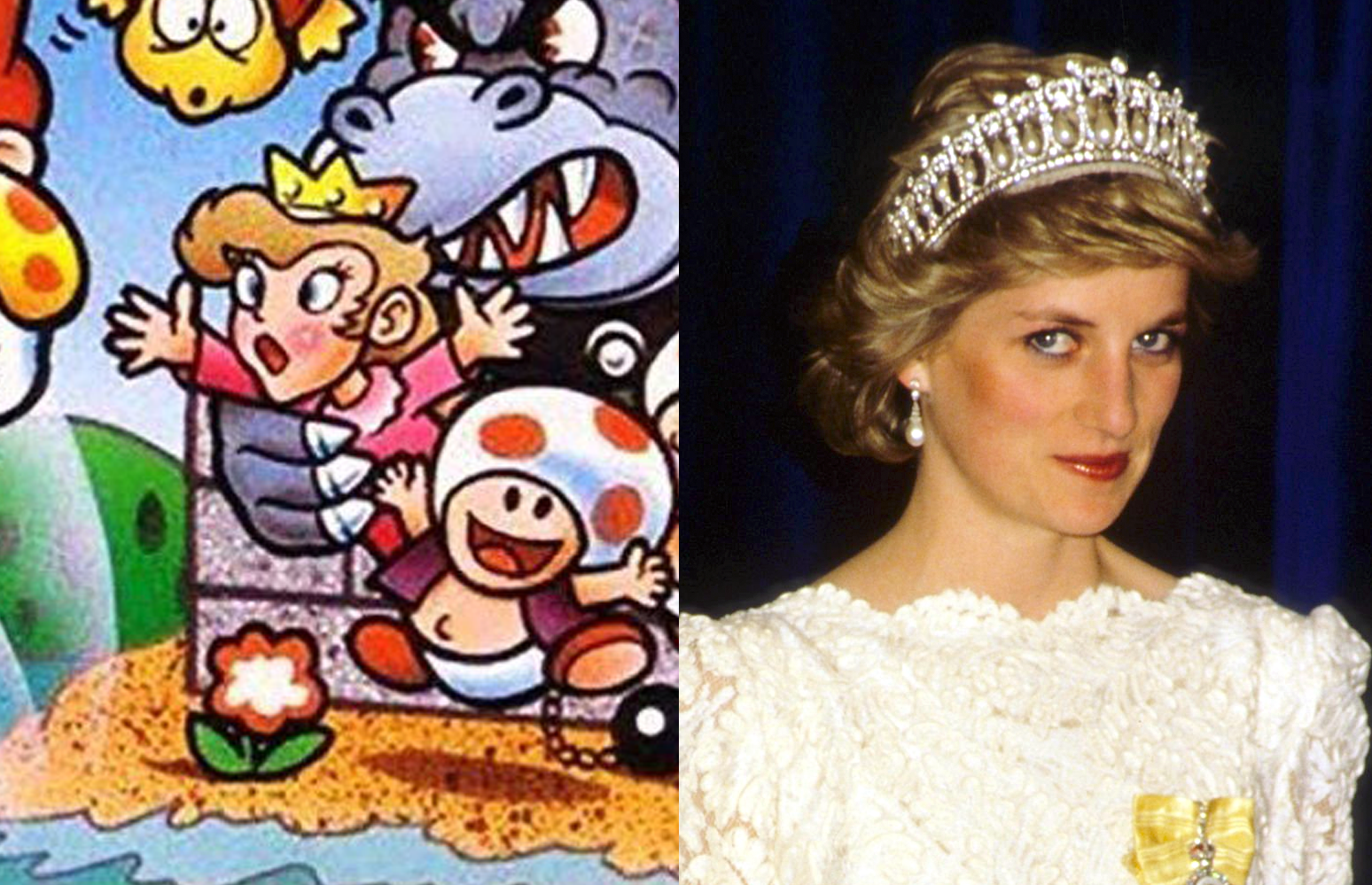
I admit, this is my own research and I can’t find a single interview where Miyamoto or anyone else owns up to designing the monarch of the Mushroom Kingdom after Princess Di, but I think it seems reasonable that the unique hair shape she sports in Miyamoto’s box art as a cartoony, two-dimensional way to represent the feathered look Diana was sporting in the early ’80s. When longtime Super Mario series artist Yoichi Kotabe redesigned Peach for The Lost Levels, he took that box art illustration and translated it to something that’s very close to how she looks today.
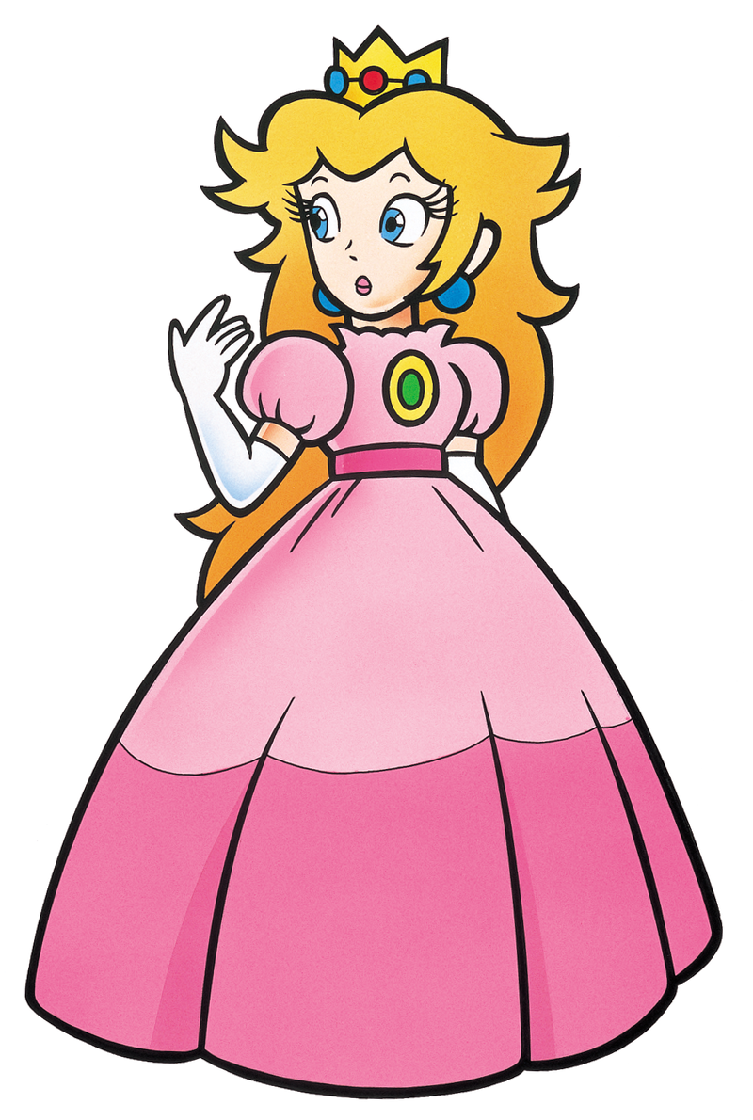
According to a 2012 Iwata Asks promoting Flipnote Studio, Miyamoto’s only directives to Kotabe were to make Peach’s eyes “a little cat-like” and also to make her look “stubborn but charming.” The result pushes her further away from Princess Di, but I genuinely think you can see it in Miyamoto’s original drawing of her.
29: But there is also a preponderance of Princess Peach prototypes out there.
I have a longer post that discusses the potential Princess Di inspiration but also works as a collection of all the weird looks Peach sported before she came to look the way we all know today. And it includes some weird ones, like this sketch glimpsed in a 1992 episode of the French economic series Capital, showing an inexplicable Little Miss Muffet-looking character who I can only assume is a look considered but rejected for Princess Peach.

After the post went live, it also became a collection of what sure looks like antecedents for Peach’s finalized look, even if some must be mere coincidences. For example, Kate Willaert brought to my attention a drawing that appeared in the flyer for the Universal arcade game Scratch — from 1977.
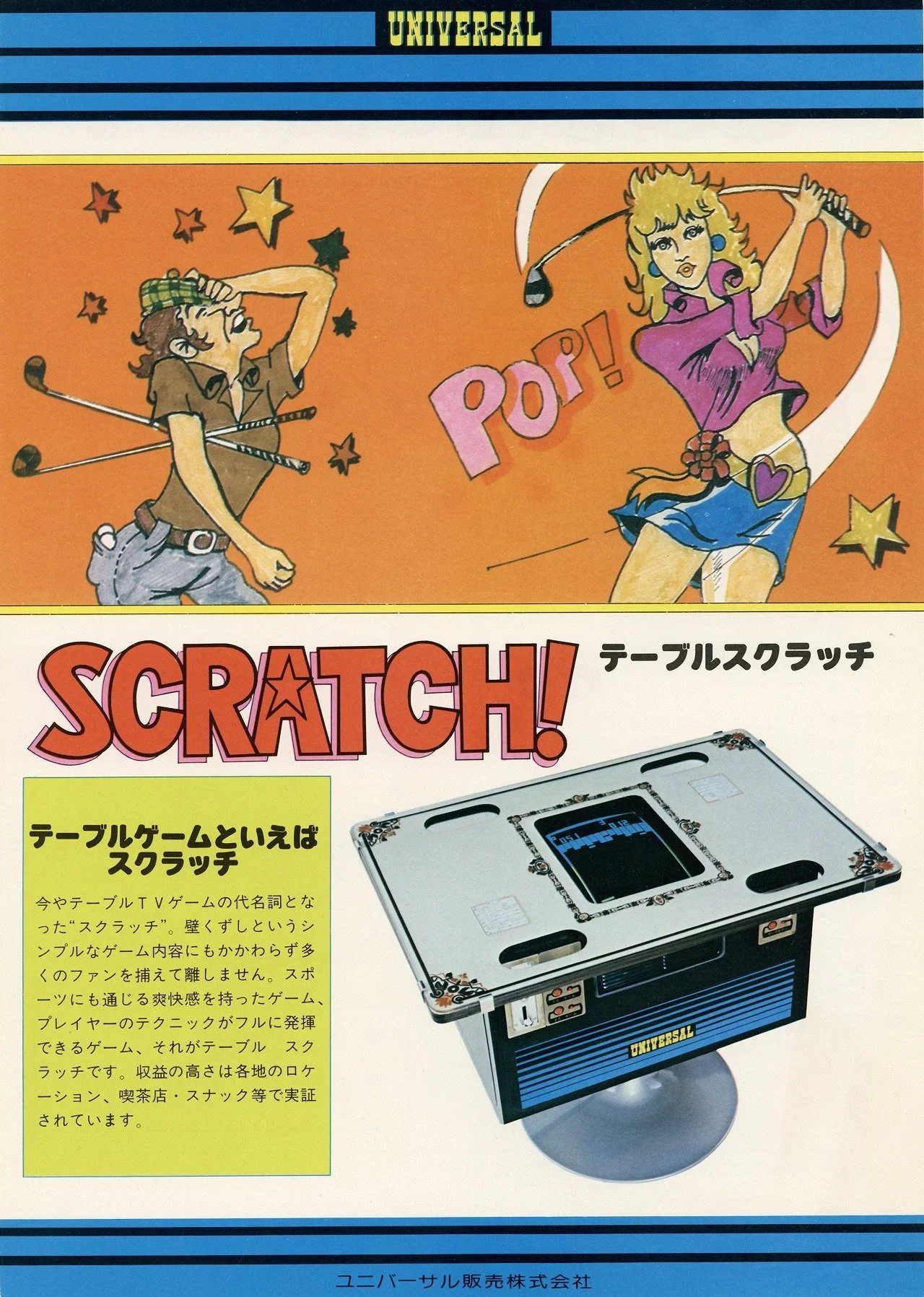
There’s also an extremely Princess Peach-looking costume that Heather Thomas wears in the 1982 sci-fi comedy Zapped!

And then most striking of all, there’s a 1983 episode of the Akira Toriyama series Dr. Slump that features the character Midori Yamabuki dressed in period costume and looking almost exactly like our Peach — sapphire brooch and all.
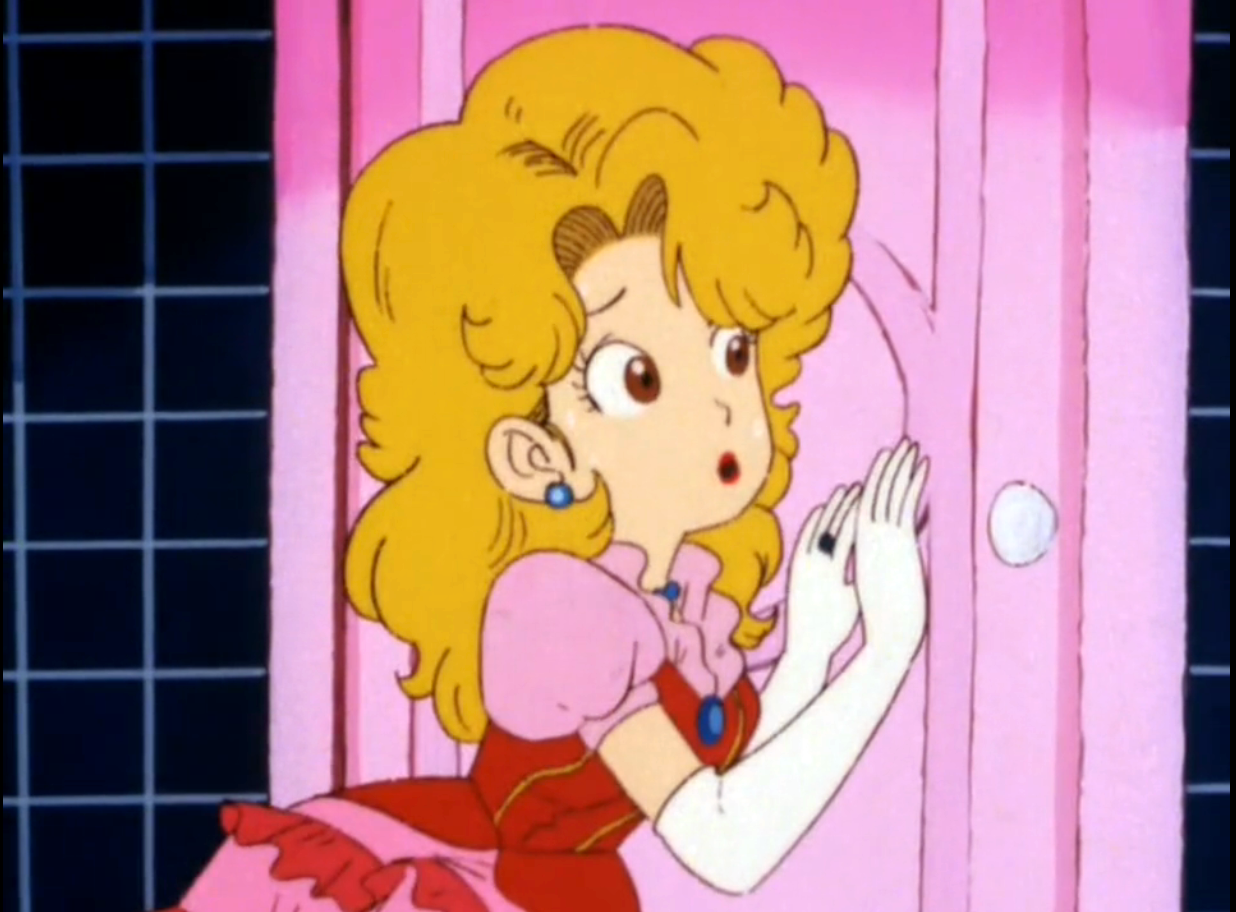
This is the one I most suspect of actually playing a role in Peach’s finalized look, especially considering the other ways that Dr. Slump influenced various design elements in the Super Mario series, which I discuss in item no. 69.
30: There’s a princess pattern.
Peach is the princess of the Mushroom Kingdom. The next princess to show up in the series is Daisy. And then there’s Rosalina, who is not officially a princess but who is very much designed in the image of Peach. They follow the basic power-up pattern established in Super Mario Bros: mushroom, flower, star.
Perhaps it’s a coincidence, but given her reality-warping, existence-resetting powers, Rosalina would seem to be the most powerful of the three. And yes, I have seen The Super Mario Galaxy Movie which does explicitly refer to Rosalina as a princess. In fact, I have a whole post looking at the film’s big lore reveal and what basis it has in the video games. Spoilers, of course.

Navigation:
Part One (1-15): Mario and Luigi origins / Donkey Kong and Mario Bros.
Part Two (16-30): Bowser, Peach and Toad / Super Mario Bros.
Part Three (31-45): The enemies of Super Mario Bros.
Part Four (46-60): Super Mario Bros. miscellany / Super Mario Bros. 2
Part Five: (61-75): Super Mario Bros. 3 and Super Mario World
Part Six (76-90): Yoshi and Donkey Kong (and friends)
Part Seven (91-101): Various beloved supporting characters and also Stanley the Bugman
Part Eight (102–116): A sort of junk drawer including Peach’s dad, Bowser’s wife and the infamous field horsehair plants