

Super Mario RPG and the Mystery of the Fifth Card Suit
I told myself to take a few weeks off from all things Super Mario, and now it’s been more than a month since Mario 101 went up. This post is allowed, I’m telling myself. But while I’m starting this one out with Super Mario RPG, this is going to be a bigger story than any one game or franchise. In fact, it’s about playing cards.
As I explain in this Mario 101 item, the spade icons on the Super Mario Bros. 3 map screen are a specific callback to Nintendo’s logo long before the company made video games. When it made playing cards, Nintendo’s logo was a stylized spade icon with an “N” in the center. This is easy to miss in Super Mario Bros. 3, because many of the spade icons lead to various card games in which you can win items or extra lives. You wouldn’t necessarily expect that there’s any more to them than that, but the spade does show up again in Super Mario RPG, which assigns the various playing card suits to the playable characters in that game.

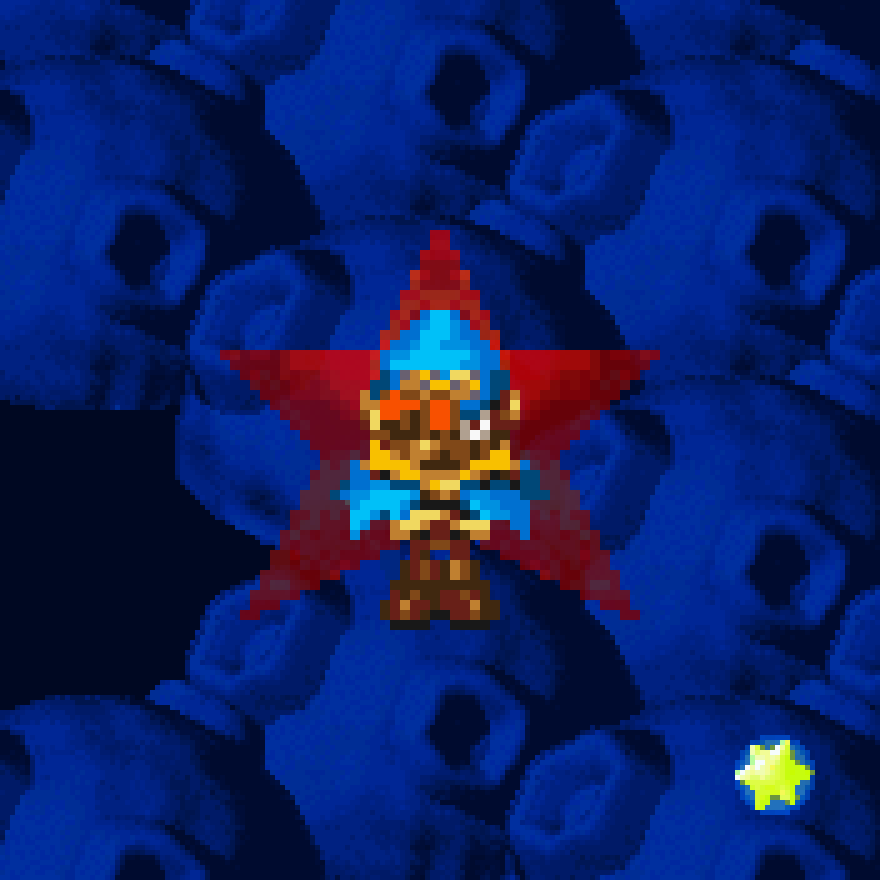
When any of them do a “magic” move, you see that icon flash onscreen for just a second. Because Mario is literally Mr. Nintendo, he gets the spade icon. Peach gets the heart, because she’s a girl. Bowser gets the diamond, I guess because he’s a king and has riches? And Mallow gets the club, I assume just because one of the items he uses in Super Mario RPG is a staff? I guess there doesn’t actually have to be much logic behind who gets what, as there are only so many suits and they have to be assigned to someone. But there are five characters in the game, so Geno gets a star, which is not a traditional card suit. Because the game tells us that his character is literally from the Star Road, however, this choice makes visual sense.
That’s as far as I’d taken it, at least, until I got a comment on that item that I couldn’t answer.

I actually played the NES Adventure Island games back in the day. The first one was punishingly hard, but the second one a lot less so — and because it came out when I was only nine, I was still big on dinosaurs and therefore really got into it. The game debuted months after Super Mario World arrived on the Super NES, so I assume Hudson was very much copying Nintendo in putting their plucky side-scrolling hero on the back of a dinosaur. (In this item, I hypothesize what the difference is, technologically-speaking, between the Adventure Island dinos and the kind of mount Nintendo tried and failed to give Mario during his NES days.) Anyway, Adventure Island items hide in eggs that have to be cracked open, and instead of getting a fully-formed dinosaur buddy emerging, Yoshi-style, you get a square icon bearing one of the four playing card suits.
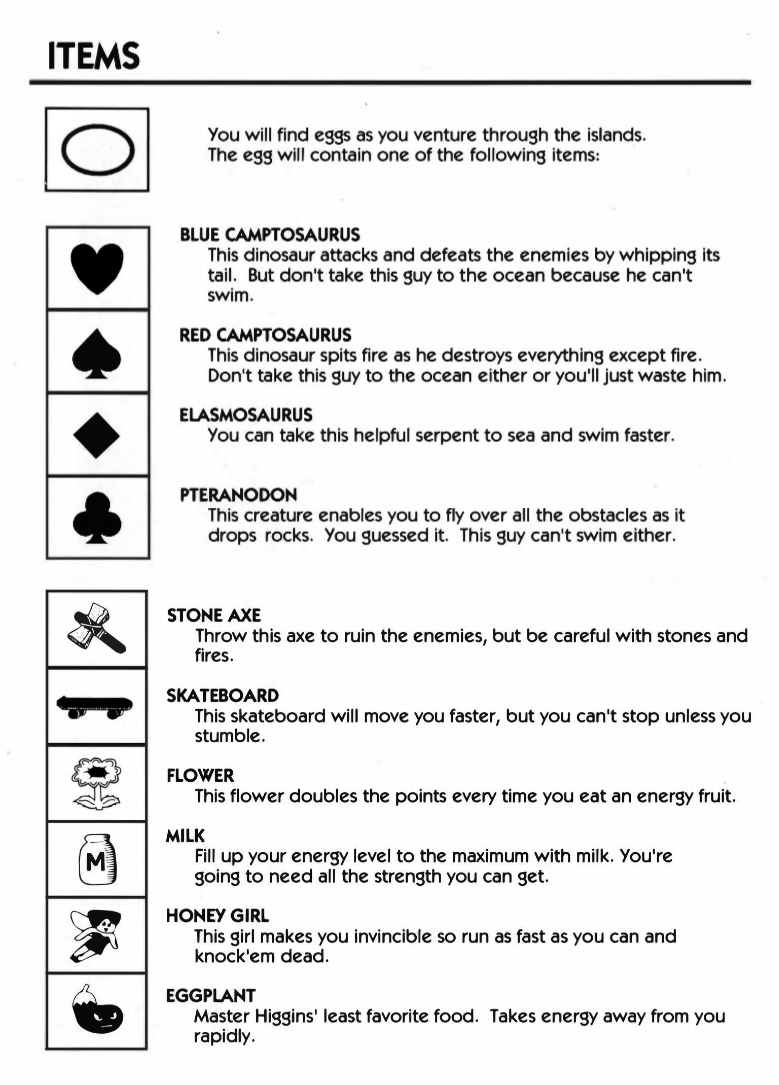
Yes, Adventure Island is the only context I have for the Camptosaurus. I have no idea why a Camptosaurus was selected to be in the game. I guess they’re just Camptosaurus crazy over at Hudson?
Adventure Island III, released for the NES in 1992, introduces a fifth dinosaur buddy: Poley (sometimes Pokey) the Tripetaurus, who can do a rolling spin attack, kinda-sorta like Sonic the Hedgehog.
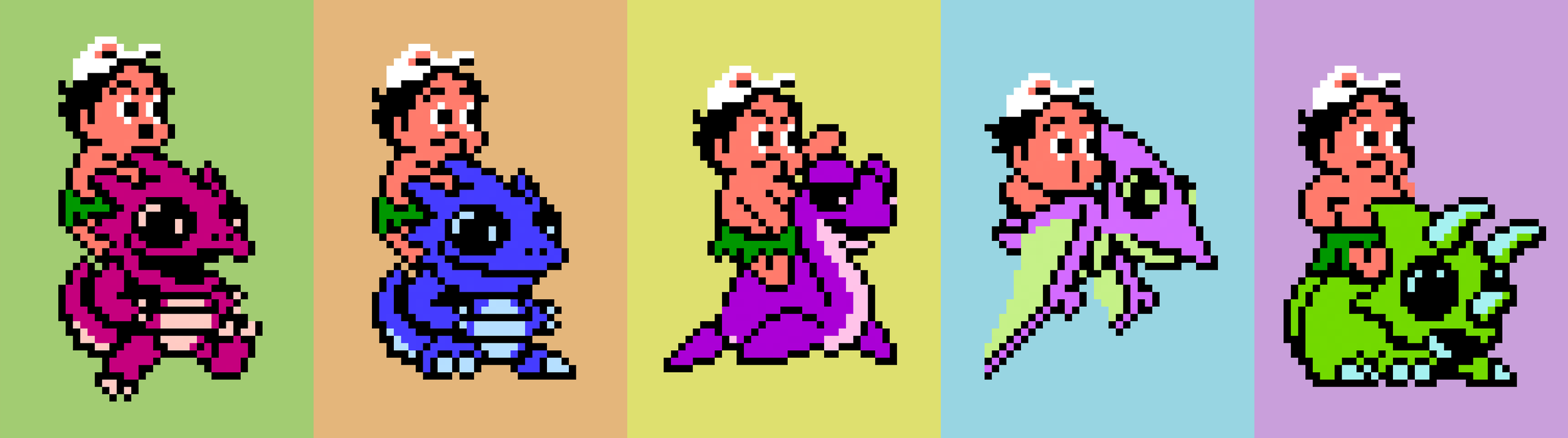
Right: The Tripetaurus in question. No, there is no such dinosaur as the Tripetaurus. It almost seems like someone badly typoed Triceratops? More on that later.
And when you crack open an egg that gives you Poley as a power-up, his icon is a star.
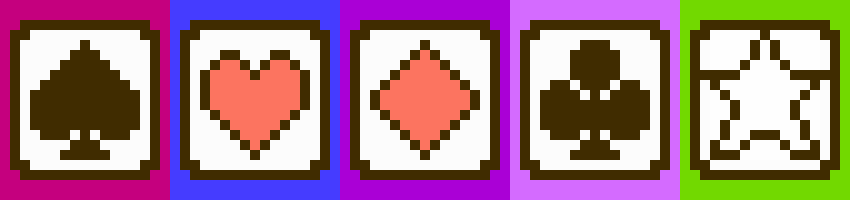
So why, then, would two unrelated video game franchises use a star to represent a fifth card suit? Is there some special version of a deck that has five suits and the fifth is stars? Or is it just a coincidence, given that there are only so many symbols that can be drawn in an sixteen-by-sixteen pixel format that read clearly to both Japanese and non-Japanese players, and the star happens to be one of them?
My first assumption was that there must be some card game that utilizes a five-suit deck — maybe one that had reason to come to prominence in Japan in the early 1990s. I had never heard of one, but that fact doesn’t mean much because I’m not a card guy. The only card game I can ever remember anyone in my family playing was Solitaire, if that says anything about us. Looking into it, I was surprised how little I knew about the standard, 52-card deck, and indeed a big chunk of this post will be the various things I learned about playing cards.
Most of the English-speaking world apparently uses the deck that was popularized by the French and that dates back to 1480. The four French suits correspond directly to the ones known to English-speakers: trèfles (literally “clovers”) correspond to our clubs; carreaux (literally “squares” or “tiles”) correspond to our diamonds; piques (literally “pikes”) correspond to our spades; and finally cœurs correspond to hearts because that’s just what it means. However, this deck was adapted from a German one that’s still widely used today and that dates back to the 1400s. The oddly Animal Crossing-esque German suits are acorns, bells, leaves and hearts, corresponding to our clubs, diamonds, spades and hearts, in that order. And this deck was based on one used in Italy and Spain as far back as the 1370s. The suits of the so-called Latin deck — clubs, coins, swords and cups, again corresponding to our suits, in the same order — are also those appearing in the Tarot deck, with clubs becoming wands and coins becoming pentacles. (The fact that the English deck calls its clover-looking suit clubs suggests some cross-contamination happening along the way, with the name of reverting to its original form for no reason that I could find in my research.) Italy and Spain seem to have adapted their decks from one used in Egypt during the period in which it was ruled by the Mamluk Sultanate, from about 1250 to 1517. Its four suits are polo sticks, coins, swords and cups. It’s possible that this was adapted from a Chinese card system that uses four money-based suits: coins, strings (of coins), myriads (of strings) and tens (of myriads). According to a 2002 article appearing in The Playing-Card, a quarterly publication that I can’t seem to access online, it’s possible that the Chinese character for ten was interpreted by someone as a sword and the character for myriad, when inverted, might have resembled a cup, although I’m not clear where between China and Egypt that’s supposed to have happened.
Which is a long way of saying that the history of cards amounts to one long metacultural game of telephone, but maybe the most important takeaway is that even when you’re only dealing with four suits, those suits vary a lot more than you might expect. It’s not just clubs, diamonds spades and hearts, even if that’s what you’re the most used to seeing on the card table.
So what about when there are five suits? Does that even happen?
The Wikipedia page on playing card suits lists various permutations of the standard deck that have used a fifth: crowns in one, shields in one, roses in a third. The only version that seems to have been known to Japanese card-players would be a version of what’s known as karuta (かるた). The term comes from the Portuguese carta, “playing card,” because Japan inherited these western-style playing cards from Portuguese sailors starting in the 1500s. (I was not expecting a tie-in to my piece on Amakusa from Samurai Shodown, but here we are.) In fact, this style of playing cards was sometimes referred to by Japanese as nanban karuta (南蛮かるた), literally “the playing cards of southern barbarians.” The suits were apparently the same as the Latin ones — clubs (パオ), coins (オウル), swords (イス) and cups (コツ) — but when Japan kicked out foreigners and foreign culture following Amakusa’s ill-fated rebellion, the art style of these cards was changed to obscure the connection to the west. The one exception would seem to be unsun karuta, which preserved those four original suits and added a fifth: guru (グル), a circular element featuring the mitsudomoe (三ツ巴), a traditional Japanese design that is sometimes likened to a comma by English-speakers.

Each white, comma-shaped form is a tomoe (巴), and the grouping of three of them together in this style is known as a mitsudomoe. It’s likened to the western triskelion.
But no, nothing like a traditional five-point star.
There is, at the very least, a deck that featured a yellow star suit in addition to the traditional red and black suits. Produced by Five Star Games around 1991, it seems to be rather rare today. I have no idea why this deck was created or why it apparently ceased to exist. And I have no idea whether it ever made it to Japan or if it had much of a presence in card games there.
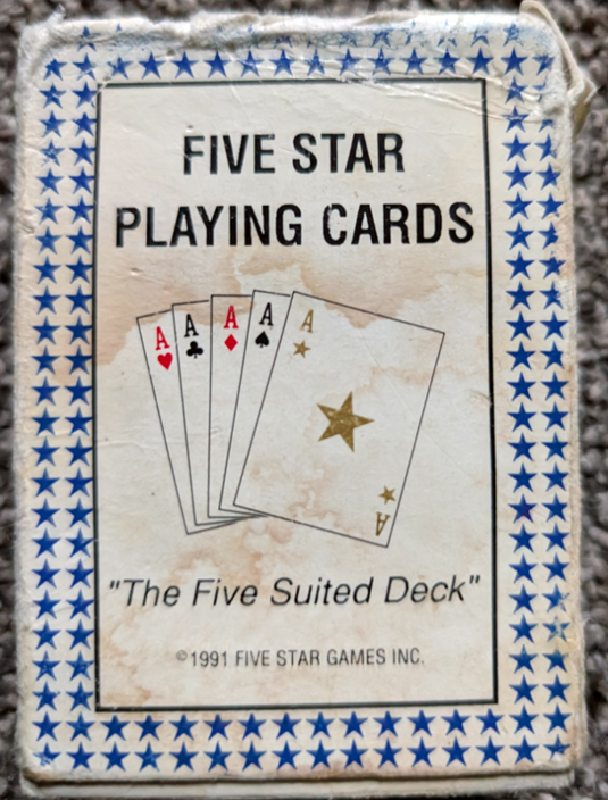
In fact, all the examples I could find for any card deck using stars as a fifth suit were relatively recent. There’s Five Crowns, a game released in 1996, that uses a special deck that features yellow stars alongside red hearts, black spades, green clubs and blue diamonds. And then there’s also the Stardeck, which adds a red and black star suit but which was introduced in 2023. I was surprised that these star suits would be as new as they are, given the universality of the five-pointed star as a symbol over at least the last century. It’s almost as if playing cards has a weird aversion to stars, often picking less universal, less easy-read shapes to represent additional suits instead.
So what the hell? Why would this be?
If you’re more card-savvy than I am, I suppose that the answer might seem quite obvious. Again, I’m not a card guy, and one of the reasons I’m not good at poker is that I can never remember which combination of cards adds up to something good. That’s probably why it had to be pointed out to me via Bluesky that the combination of suits in Super Mario RPG might be intended to represent a poker straight — a rather winning hand, in case you didn’t know. In poker, a straight features five cards of sequential rank, regardless of suit. For example, if you had a ten, a nine, an eight, a seven and a six, it would count regardless of the suit of these cards; if they were all the same suit, it would be a straight flush and therefore a better hand.
If you were playing a version of poker in which an ace could count as high (above a king), then Super Mario RPG’s five-member party could make sense as a straight. Mario, the leader, would be the ace and the high card, then Bowser would be the king, Peach would be the queen, Mallow would be the jack and then finally Geno could be a joker because in some versions of poker, the joker acts as a wild card and can function as any card needed to complete a hand. If you’ve got four aces and a joker, for example, the joker can act as a fifth ace and consequently give you a triumphant five-of-a-kind; in the case of Super Mario RPG, the joker card is standing in for a ten. And this makes sense considering Geno’s star symbol, because joker cards are sometimes decorated with stars in the spots where regular cards would feature their suits. Actually, the fact that jokers already had an association with stars might even explain why they’ve not been promoted as a fifth suit in various deck expansions over the years. They were already spoken for in the visual language of cards.
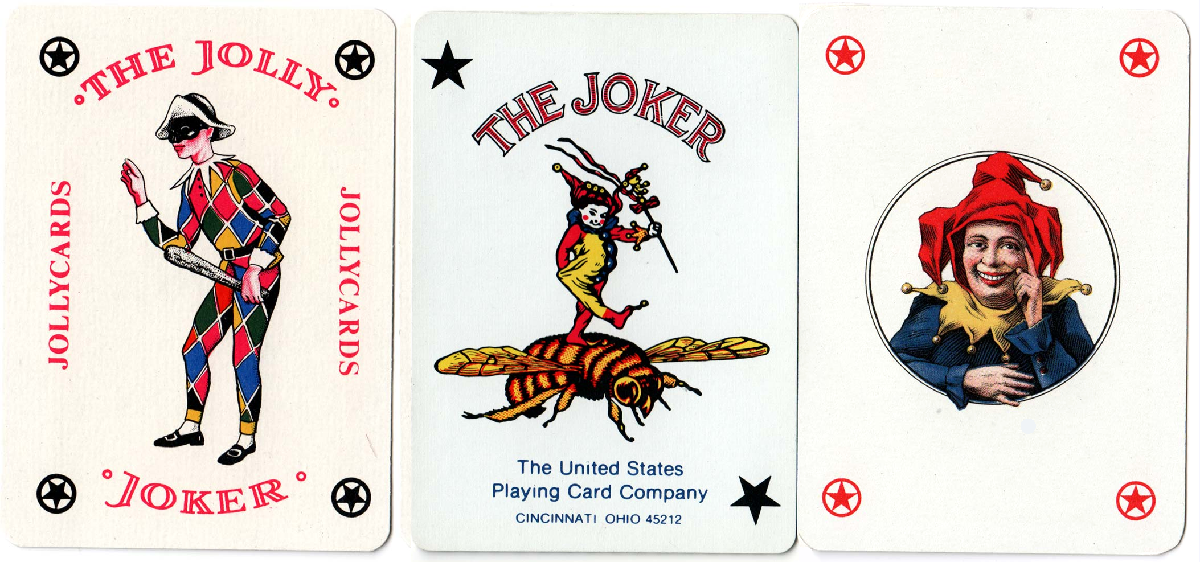
Not all joker cards feature stars. In fact, most don’t. However, if there was a recurrent design theme among various joker cards, it would be stars. (All three examples via The World of Playing Cards.)
Also Geno is very much the wild card of the group, given how he’s a space alien who wields the power of the stars and is operating on a different level than the rest of the group is.
I wouldn’t say there’s an obvious read of the Adventure Island dinos as a straight or any kind of poker reference at all, because none of them map onto specific cards the way the Super Mario RPG characters do. In this case, the fifth dinosaur might have been assigned a star because it’s a common enough card symbol because of its association with the joker card. It’s not a fifth suit, exactly, but instead more of an instance of “well, we have this left over,” and it makes more sense than, say, moons or horseshoes or any other symbol lacking a connection to playing cards.
Importantly, I feel like Adventure Island’s use of the star as a fifth card-related symbol makes it seem less likely that Super Mario RPG assigned Geno the star solely because he’s associated with the Star Road. That’s part of it — because how could it not be? — but there’s another layer of meaning here that I think exists so the game could make this subtle reference to Nintendo’s past history with playing cards. Besides, Poley the Tripetaurus has no association with stars in the sky, so there’s no good reason why Hudson would assign him the star unless there’s a specific association with the playing card motif.
This is the kind of research rabbit hole I love. Did all that investigation into the history of suits end up answering the question at hand? No, but it did help me understand how this style of card game exists as a cultural meme that spread throughout the world back in the day, mutating its visual language each time in a way that made sense for the people who were picking the cards up. I couldn’t stop myself from sharing it, and I feel like that whole discussion fell in line with the kind of writing I do here about the cultural evolution of video game elements. This was just the analog version of that.
Miscellaneous Notes
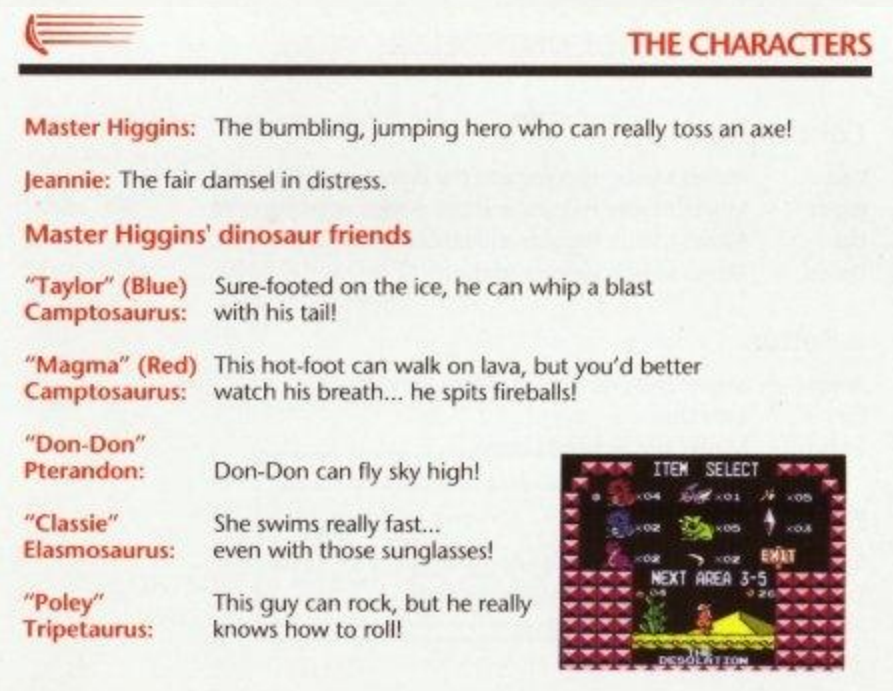
The localized English version of the Adventure Island games give names to the other dinos. The blue Camptosaurus is Taylor, because it attacks with its tail. Get it? The red Camptosaurus is Magma, because it can spit fire and walk on lava. The Elasmosaurus is Classie (and apparently the only female member of the team), while the Pteranodon is Don-Don.
I wanted to see if the original Japanese version of these games did the same, and it sure doesn’t! First of all, the two Camptosaurus are identified as チラノ or Chirano, which seems close enough to ティラン or Tiranō, a shortening of the name of the Tyranosaurus (ティラノサウルス or Tiranosaurusu). So they’re both little T. rexes, I guess? The Elasmosaurus is only identified as ノッシー or Nosshī, which doesn’t seem to name any specific dinosaur but which does fall in line with the Japanese convention where cryptid-type dinosaurs and sea serpents in general are named after Nessie the Loch Ness Monster. (Yoshi is too!) The Pteranodon is just termed プテラ or Putera, which I’m assuming is a shortening of pterosaur or pterodactyl. And finally Poley is termed トリケ or Torike, which I assume is meant to be Trike, which means it actually is a Triceratops after all.
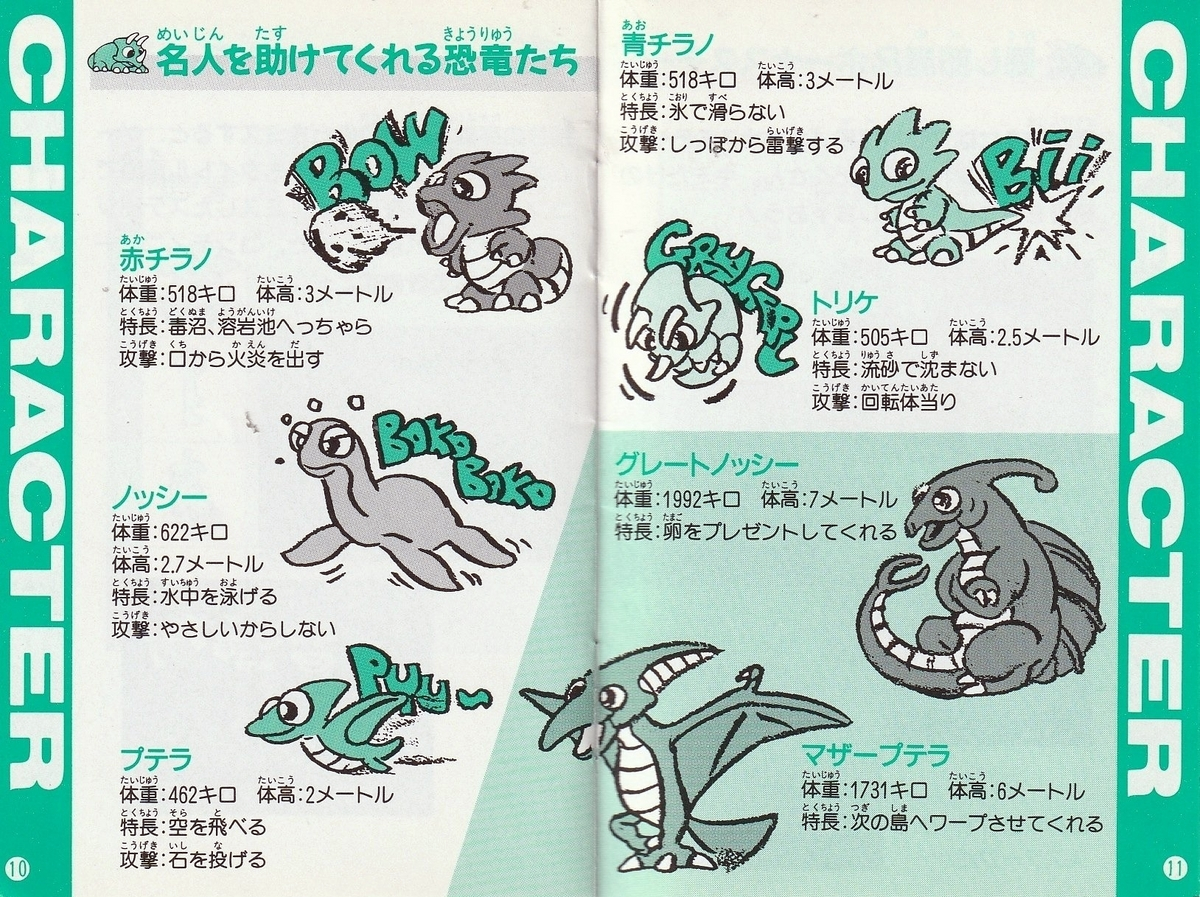
Localization is truly a wild process!
One thing that I was puzzled by in reading about the history of one particular style of card game moving from China, through Egypt and eventually to Europe was that Japan only apparently inherited the game from the Portuguese, centuries after China had originated it. Was this something that never made it from the coast of China to Japan? Or did Japan inherit some other form of card game from China?
The playing card motif was completely dropped from the 2023 remake. I have no idea why. Perhaps whoever made that decision didn’t realize that it tied into Nintendo’s history and therefore couldn’t make sense of why there was an allusion to playing cards at all. In posting about this mystery on Bluesky, however, it was pointed out to me that at some point in the development of Super Mario RPG, the playing card theme was meant to be more pronounced. It’s all but vanished in the final version of the game — and in the Switch remake, fully vanished — but in the concept art for Bowser’s castle, you can see distinctly spade-shaped ornaments in front.
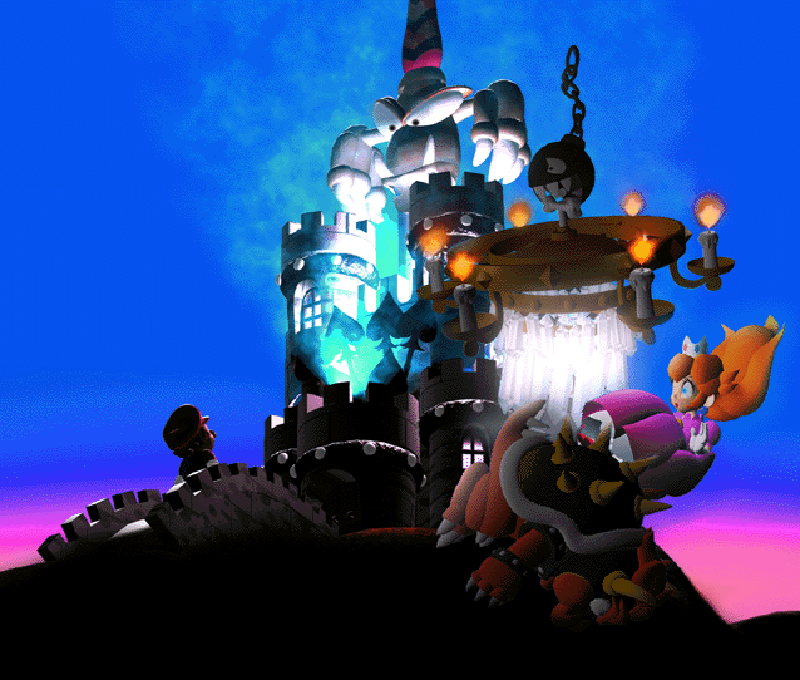
Perhaps they’re just meant to be spear tips, which is what the spade suit was meant to represent, don’t forget, but MrTalida also pointed out that Kazuyuki Kurashima, the character designer for the game, did once tweet that this element was meant to be more prominent in the game.
EDIT: Right after this went live, it was pointed out via Bluesky that early concept art for one of the more medieval-themed versions of Super Mario RPG show “Queen Peach” and “King Bowser,” the latter looking a lot like the kind of royal you see on a face card. Both images were posted by Jiro Mifune, credited with “visual effects and plot assistance,” to Twitter but have been deleted. They’re preserved on the Super Mario Wiki.
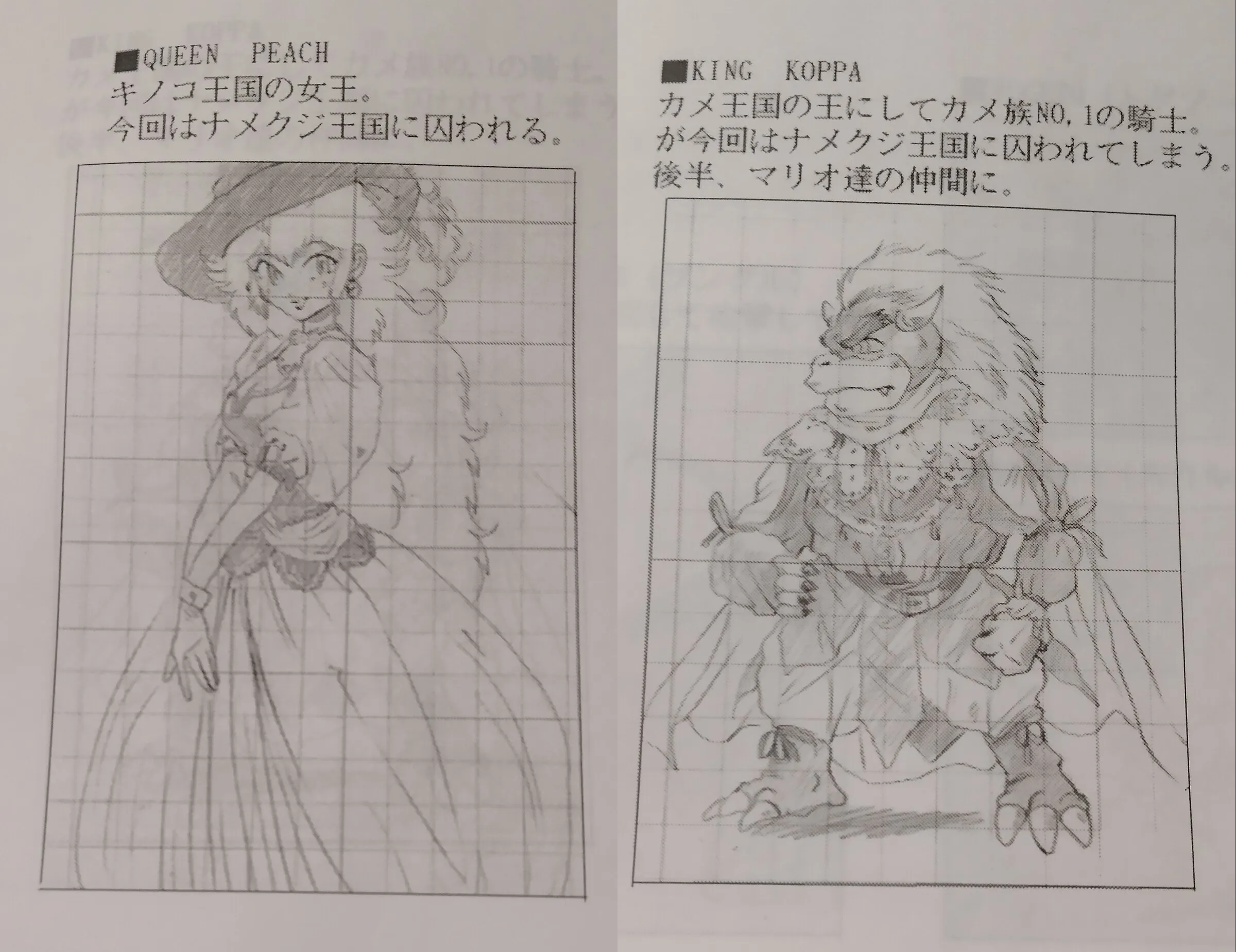
The text describes a discarded story for Super Mario RPG involving the Mushroom Kingdom’s war against the Slug Kingdom.
The website Rawest Forest has a collection of concept art from this version of Super Mario RPG. Of special not for this post is a glimpse at a Jiro Mifune-designed character that did not make it to any final version of the game: Jackson Joker (ジャクソン・ジョーカー or Jakuson Jōkā), who would have been an antagonist in one version of the game. Please note the inclusion of stars in his design.
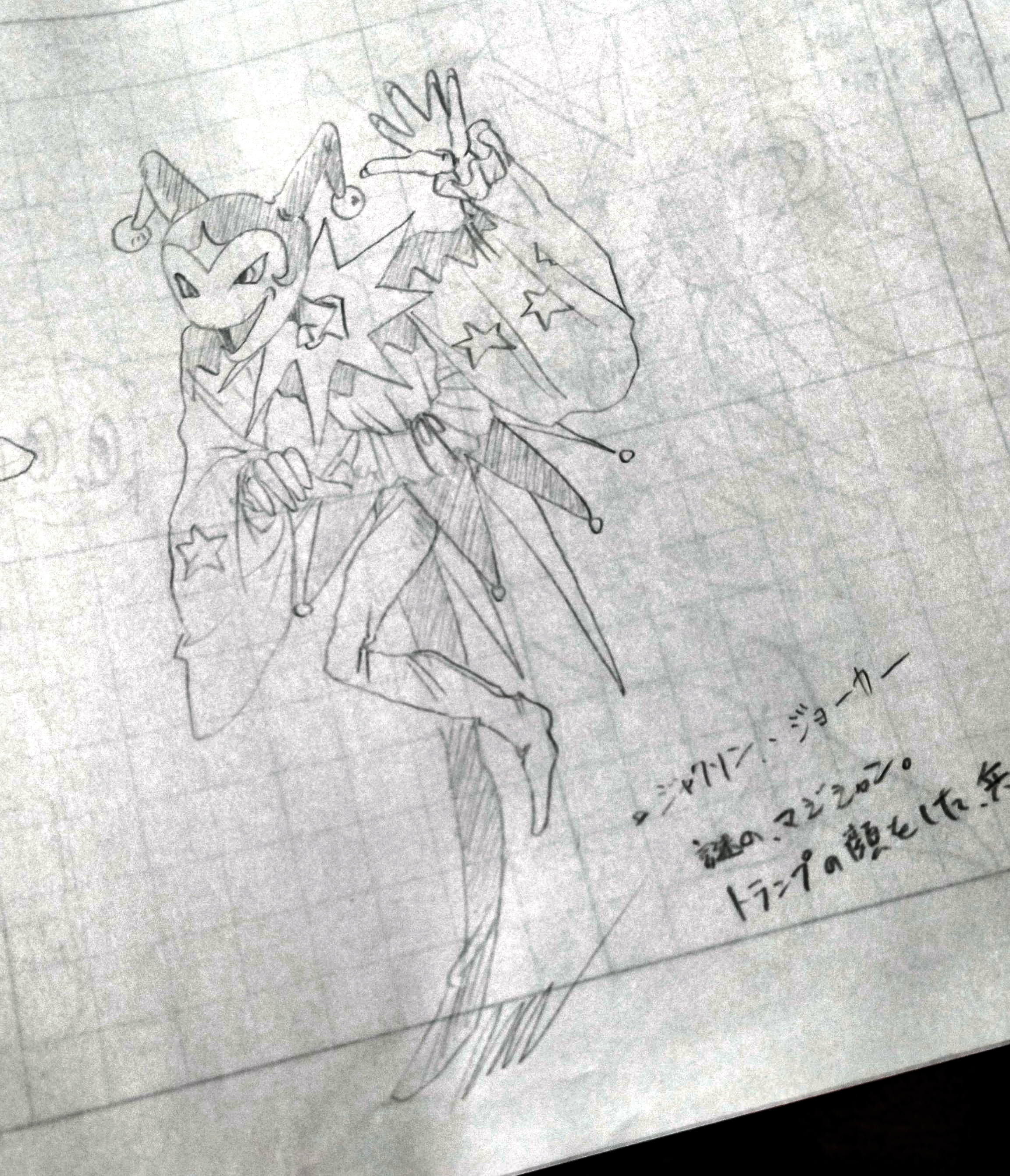


According to Rawest Forest, the only two Mifune-designed characters to make it into the final version of the game are Jonathan Jones and my beloved Valentina.