

Sonic’s First Girlfriend Was Madonna
Regardless of whether you think Sonic the Hedgehog is cool, it’s clear that he was designed to make you think that.
Pop in the first game and the effort is apparent almost immediately. He’s got that smirk. He’s got that authoritative finger waggle. He even taps his foot impatiently if you let the controller sit idle too long. It’s almost as if Sonic thinks you’re lucky just to spend time with him. He could, after all, leave you in the dust if he wanted — blast processing and all.

Subsequent games continued the coolness campaign. In addition to introducing his Super Sonic form, for example, the sequel pairs him with Tails to make it clear that Sonic isn’t meant to be cute; he’s meant to be cool. And while Sonic the Hedgehog 3 introduces Knuckles — starting a tradition of pitting Sonic against various rivals who are meant to be as cool, if not even cooler — it also makes the decision to put Sonic on a snowboard. And yeah, in 1994, that was the better choice if you wanted a character to appear cool: put them on a skateboard, a surfboard or a snowboard. Boards are cool, kids!
< Support this site: on Patreon! • on Kofi! >
I’d almost want to compare Sonic to the Simpsons character Poochie. If you don’t know, the 1997 episode “The Itchy & Scratchy & Poochie Show” centers on Homer voicing a new character introduced to Bart and Lisa’s favorite cartoon series. The show doesn’t actually need a new character, but the execs who decide that it does also make this addition an exaggeration of the kind of “totally radical” mascots that we elder millennials grew up with. Sonic is also one of these, in a sense. He’s not as blatant as some — Teenage Mutant Ninja Turtle wannabes along the lines of Biker Mice from Mars, I’m looking at you — but he was nonetheless created with the intention of distracting gamers from Mario, a short, pudgy plumber whose appeal lies in being as unassuming as possible. If Sonic is a product of the rad, bad 1990s, then Mario is comparable to something older and more anodyne, possibly even as edgeless as Mickey Mouse himself. Mario and Mickey both are quick with a smile and eager to make friends wherever they go. That’s never really been Sonic’s vibe — by design.
Perhaps more than the games themselves, the North American commercials forefronted the character’s in-your-face attitude in a way that defined Sega’s corporate vibe for the rest of the 16-bit era.
But it wasn’t just a localization thing; it began in Japan. During a 2018 GDC panel, Sonic co-designers Naoto Ohshima and Hirokazu Yasuhara explained that the coolness factor was one of the main goals in designing a new mascot for Sega — and that Sonic’s trademark attitude was a major part of making him cool.
Yasuhara: And cool is a nice word, but how do you define cool? Everyone’s definition of cool could be pretty different. So cool can be something that is more on the surface, visual, visually sort of, I guess, expressive or expressing, or just cool character design. But that wasn’t the cool that we were looking for. … It was more about the attitude of coolness and bringing that somehow into the character design.
[At his point, Yasuhara directed the audience’s attention to a Power Point slide that, among other things, defined “substantive coolness” as not taking orders from others, following his own moral code and “will do anything for the sake of what matters to him.”]
Ohshima: And when fans are looking at Sonic’s facial expression, it would be a stare or like a cool attitude that’s a trademark. So that's something that I really wanted to show through its kind of stare, I guess.
Yasuhara: So I wanted the characteristic of Sonic to really come out or stand out from that sort of attitude that we were trying to create.
This foundational coolness has remained, even when the series has stumbled. (A lousy Sonic game has not really tarnished the character’s reputation as a cool guy; it’s a subpar entry for a video game character who deserves better, no matter how many times it happens.) Because this has undergirded Sonic the series and Sonic the character since the early days, I was very surprised to learn that the blue blur was actually toned down between the conception of his backstory and the release of his first game. What was removed is especially interesting to me because this one aspect in particular links Sonic to a sort of cultural meme that you can see in other pop culture couples throughout the ’80s and ’90s: In his earliest form, Sonic had a sexy human girlfriend named Madonna.
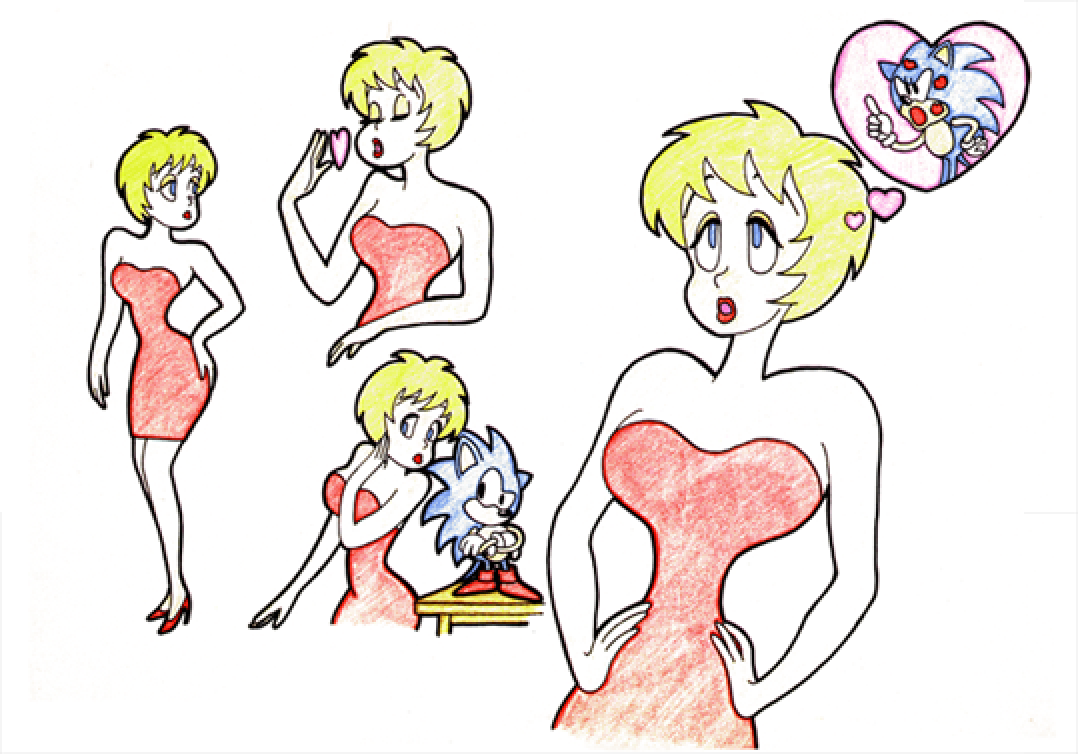
Via Sonic Retro, which has an incredible wealth of concept art for various versions of Sonic that never came to be.
He was also the lead singer of a band, because that’s another cool thing a character can do to convince you that he is, in fact, cool.
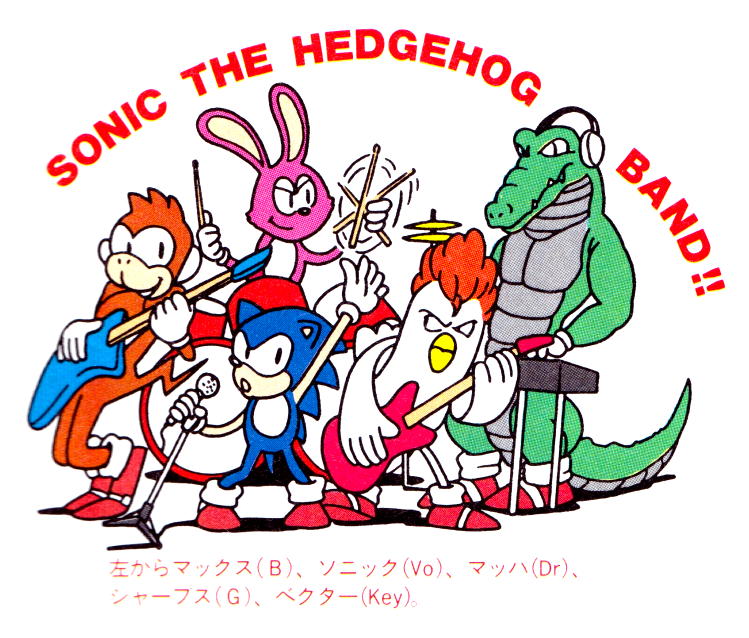
From left to right: Max the Monkey, Mach the Rabbit, Sharps the Parakeet and Vector the Crocodile. Yes, they are also totally rad and have the names to prove it.
Obviously, both these things were scotched early on, and while I have a bit to say about Sonic’s bandmates in the miscellaneous section at the end of this post, I’m going to be focusing more on Madonna. For what it’s worth, she did, at the very least, exist slightly longer than the bandmates did, appearing alongside Sonic in the tech demo featured at the 1990 Tokyo Toy Show.
Perhaps as a clue that anything featured in this would not necessarily be around for long, the video also features Alex Kidd. R.I.P., little guy! (Video from here.)
And for the brief time before she was blinked out of existence, Madonna made it clear that if Sonic’s job was to look cool, hers was to look sexy. As Oshima explains in a 2009 GameTap video about the creation of Sonic the Hedgehog, he thought the character was grown up enough to have a love interest. “Sonic is smaller than a human, but he had a human girlfriend who was very attractive and would chase Sonic, so it’s like a male fantasy,” he said. The reason that Madonna sticks out as important to me is that she puts Sonic in the company of a handful of other male characters paired with female love interests who seem like they should be out of their league. The most famous example is probably Roger Rabbit. He’s a goofy dork, but he’s married to a nightclub singer who’s so sexy that she turns the heads of every toon and human alike.
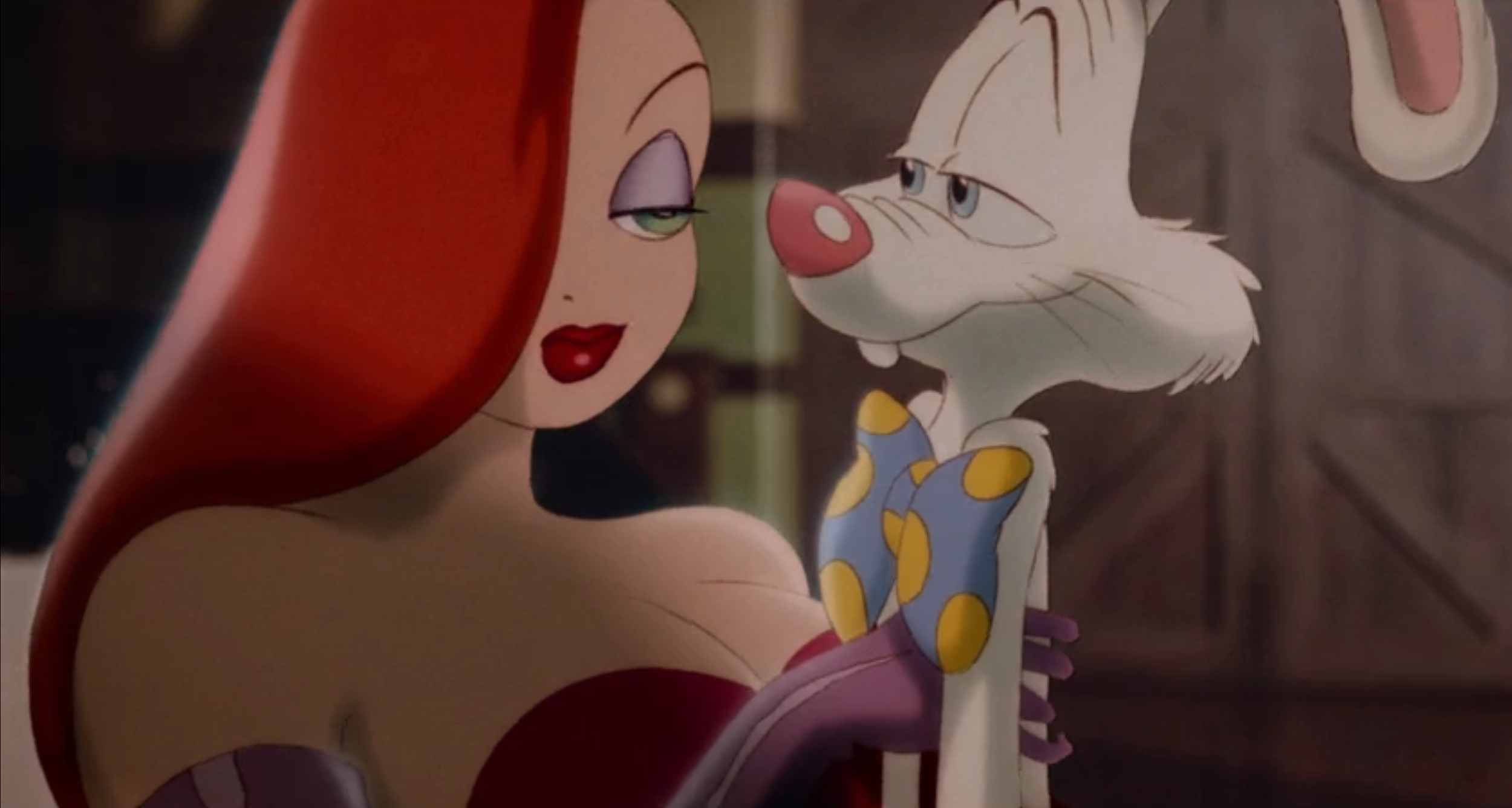
Note: Jessica Rabbit is a sexy woman in a red dress who sings.
There’s a joke in Who Framed Roger Rabbit about how when Bob Hoskins’ character first hears her name, Jessica Rabbit, he assumes that she’s going to be a Minnie Mouse-type — basically Roger with a bow stuck on her head. She’s very much not that, and the mismatch between husband and wife is nodded to a few times over the course of the film. The fact that Roger was able to marry someone who seems like she could do a lot better than him is a clue that despite all appearances, he’s got something going on. The movie’s plot eventually bears this out.
< Support this site: on Patreon! • on Kofi! >
Released in 1988, Who Framed Roger Rabbit is not the first instance of this. Two years previous, a far less successful film did something remarkably similar. Howard the Duck centers on another non-traditional leading man, but by the end of the movie, he’s won the heart of Beverly, the lead singer in a rock band.
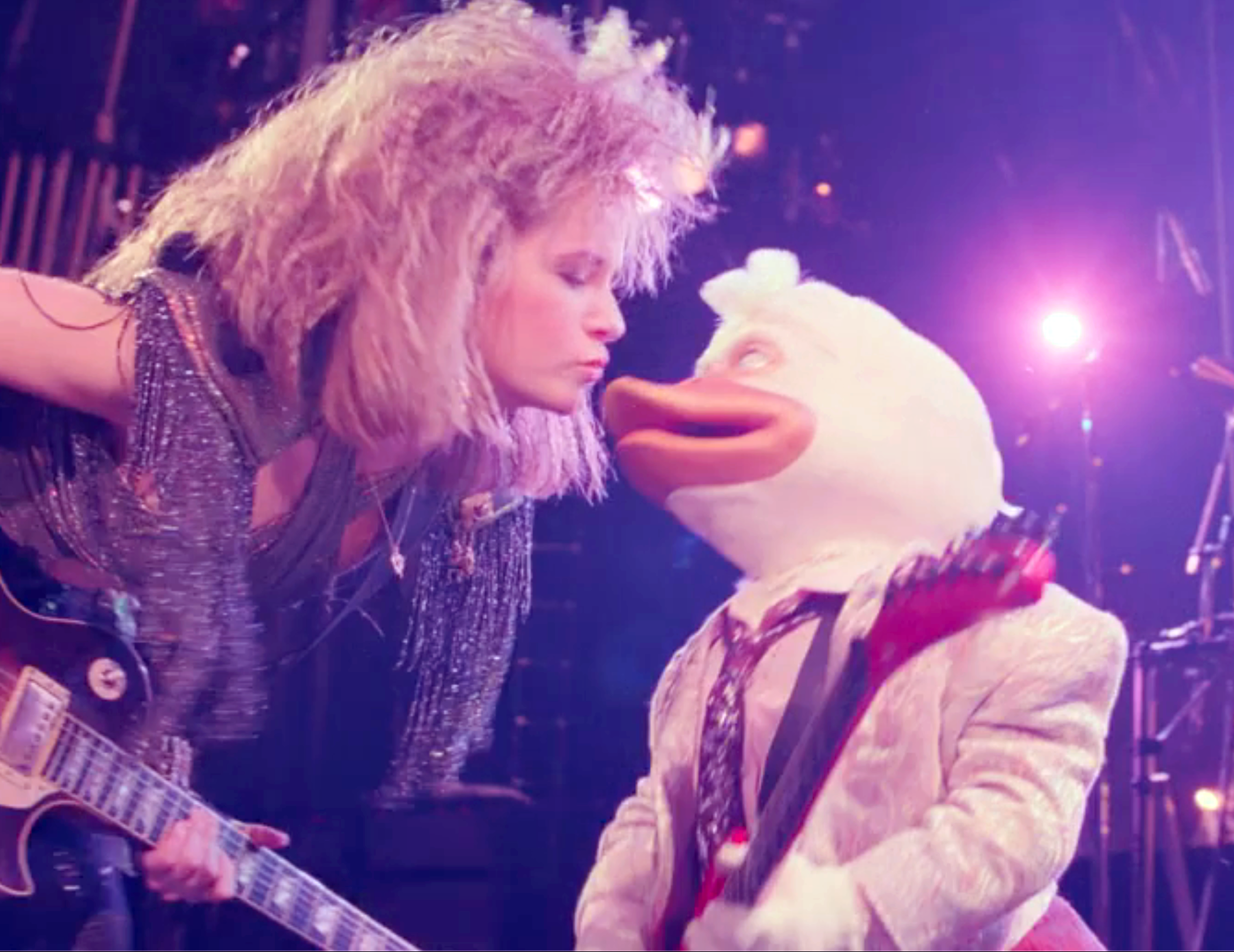
Note: Beverly Switzler is a sexy woman who sings, although not always in a red dress.
It should be noted that the actress who played Beverly, Lea Thompson, had previously starred in Back to the Future. She’s cute as hell in that — it’s Lea Thompson, and she can’t not look cute — but she’s definitely in sexy mode in this strange movie about an anthropomorphic duck. She seems like she could have her pick of men in this world, but it’s Howard who ultimately woos her. Like Roger, Howard has something special going on.
This pattern lines up fairly neatly with Mario and Pauline in the arcade game Donkey Kong, first released in 1981. Yes, the character we know in the west as Pauline actually debuted in Japan as Lady — and yes, Lady had an “old west maiden” look that probably results from her origins as the damsel in distress from Sheriff, the cowboy-themed Nintendo arcade game. But as I explain in my longer, in-depth piece about Pauline’s evolution, the idea of her being a singer in a red dress was introduced decades before she actually ended up singing in Super Mario Odyssey.

Note: Pauline is a sexy woman in a red dress whose associations with singing go back to the original Donkey Kong, believe it or not.
Keep in mind that during the early days of Nintendo of America’s promotion of Donkey Kong, Mario wasn’t exactly the character who would exist just a few years later. In fact, early flyers promoting the game referred to him as Little Mario, which once again underscores the idea that he’s an unexpected match for the female character that was, at least in the western art, depicted as a leggy bombshell.

If I had to guess where this trend begins, I’d point to the 1943 Tex Avery cartoon Red Hot Riding Hood. It depicts Little Red Riding Hood as having grown up to be a nightclub singer so sexy that she ultimately makes the Big Bad Wolf shoot himself in the head. No, I am not kidding.
Note: Red is a sexy woman in a red dress who sings.
Even if the title of this particular short doesn’t ring a bell, you’ve probably seen the wolf’s “wild take” reactions to Red’s sexiness on their own, as a clip or a gif. Red would become a recurring character in MGM theatrical shorts, with the wolf competing for her affections against Droopy, the short-statured basset hound character who speaks in a sort of Truman Capote voice. In the follow-up animated series Tom & Jerry Kids, Red was rechristened Miss Vavoom and is once again romantically paired with Droopy. Because this show was released after Who Framed Roger Rabbit, this version of the character is to a degree influenced by Jessica Rabbit, but at the same time, the original Red was a major inspiration for Jessica Rabbit in the first place, right down to the fact that her romantic interest is not what you’d expect from a leggy knockout who would seemingly have her pick of suitors.
The primordial version of Sonic = Roger Rabbit = Howard the Duck = Mario = Droopy, is what I’m saying, because Madonna = Jessica Rabbit = Beverly Switzler = Pauline = Red Hot Riding Hood. All of these examples, in one way or another, attempt to sell the coolness of a male character on his inexplicable ability to snag not just a beautiful woman but one who has some connection to singing. But if there’s a history of these types being given out-of-their-league love interests as an easy shorthand for being cool, then why would Sega — so concerned with making Sonic seem as cool as possible — omit Madonna from the final version of the game? Well, there are competing explanations for how she got bumped to the phantom zone.
In that same 2009 GameTap video about the history of Sonic the Hedgehog, Madeline Schroeder, the game’s product manager, takes some credit for shaving off elements from the character that wouldn’t have worked for American audiences. According to her, this includes the removal of fangs from Sonic’s initial design, the early retirement of Sonic’s band and the elimination of Madonna.
Schroeder’s interview begins at the 2:08 mark.
Schroeder doesn’t explain why these elements all had to go. (I mean, I can see why she said no to the fangs.) I’ll explain in the miscellaneous section about how 1990s cartoons veered away from sexualized female characters, but I’d imagine a major consideration might have been a desire to avoid a lawsuit from the pop singer Madonna, who’d have more than a little reason to suspect that this video game character might be based on her.
However, in a 1993 interview with a magazine called Beep! Mega Drive, other motivations are cited for Madonna being kicked to the curb. Yuji Naka, lead programmer for the Genesis Sonic games, said Sonic rescuing a captured woman made the game too reminiscent of Super Mario Bros. And given the fact that the Super Mario games had done the whole short hero + tall love interest thing twice — with Pauline and then again with Peach — Naka was probably correct.
Naka: There’s a woman in the original source material. We created a woman named Madonna, and the original plan was to have Sonic rescue her. However, that kind of silly direction didn’t really fit Sonic. We wanted to go with something more orthodox. Of course, there certainly are a lot of games like that in the world, where the hero has to rescue the princess. We wanted to do something different from Mario, though, and aim for a new direction.
Beep: Do you have any plans to introduce a heroine in later Sonic titles?
Naka: Not right now. If we do, I’d like to expand the world of Sonic a bit more.
I’m not sure who to believe, though if Mario 101 taught me anything, then both Shroeder and Naka’s parallel accounts may not necessarily contradict each other. Regardless, it’s more notable that Sonic was ever given a love interest that fits into this larger pop cultural pattern. Again, please tell me if there are notable examples that I’m just skipping over, but I think that Madonna might be one of the last examples of this trend, which was apparently an ’80s thing that bled over into the beginning of the ’90s before going away altogether. If you consider that Sonic was very much a ’90s character, I guess it seems appropriate, but it’s also worth considering that despite the relentless push on Sega’s part to make Sonic seem cool, having a knockout for a love interest was determined early on to be just too far.
As it turns out, I’d intended for some time for my first post about the Sonic series to be about Amy Rose, but my attention ended up being turned toward Madonna. It’s ironic, I realize now, that the closest to a significant other that Sonic would get would be much more along the lines of a Minnie Mouse figure. That’s rather old school and not totally radical 90s at all. Maybe that’s why Sonic more often than not doesn’t want anything to do with Amy, despite her being a much better match for him, species-wise and stature-wise.

Maybe on some level Sonic remembers having a love interest that made him seem, you know, cool?
Miscellaneous Notes
Much in the way that Madonna was at one point meant to figure into the game, so too were the members of Sonic’s band. Over at Sonic Retro, you can see storyboards for how the intro sequence to Sonic the Hedgehog was going to look when these guys were still in the mix.The Sega logo sequence includes cameos by Sharps, Mach, Max and Vector as well as a rotund character I can’t identify. Is that… Doctor Robotnik?
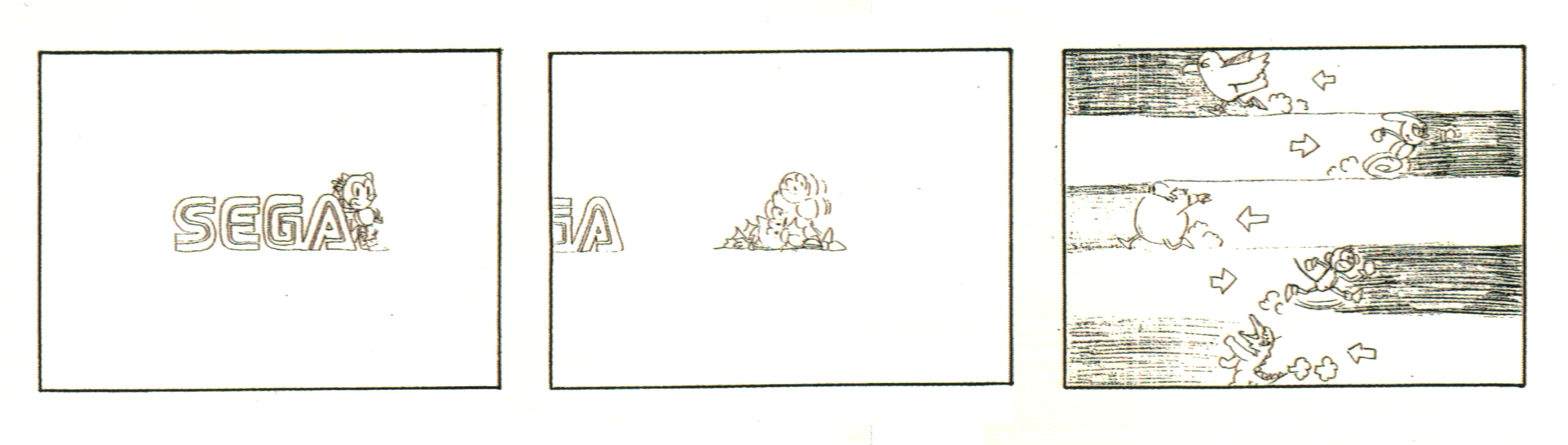
It’s surprising that of the four of them, the only one to see the light of day in any form would be Vector, who was reintroduced to the series in Knuckles’ Chaotix in 1995. But it’s also surprising that there would be a band existing in Sonic’s universe and that the singer wouldn’t be Madonna, given how she’s the leggy female character in a red dress *and* she’s named after a famous singer.
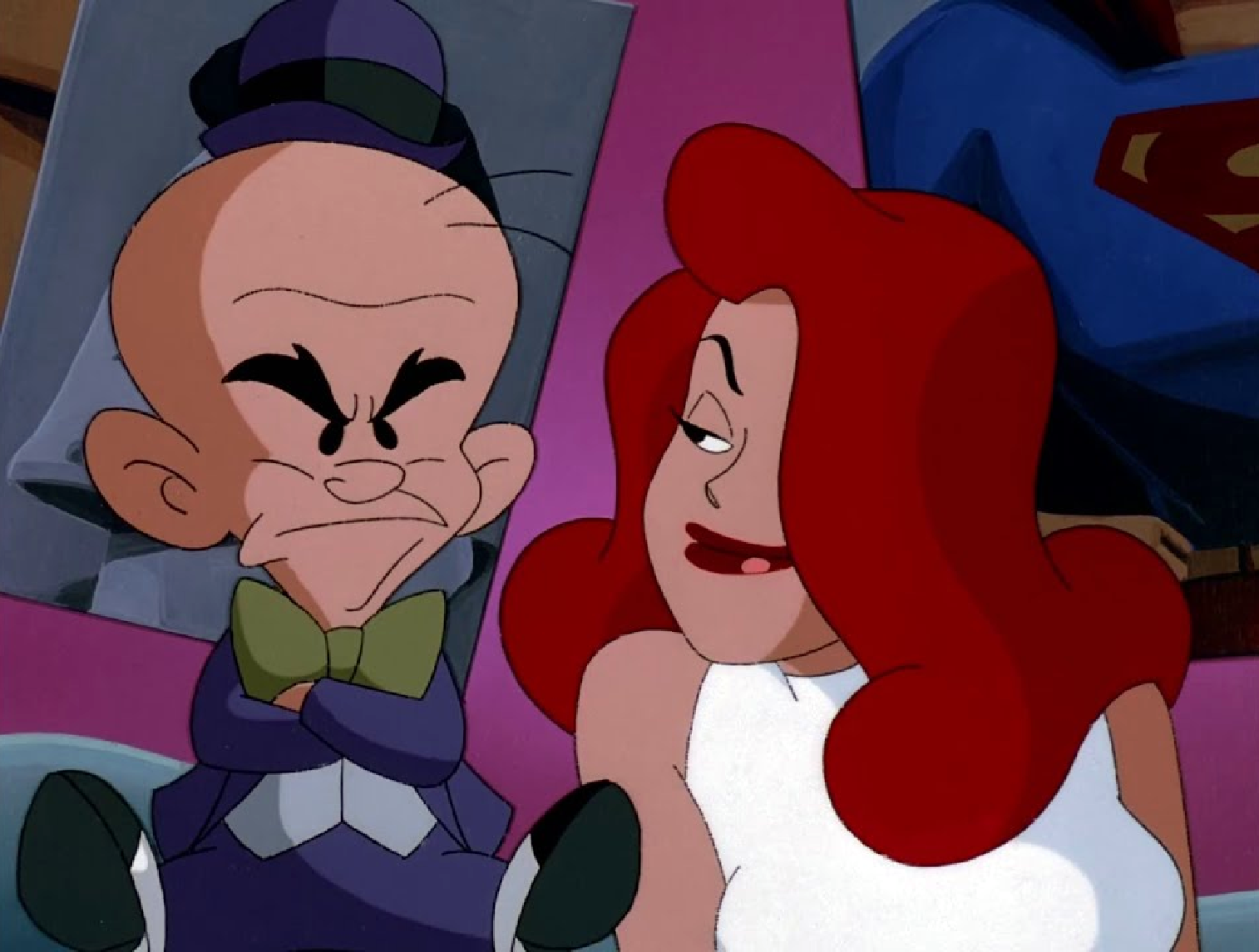
I feel pretty sure that there are other examples of the short guy + tall sexy girlfriend that I’m not just thinking of. Maybe Gsptlsnz, the girlfriend to the Superman villain Mister Mxyzptlk? Especially as they’re drawn in the DC Animated Universe?
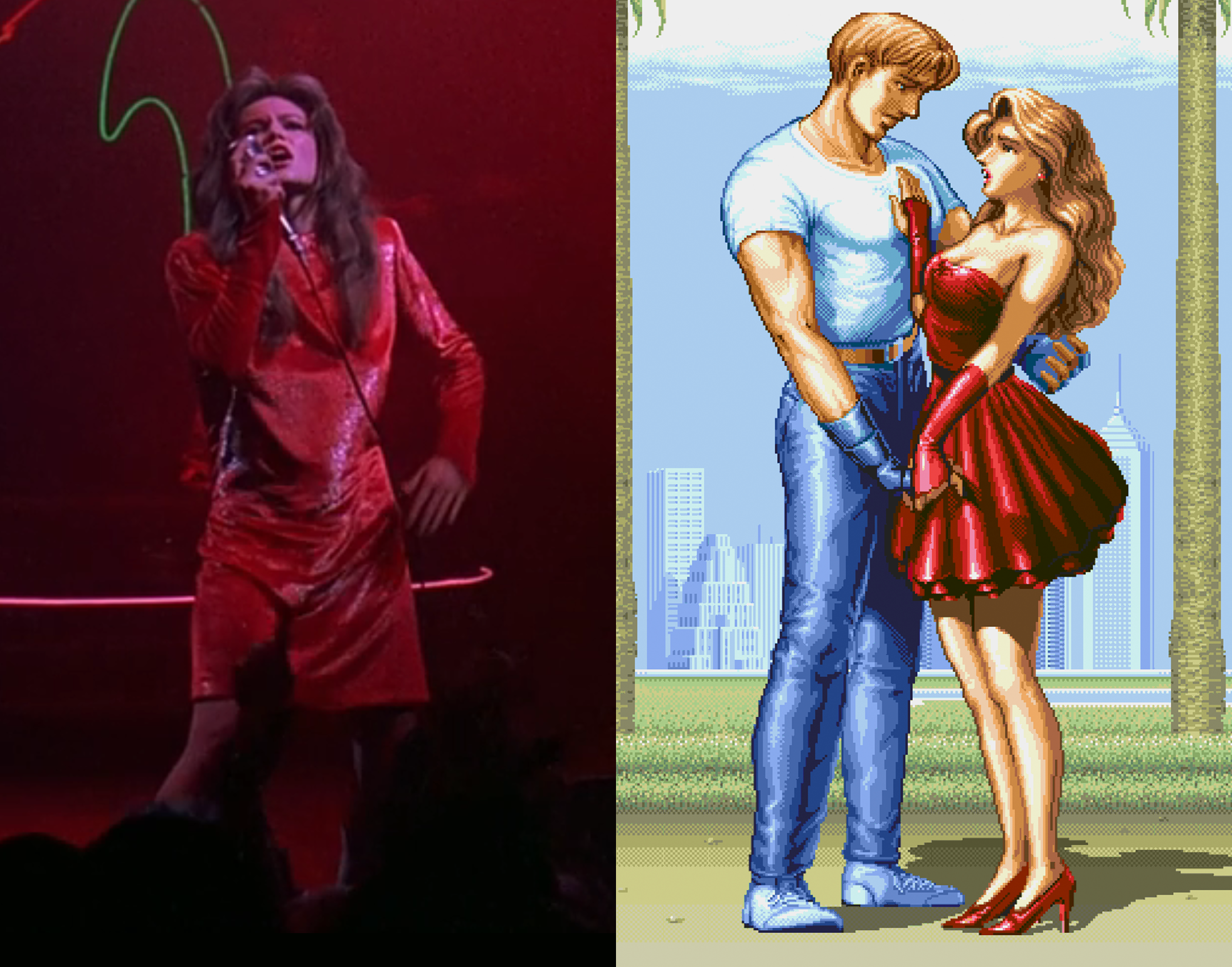
I’d hesitantly offer up Ellen Aim, Diane Lane’s character in 1984’s Streets of Fire, as a variant of this pattern. She is very much the singer in a red dress, even if she’s paired with Michael Paré’s Tom Cody, who is very much not an anatomical mismatch. They’ve actually got their own video game expies in the form of Cody Travers and Jessica Haggar in Final Fight — and these also don’t fit the pattern because Cody is hot and Jessica, despite wearing a red dress, is not a singer.
In some ways, Madonna reminds me of Minerva Mink, a character who appeared on the 1993 series Animaniacs — but only rarely. Voiced by Julie Brown, Minerva was created as a female counterpart to the leering male character you’d see in older cartoons. She’s drawn to look about as sexy as you can in a children’s cartoon, but she loses her cool when she sees an attractive male character, going into her own version of wild take paroxysms. It’s a novel idea, but it ultimately proved to be Minerva’s undoing; she was just too sexual for the audience watching Animaniacs, and she ultimately only starred in two shorts.
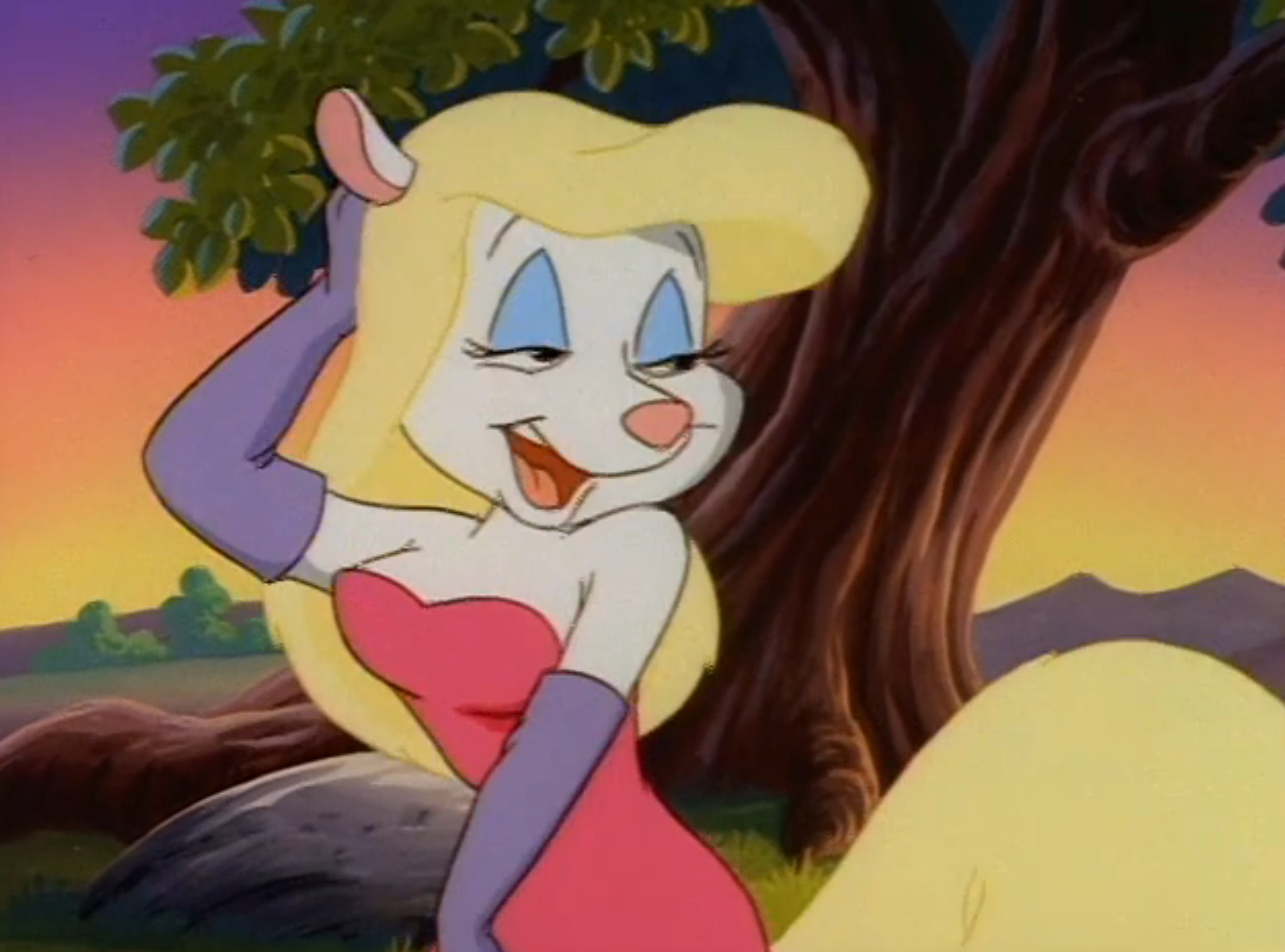
I suspect when Madeline Schroeder was determining that Madonna wasn’t a good fit for the western gamer audience, she was making that call for similar reasons. And, as it turns out, it would continue this way. The 2020 reboot of Animaniacs ditched another sexy female character, Hello Nurse, for example.
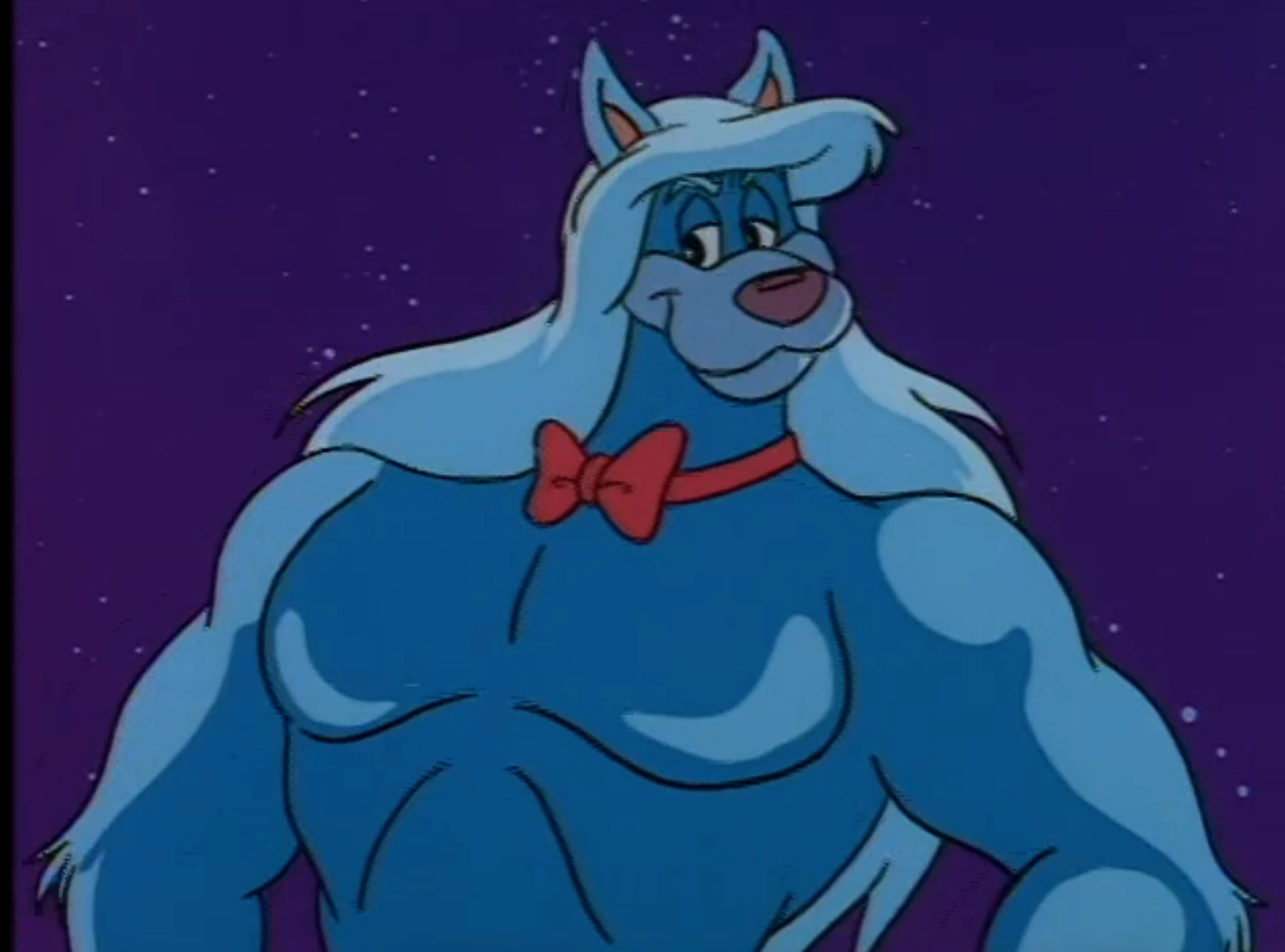
At the very least one of Minvera’s shorts, Moon Over Minerva, had her falling for the sexiest dogman in the history of western animation. I’ll take gender parity when I can get it.
I didn’t realize it when it first aired, but the Simpsons episode with Poochie so perfectly skewered a cultural trend of the ’80s and ’90s that the trend basically died on the spot. These characters had attitude but also combined interests and activities that adults thought kids in general and boys in particular would find cool. Between the moment he’s conceived in a writer’s to his introductory rap in this first episode, we learn that Poochie is meant to be a combination of a hip hop, surfer, rasta, basketball, BMX, rocker, Joe Camel, the Fonz, and “a kung-fu hippie from Gangster City.”
To an extent, however, The Simpsons had its own totally radical character in Bart — if not the Bart seen on the show then the Bart riding his skateboard and saying “cowabunga” on merchandise. Thinking about “The Itchy & Scratchy & Poochie Show” today, I feel like the show is apologizing for some of the in-your-face attitude espoused by Bart t-shirts sold during the height of Simpsons mania.
But nothing Bart did was ever as bad as the version of Alucard featured on Captain N: The Game Master. That was and still is completely unforgivable. It’s maybe the worst instance I can recall of this weird trend.
Finally, in trying to find the right kind of gif of the original Sonic the Hedgehog title screen, I realized that none existed and that I had to make it myself. I did, and I redid the background landscape scroll. It’s an abbreviated version of the one in the game, but you know what? It’s actually kind of pretty. So I’m sharing it here.

It’s one of those gifs that you can hear, you know?