

Bill in Street Fighter vs. Bill in Final Fight
Recently, I came across two different elements in Capcom games that seemed to be related — one in the original Street Fighter and the other in Final Fight. The popular explanation online says that both are homages to the same real-life Capcom employee, but because they manifest differently in their respective games, I wasn’t sold. If there’s one takeaway I’d want from my Mario 101 project, however, it’s that confusing, overlapping and sometimes even contradicting origin stories can exist without invalidating each other. And upon looking into this particular example, I’m thinking it might be one of those cases where it all adds up after all.
This also ended up being a timely mystery. In the previous post, I made the assertion that to some, one heavyset guy with a mustache might look like another. A commenter cried foul on this, given statements I’ve made in non-video game-related forums as well as the fact that more and more, I fit this description myself. I guess I should have clarified that *I* wouldn’t make a sweeping generalization about the big-bellied men of the world. I was just saying that some people might, especially if they’re not as invested as I’ve become in the nuances of this particular community.
Let’s start with one of the most iconic big guys in all of video games: Bill Bull from Final Fight.
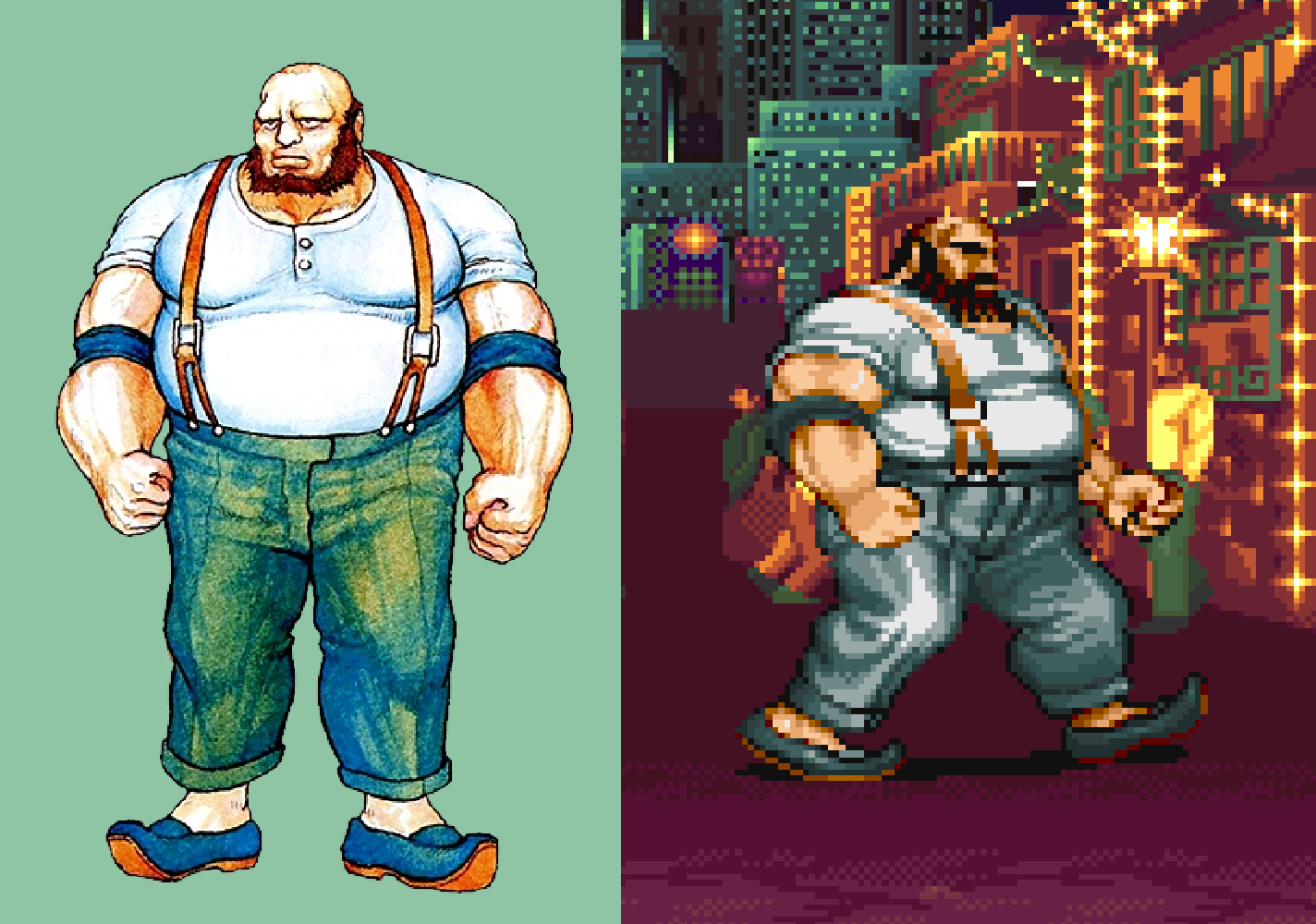
This dude has got some real Carl from Aqua Teen Hunger Force energy as he pounds the pavement of Metro City in an effort to beat up Mike Haggar and his comparatively twinkier sidekicks. Importantly, however, Bill Bull is not the only big guy in Final Fight. He’s joined by two other big-bellied baddies, G. Oriber and Wong Who.
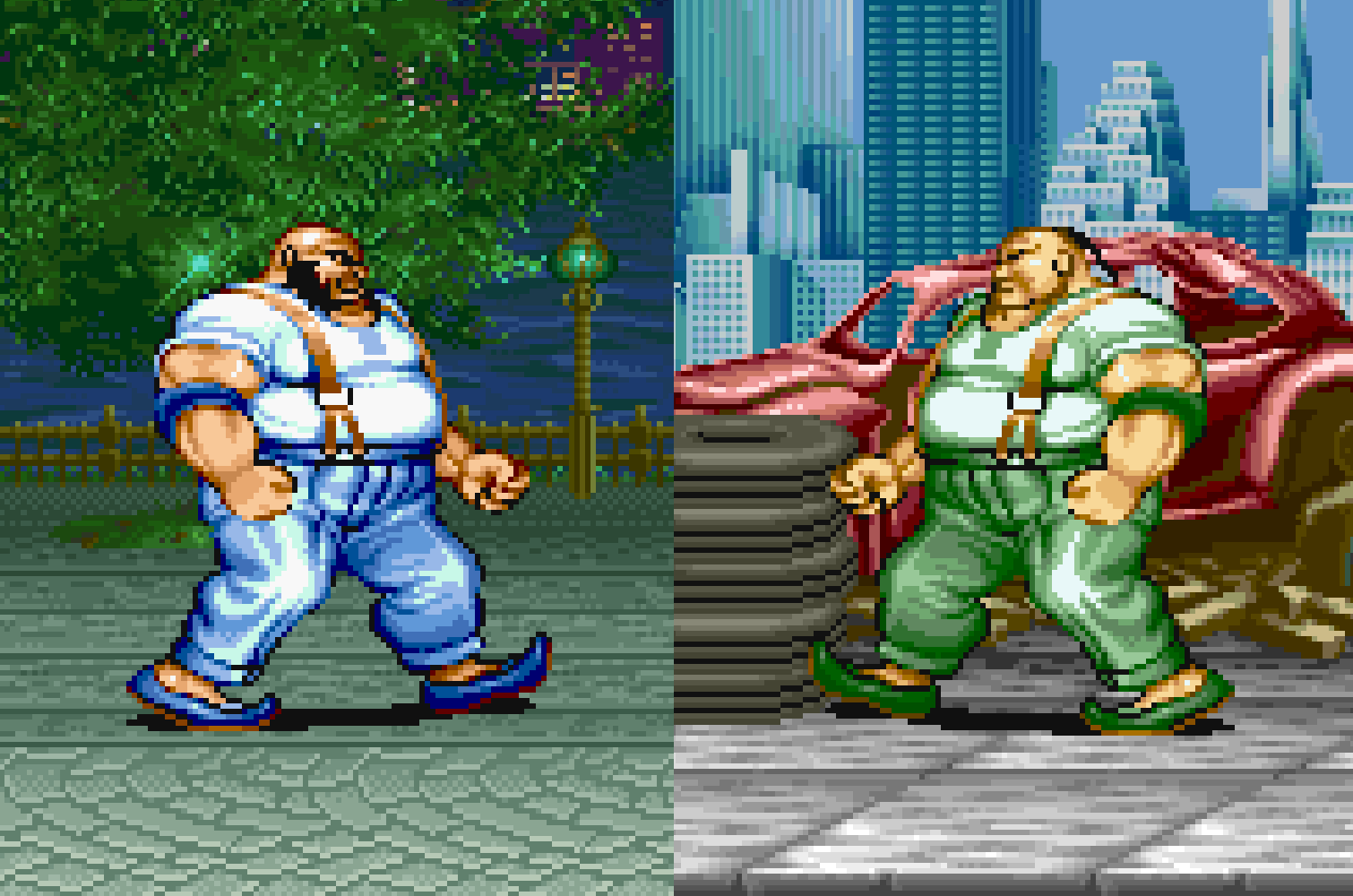
In the same way that Ryu and Ken have identical bodies in the earlier Street Fighter games, G. Oriber and Wong Who are headswaps of Bill Bull — the same basic body, just recolored, with a unique face pasted onto it, with G. Oriber sporting a slightly different style of facial hair and Wong Who a fu manchu and a queue. Together, these three are unofficially known as Final Fight’s headbutt corps, as all three will use their heads in a fight. And that’s maybe surprising, considering that their artwork emphasizes their bellies and you’d think they’d use those in a fight too, but also I think it’s probably for the best that Capcom didn’t call them “the three fat guys.”
So that’s one Bill. But there’s another Bill in the form of a punked-out guy with glasses who appears in graffiti in the background of Birdie’s stage in the original Street Fighter.
(It may not be coincidental that Birdie — one of the bigger guys in Street Fighter and a character who would only get even bigger when he returned for Street Fighter Alpha — is also known for headbutts. The name of the pub in the background is, after all, Block Heads.)
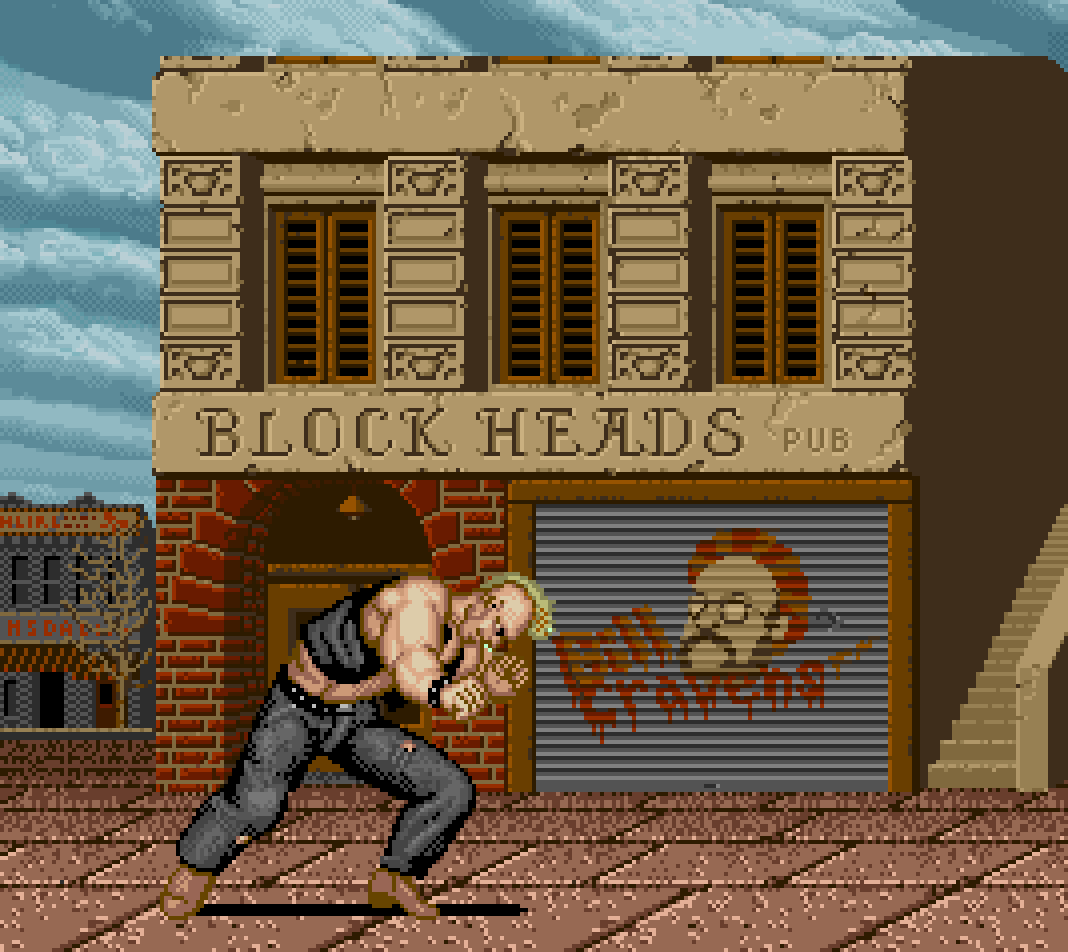
We know this to be a homage to Bill Cravens, who held several positions during his tenure at Capcom USA, including vice president of sales and marketing. He worked for other companies as well, including Nintendo and Universal, and is often credited as being one of the first people to sell a Pong arcade cabinet. In his piece “Super Sales Six,” profiling the prolific salesmen who helped get games into arcades, Ethan Johnson calls Cravens “by far the most legendary and well-known in the whole coin-op industry.” And Polygon’s oral history of Street Fighter describes Cravens as a “towering presence [with a] reputation for showmanship” and “a larger-than-life, outrageous figure who made strong connections everywhere he went.”
In the below video, which is from 1988 or 1989 according to the description, Cravens intros a presentation about new Capcom technology and its upcoming slate of games. At the 5:55 mark, the video even mentions the game that at this point was being called Street Fighter II but would upon its release be called Final Fight.
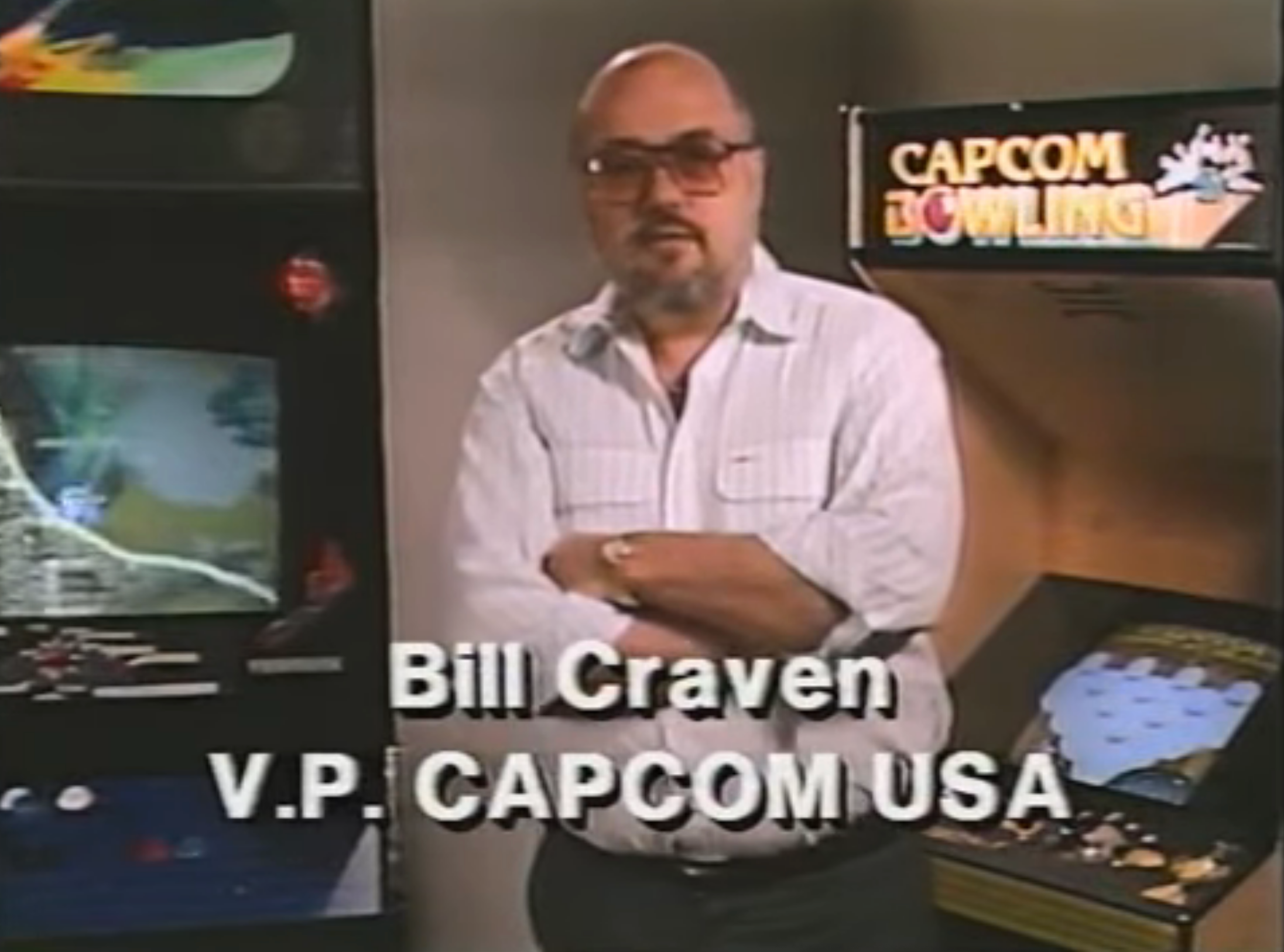
It’s often said that Final Fight’s Bill Bull is also an homage of sorts to Bill Cravens, and while that makes sense — they’re both big guys and the video game character is named Bill, after all — I was somewhat dubious. For one thing, Bill Bull looks a lot less like the real-life guy than the graffiti in Birdie’s stage does. And for another, I’m not sure being the inspiration for Bill Bull would necessarily be a flattering thing. The matter is further complicated by an apparent alternate origin for Bill Bull given in the 2004 art book Capcom Design Works: Early Days.
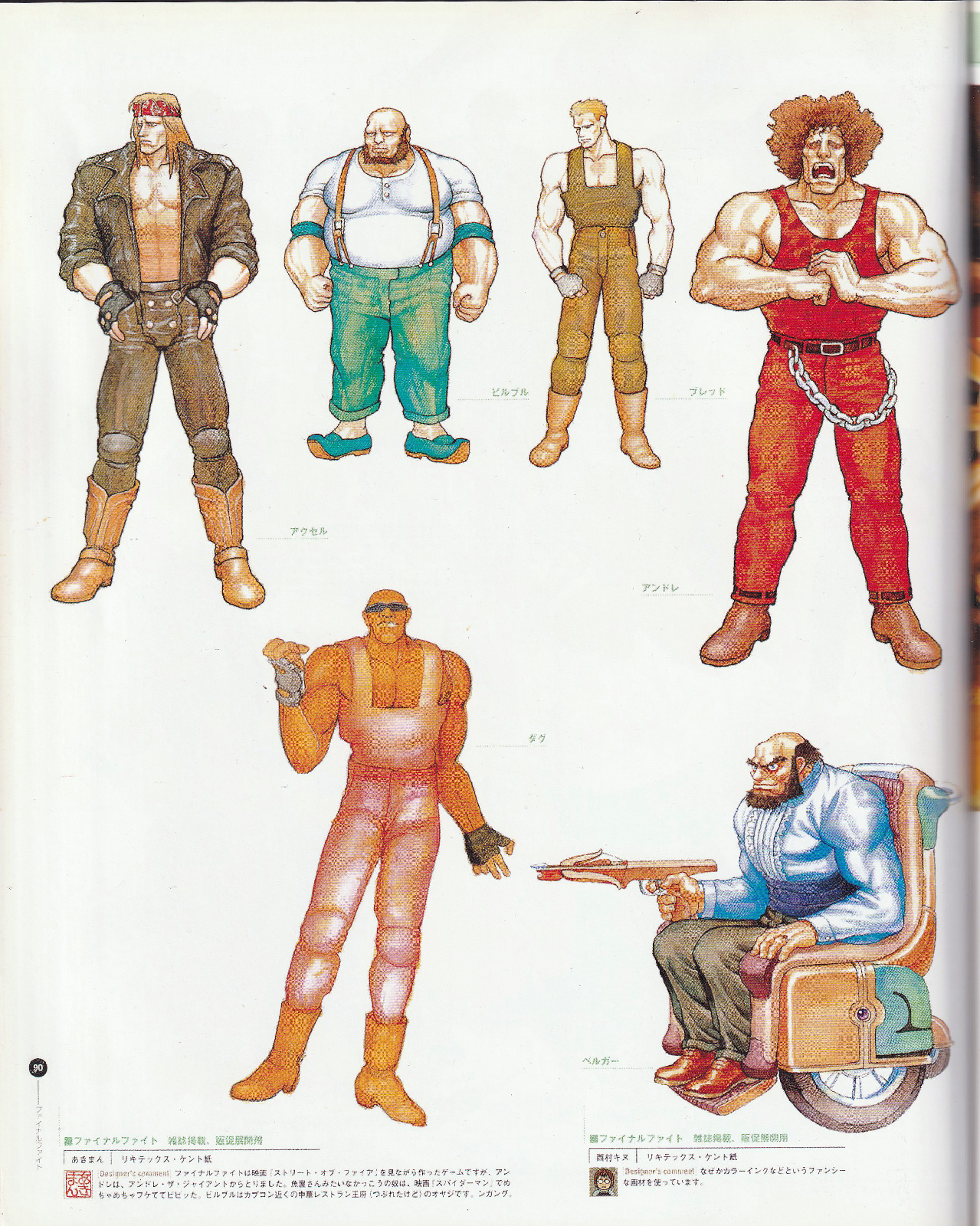
That text box in the bottom-left corner offers up notes from co-designer Akira “Akiman” Yasuda” on a few different characters. A translation:
Final Fight is a game I made while watching the movie Streets of Fire, but was inspired by André the Giant. That guy who looked like a fishmonger was crazy old in the Spider-Man movie, and it freaked me out. Bill Bull is the old guy from the Chinese restaurant, Wang Fu, near Capcom. (It’s closed now, though). Ngangu.
If the design inspiration for the character were Bill Cravens, why not mention that? And while I’m not sure who “the old guy from the Chinese restaurant” is meant to be, it would be a strange way to refer to a former Capcom employee. Of course, it could easily be that Yasuda was misremembering the origins of the design or just lacked information that other Capcom employees had. Cravens having worked with many Capcom Japan employees doesn’t guarantee that he would have met Yasuda.
So what gives?
Bill Cravens died in 2007, and because he can’t answer questions about his legacy in the industry, I asked his son Ryan Cravens, who responded as follows:
Not sure how much I can help you with this as I do not have anything in writing from Capcom that says Bill Bull was based on my father. Having said that, he had been with the company for a few years when Final Fight came out and he was well-liked throughout Capcom in Japan. One of his tasks was to sit through and watch new games being played through from start to finish (to see if there was objectionable material for the west and other tweaks) and he spent a lot of time with the designers and programmers as a result.
Bill had a large personality and was very likable. He had mentioned that Bill Bull was designed after him, but it was a much bigger deal to me as it was to him. The same can be said for being depicted as graffiti in Street Fighter.
This email makes me lean more toward the Final Fight character being an intentional homage to the elder Cravens, not only because the story apparently existed before it was an internet rumor but also because of what the younger Cravens said about his father’s role in the release of new games. Because he would have still been at Capcom through the development of Final Fight, he would have seen the Bill Bull character firsthand and, to put it bluntly, that’s a funny joke to play on someone, especially if you have a jovial working relationship with him. It actually would even explain why the Final Fight character looks different. He’s fatter, he’s meaner and he’s a bad guy, and in watching a playthrough of the game, Cravens would have had to watch an overstuffed version of himself get beat up again and again. I know that I, at least, would think it was a really great joke if someone did this to me.
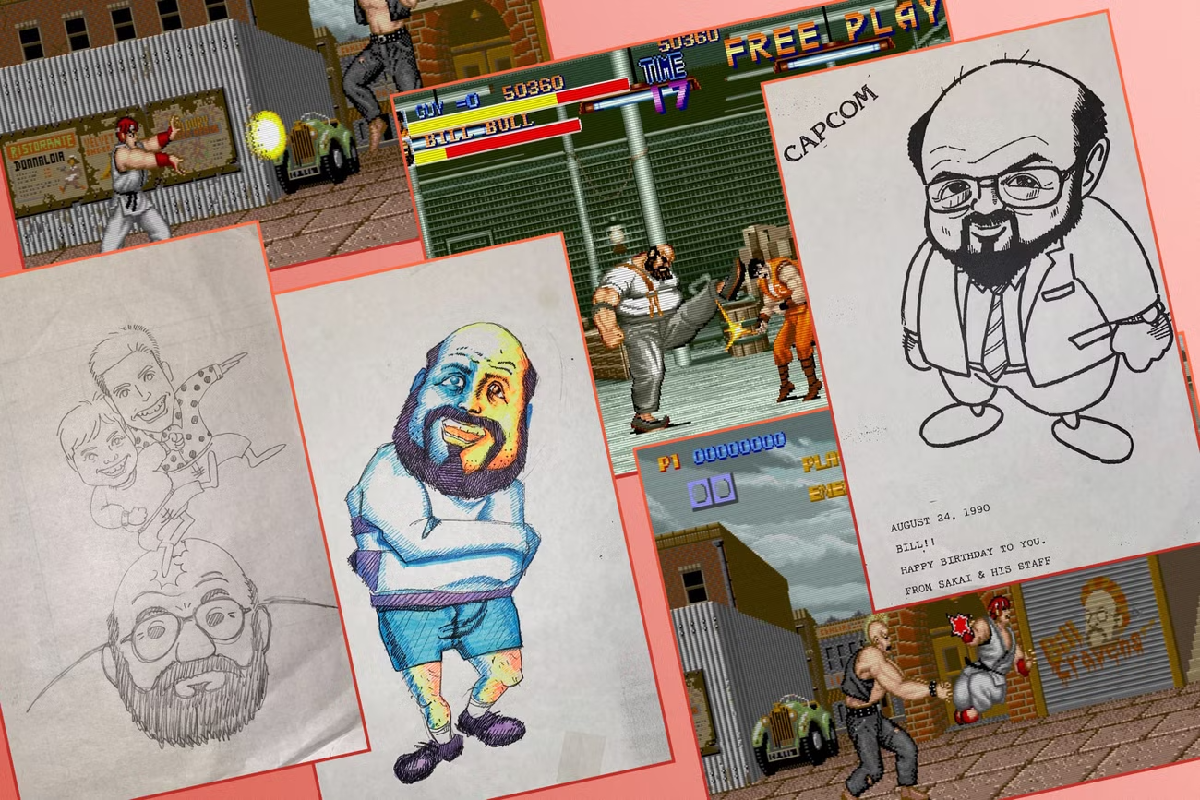
It’s also not the only time Capcom staffers had poked fun at Cravens, as seen in this collage of caricatures that ran in Polygon’s oral history.
If the story isn’t true and Bill Bull wasn’t an homage to or inspired by Bill Cravens, then I suppose the explanation might stem from a situation like the one I described in my post about Dhalsim’s name. In that one, I concluded that the Indian Street Fighter character was most likely named for the real-life wrestler Dara Singh, even if they don’t look much alike. That said, there’s a longstanding rumor perpetuated within Capcom’s own corporate culture that Dhalsim is actually named at least in part after a curry shop located near the company’s Osaka headquarters. I don’t think this is true and in the post I pointed out that neither does Akira Nishitani, who co-designed Street Fighter II and Capcom both with Yasuda, whom I mentioned earlier.
So who is the old guy from the Chinese restaurant? I think Yasuda is misremembering here, partly as a result of the fact that Bill Bull, G. Oriber and Wong Who look so similar. (And yes, I do realize that this would be the exact kind of mistaking one heavyset guy for another that I mentioned at the top of the piece.) In fact, the katakana for Wong Who’s name, ワン・フー, would be rendered in English as Wan Fū or Wang Fū. That’s a lot closer to how the restaurant name is rendered in the art book: 王府 or in Chinese, wángfu — literally “prince’s mansion.” But this would mean, rather confusingly, that one story about a Capcom character being named after an Osaka restaurant is apparently not true but a very similar one about a very different Capcom character apparently is true.
Video game lore is weird and complicated!
I’m going to conclude with one final story about Bill Cravens’ legacy as it pertains to Capcom games. As he told it — and as his son tells it today — it was his idea not to release Final Fight as a sequel to the original Street Fighter. From Ryan Cravens:
That game ended up being renamed and was later changed to Final Fight. My father claimed that he didn’t want that game to be the successor to Street Fighter, and he worked at being changed to Final Fight.
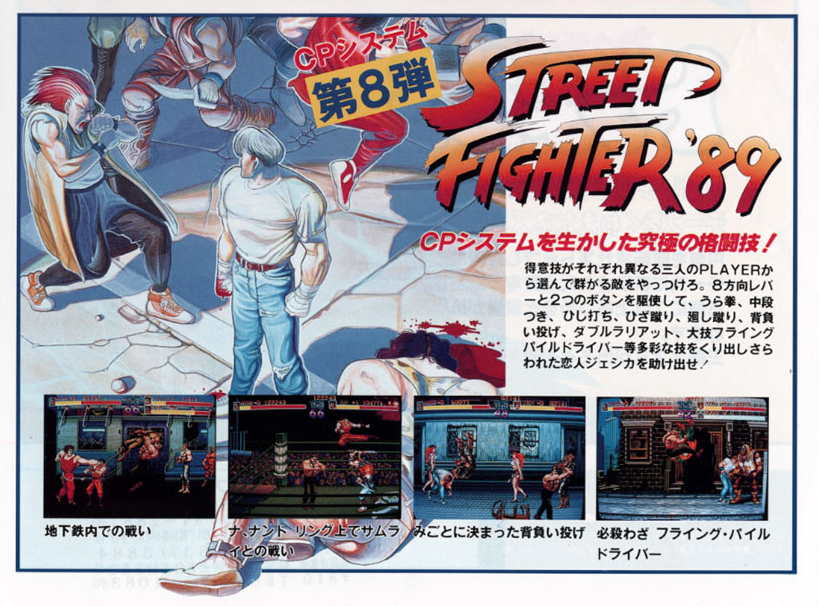
The younger Cravens notes that he’s not sure how accurate that story is, even if it’s one he’s heard over the years. On one hand, you can, in fact, see early promotional material for Final Fight from the brief period in which Capcom was apparently flirting with the idea of calling it Street Fighter ’89.
On the other hand, there’s never a shortage of people who want credit for what turned out to be a good idea. Given the smashing success of the game that actually was released as Street Fighter II, this was the correct call. But there’s something about the conclusion given by the younger Cravens — to paraphrase, “I don’t know if this is true, but it’s for sure a story that gets told” — that’s very common in these conversations about the origins of video games. I’ve run into this a lot, and until anything can be proven one way or the other, I think our only choice is to acknowledge that the stories have value even when we can’t be sure if they’re true.
Miscellaneous Notes
If you felt confused about the reference to Spider-Man in the translated caption of the Capcom art book, you’re not alone. Initially, neither Fatimah nor I knew what to make of that line. So I posted to Bluesky about it and Nina Matsumoto ended up coming up with the answer: It’s a reference to the fact that Willem Dafoe, who played the Green Goblin in the original 2002 Spider-Man, also played the heavy in 1984’s Streets of Fire. Yasuda was merely commenting on his surprise at how much Dafoe aged between the two films. And while Dafoe’s character in Streets of Fire isn’t a fishmonger, his costume does look a bit like something you’d wear if you were wading into water.
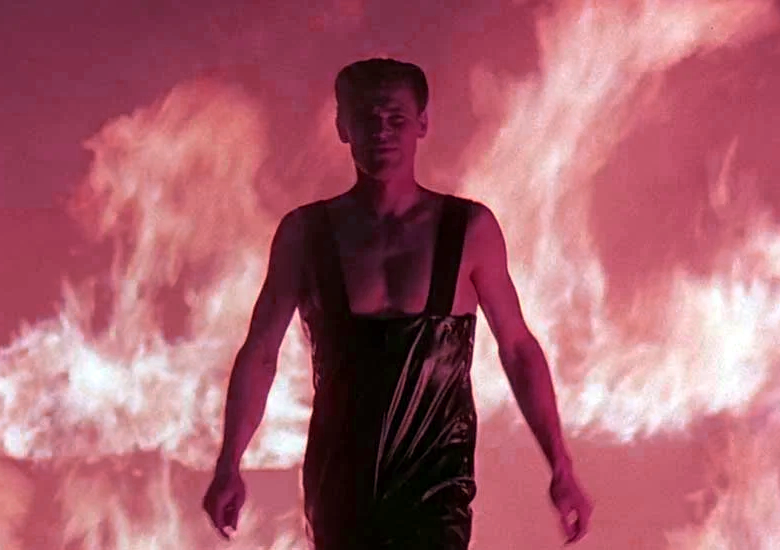
I’m not sure what you’d call this outfit in real life, but it’s clearly the inspiration for what the generic bad guys Bred and Dug wear in Final Fight. One day, I’ll do a post about all the subtle visual elements that Final Fight takes from Streets of Fire.
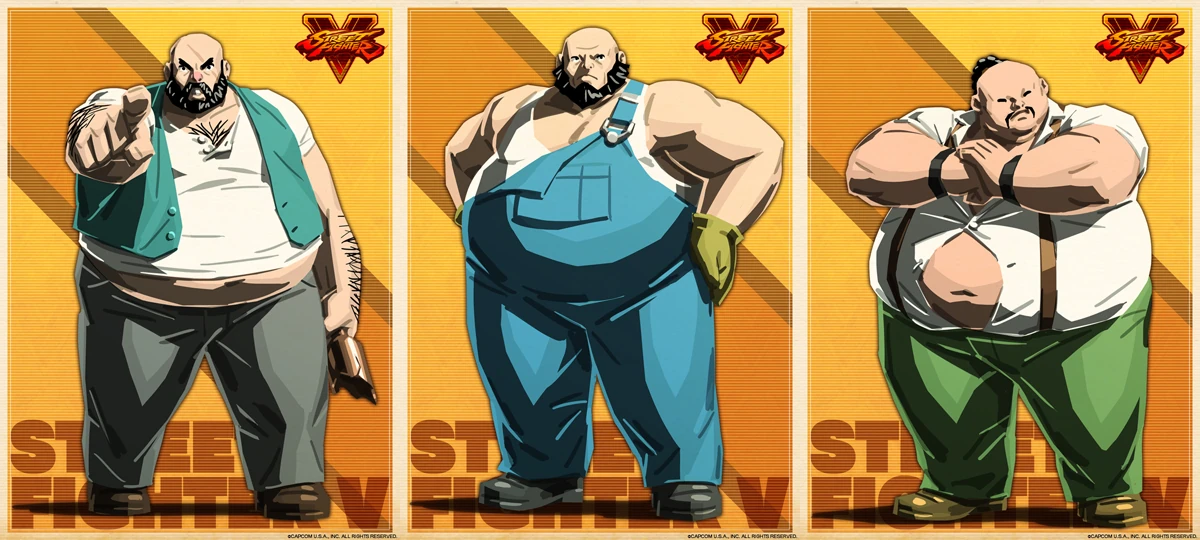
Bill Bull, G. Oriber and Wong Who each underwent luigification after the release of the first game, and their official Street Fighter V depictions show them with their own unique bodies to match their heads. G. Oriber even lost the mustache. I’d like to think this was Capcom’s way of affirming that no, one heavyset guy with a mustache does not, in fact, look like another.
Even if Dhalsim wasn’t named for a nearby curry shop, there’s good evidence to suggest that Capcom was nonetheless restaurant-crazy during this era. In addition to the shoutout to Bill Cravens, Birdie’s stage also features a nod to Ristorante Donnaloia, a real-life Italian eatery located in Kobe.
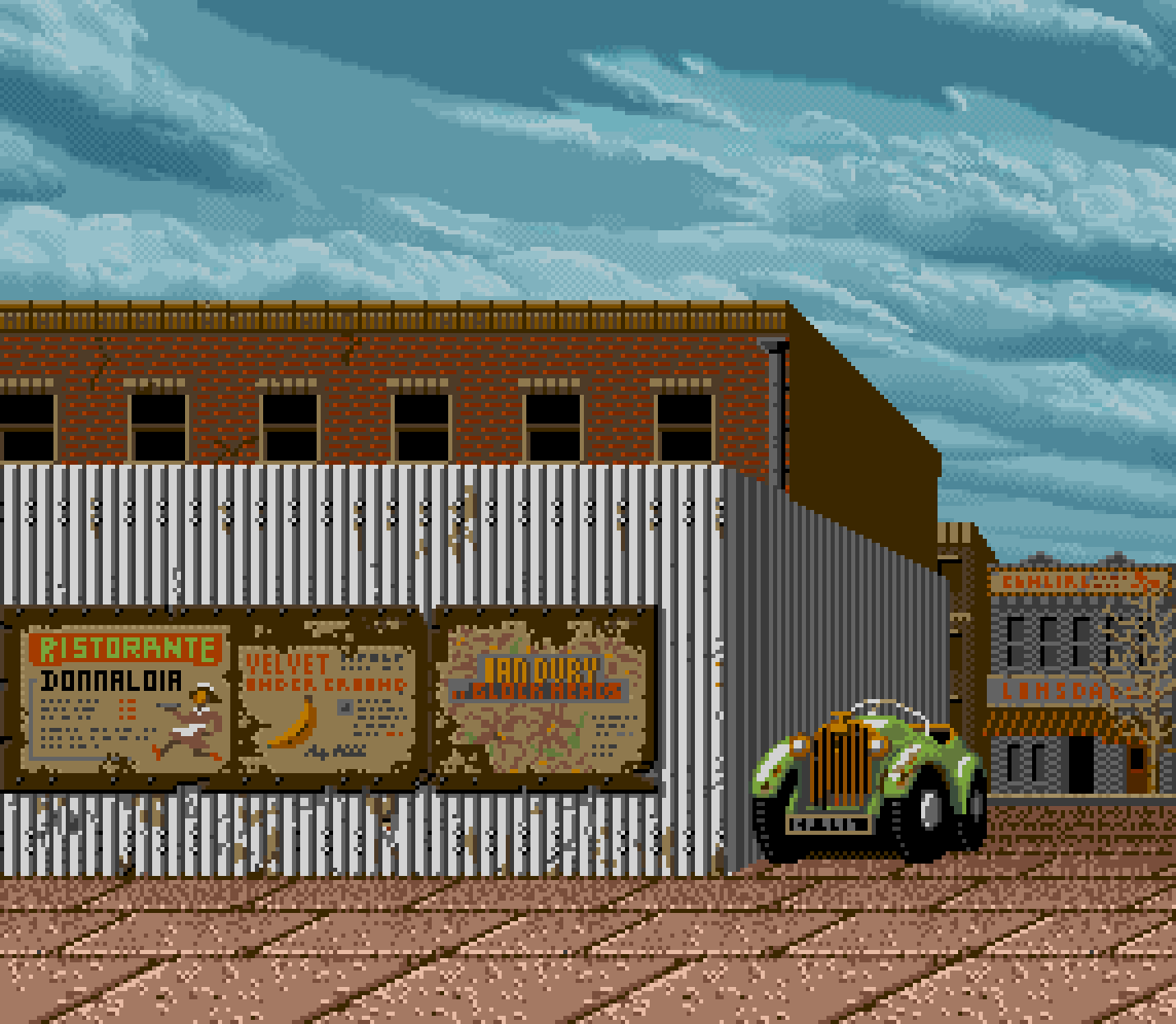
Essentially, the “ad” appears as a subtle in-game plug for a Capcom staffer’s family business. The restaurant was founded in 1952 by Guiseppe Donnaloia, the father of Aldo Donnaloia, who back in 1987 was the western regional sales manager for Capcom USA. This information is lacking from the current version of the Polygon oral history, I think because a caption is getting truncated. But the original version of the document, preserved here, confirms the familial relationship as well as explaining why it ended up in the game at all, with the younger Donnaloia saying of the gesture, “That’s a typical example of how the engineers in Japan thought of us.”
There’s apparently meaning behind G. Oriber’s name as well. The katakana, グラハム・オリバー or Gurahamu Oribā, suggest that he was named after Graham Oliver, founding member of the British heavy metal band Saxon. Graham Oliver is, it should be noted, considerably smaller than the video game character named after him.
It being pride month, I’m reminded that I still want to do a post detailing all the reasons the original Final Fight reads as gay. It’s not meant to, of course, but it very much does if you examine the smaller details. I’ve got something different I want to write before the end of June, however. It’s about Samurai Shodown, and I promise it will be good.