

The Mystery of Marin
I’m trying to make a word catch on in the world of video game analysis: luigification. It’s when a character starts out being derivative of another but then gradually becomes distinct. I’m not sure if Luigi was the first character to undergo this transformation, but he’s definitely the most famous, even if Capcom has been luigifying Ken ever since Street Fighter II. I’d say that luigification can even take place in an instance like Mortal Kombat, the first incarnation of which features Scorpion and Sub-Zero as palette swaps but with unique movesets. Over the years, the series has further differentiated so that they look different in ways that aren’t limited to color schemes.
This post will be about an unusual form of luigification in which the character in question, Marin from Legend of Zelda, isn’t gradually differentiated so much as she keeps spawning lookalikes that move further and further away from the identity she had when she was first introduced. It’s weird, but let me explain.
In the entire Legend of Zelda series, Marin has only appeared in a single mainline game: Link’s Awakening. I’d say she only appears in a single canonical game, but the plot of this one is such that I’m not sure if Link’s Awakening even truly “counts,” dreams being weird and all.
In the game, the first thing you learn about Marin is that she apparently looks like Zelda, at least according to a semi-dazed Link.
She’s not meant to be Zelda, of course, even in a game full of weird, Twin Peaks-style doppelgangers and characters guesting from other Nintendo franchises. I suppose if you really wanted to, you could read Marin as the stand-in for Zelda in the jumbled-up dream that is the setting of this game, but I prefer to think of her as a character who stands on her own. She is an island maiden who likes music and who longs for a look at the world on the other side of the ocean. And for what it’s worth, the game’s artwork makes it seem like she’s a girl who just happens to bear a passing resemblance to Zelda, certainly not her twin.
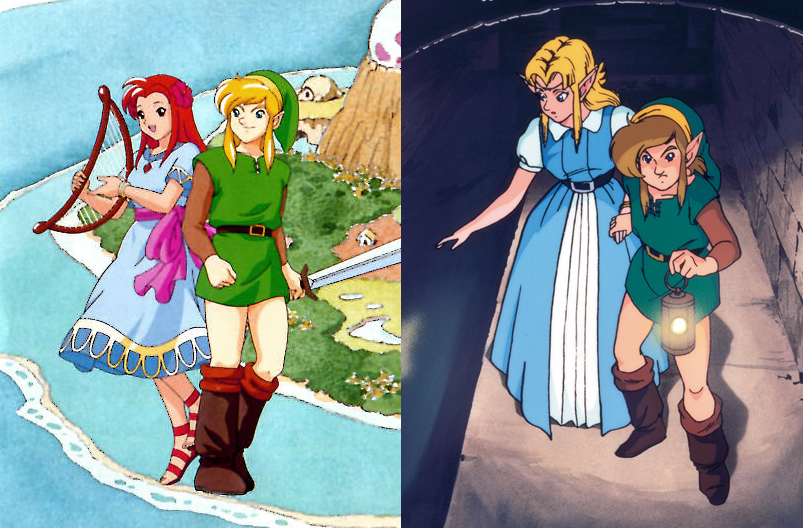
Left: Marin and Link. Right: Zelda and Link in an official illustration from A Link to the Past, that being the Legend of Zelda game released directly before Link’s Awakening and the one closest to it in aesthetically. But, like, there’s not much in these depictions that makes me think they look alike, you know?
That said, the game’s instruction booklet makes it a lot more explicit that yes, you should at least suspect some connection between Marin and Zelda.
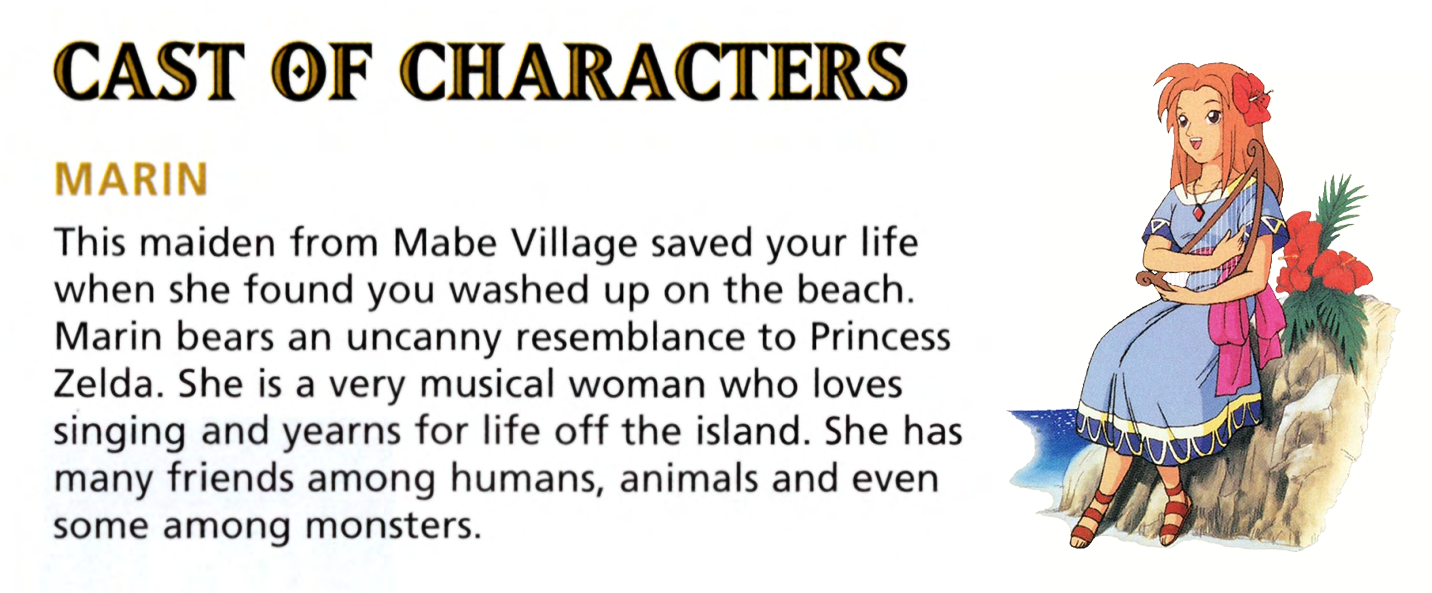
It’s not unique to the English version, either. The resemblance is mentioned in the Japanese manual as well.
If pixels count more than official illustrations (and perhaps they should), then Marin and Zelda are damn near identical. Marin’s original Game Boy sprite gets modified only slightly for use as Zelda’s in Oracle of Seasons and Oracle of Ages, which were built on the Link’s Awakening engine. The biggest difference is that Zelda wears a crown.
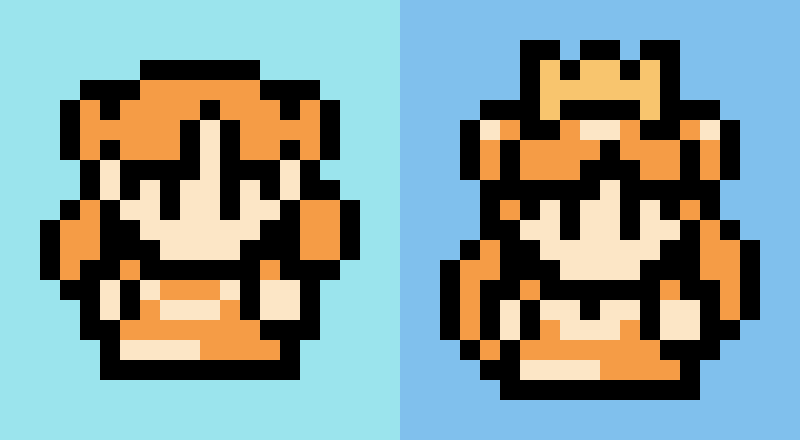
It’s up to you to decide whether this should be interpreted as “Marin looks identical to Zelda” or “We had this sprite already and didn’t want to draw a new one.”
Link’s Awakening concludes with the dreamer waking up and Koholint island vanishing forever — taking Marin with it, unless certain conditions are met. Unlike recurring Legend of Zelda characters such as Impa or Tingle or Beedle or Dampe, who show up again in subsequent games as apparently “new” versions of the same original character, Marin is not afforded the opportunity to return. In fact, the next time we see anything that might remind us of Marin is Ocarina of Time, which features a somewhat similar character named Malon. She’s not an island girl at all. She’s a horse girl, and aside from their shared hair color, the one thing that Marin and Malon have in common would seem to be their love of music.
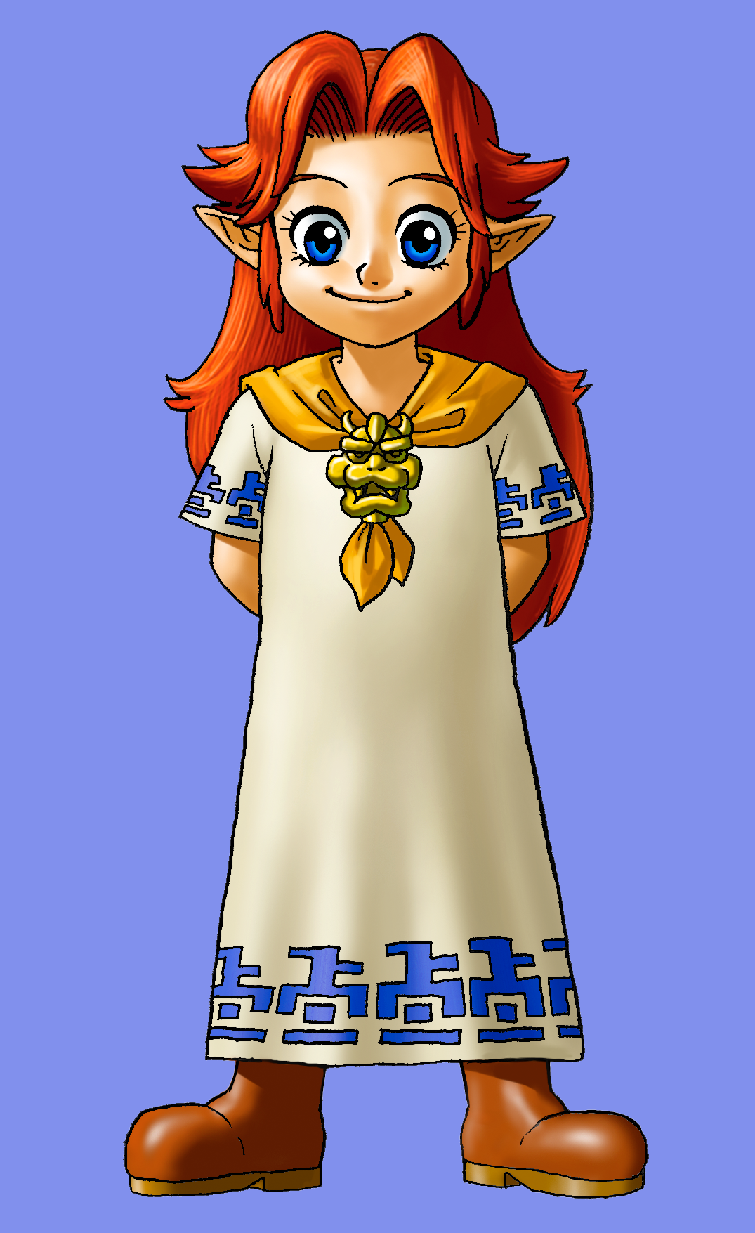
Possibly because their names are rendered differently in English, it’s not necessarily apparent that Malon is supposed to be a twist on Marin. In Japanese, Marin is マリン or Marin, while Malon is マロン or Maron, with just one vowel sound separating them, making them a lot closer. And if that weren’t enough, both are attached to father figures who are similarly connected. In Link’s Awakening, Marin’s father is Tarin (タリン), a mustachioed mushroom-hunter who, if the allusion weren’t obvious enough, at one point gets transformed into a tanuki. And in Ocarina of Time, Malon’s rancher dad is Talon (タロン or Taron). But importantly, Malon is not Marin and Talon is not Tarin. They’re similar but different, as if both have been nudged slightly away from the original Link’s Awakening characters.
I say this even though Ocarina of Time script supervisor Toru Osawa says the opposite — that Malon and Talon are in fact meant to be Marin and Tarin, at least per a 1998 a developer interview:
A father and daughter named Marin and Tarin who were introduced in Link’s Awakening for Game Boy also appeared in this Zelda game. We’re hoping that people who’ve played the Zelda series from the very beginning will recognize them. If you wonder, “Is this a reference to then?” we’ll be happy.
There’s no easy way to say this, but he’s wrong. It could be that at one point that Marin and Tarin were supposed to show up in Ocarina looking closer to their Link’s Awakening versions, but that’s not what happened. I’d say that the distance between Marin and Malon is greater than just a change of clothes. They’ve got different temperaments, they exist in different settings and they serve very different roles in their respective games. Perhaps the best indication that they’re not the same character lies in the fact that unlike Marin, Malon does recur. She appears again in Oracle of Seasons, Four Swords Adventures and The Minish Cap, each time as the girl residing with her father on the Lon Lon Rach. And when Marin returns in Hyrule Warriors, she’s very much in island maiden mode, using the various accoutrements from Link’s Awakening and none of Malon’s horse girl schtick.
In the nightmare world of Majora’s Mask, Malon exists as both her younger and older selves simultaneously, as big sister Cremia and little sister Romani, running their own ranch. But that’s par for the course for this game, which repurposes many character models from Ocarina of Time as new characters who all seem a little off in their own way. The character who is a much more interesting reincarnation of Marin comes in The Wind Waker — as Link’s little sister, Aryll.
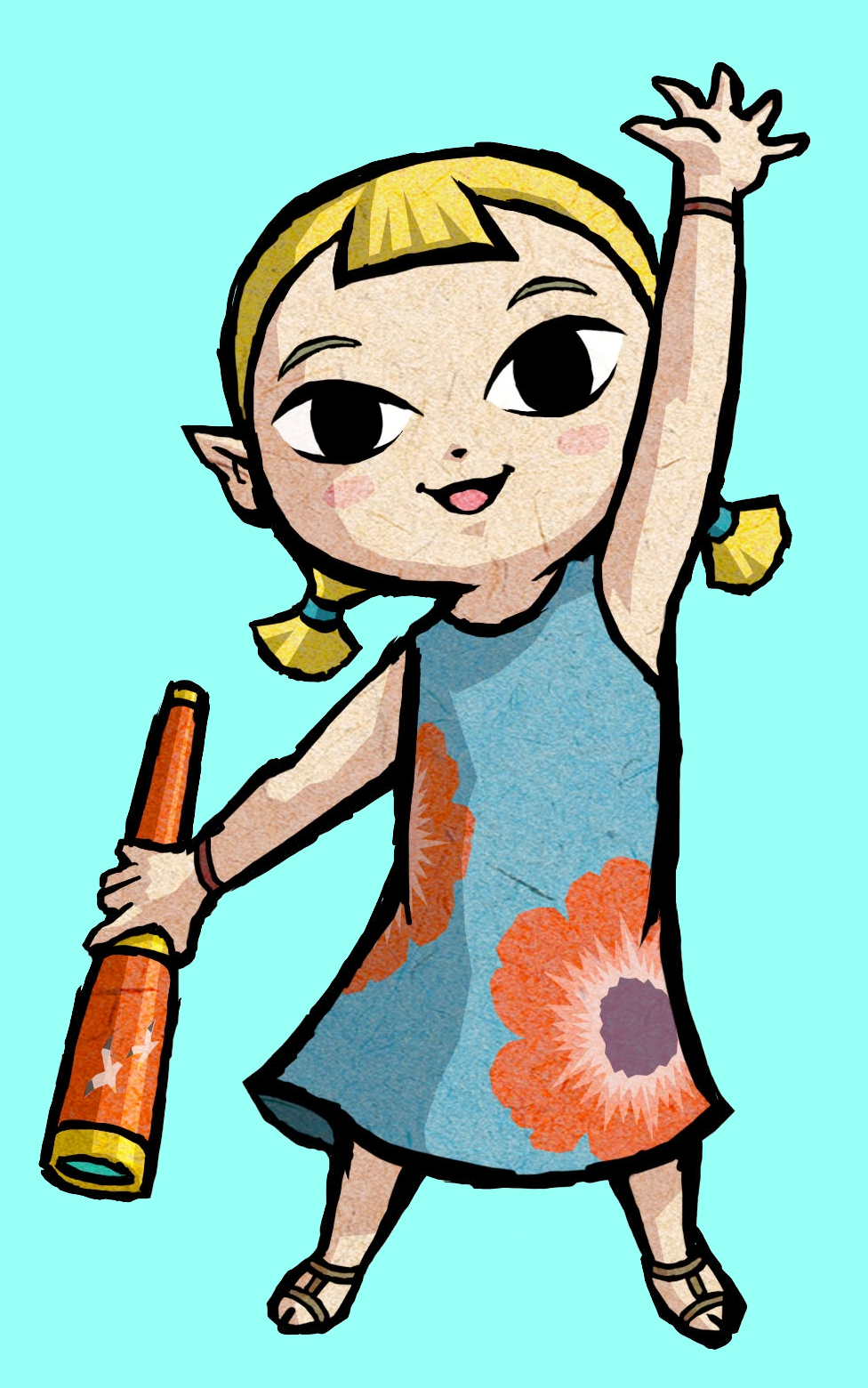
Just looking at her character model, I’d guess that Aryll had more in common with Princess Zelda, and indeed the fact that she plays the damsel in distress early on in the game does make her somewhat Zelda-like. However, she was apparently intended as another version of Marin, per an interview with director Eiji Aonuma appearing in a 2002 Wind Waker book exclusive to Japan. In fact, her name was originally going to be マリル or Mariru, which would have likely been rendered as Maril or something thereabouts if localized into English. We don’t know why the name was changed to Aryll (アリル or Ariru).
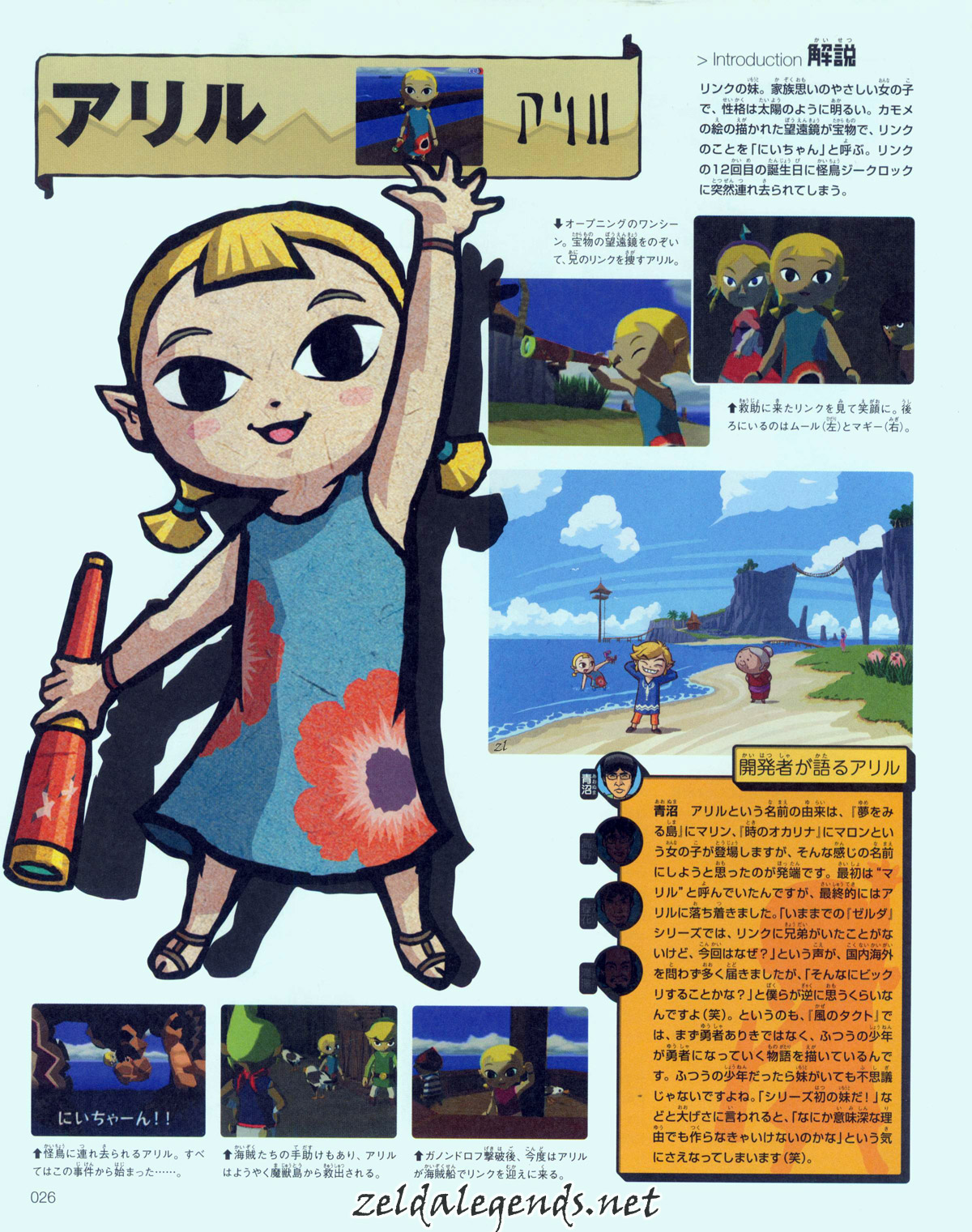
Translation of the bottom-left text box, via Glitterberri: The reason behind Aryll’s name is that there’s a girl named Marin in Link’s Awakening and a girl named Malon in Ocarina of Time. It was just an expansion on the idea of having a similarly named character. At first we were calling her Maril, but we eventually toned it down to what it is today. We got a lot of people, both from Japan and overseas, asking us why Link suddenly had a sibling, since he’d never had one in other games of the series. The thing is, we actually didn’t think it was much of a surprise. After all, the story of The Wind Waker is focused on a regular boy, not a hero. It’s not so strange for a normal boy to have a little sister, is it? People make a big deal about her being the first sister to appear in the series, but that just makes me wonder if everything we create has to carry some deeper meaning.
It’s not mentioned by the developers themselves, but it’s been noted in a few places — including this post by Zelda Universe — that the connections don’t end with names. Like Marin, Aryll has a special connection with seagulls. And Aryll’s dress would seem to echo Marin’s appearance, with its similar shades of blue and red. Even the hibiscus pattern on Aryll’s dress would seem to be a nod to the one Marin wears in her hair.
I love this, just because I played through Wind Waker without noticing Aryll mirroring Marin in any way. It’s always nice when a reference is subtle enough to slip by, because you appreciate it all the more when it’s finally revealed to you. And I like that Link’s little sister is one more piece of evidence of Marin’s apparent ability to reincarnate. In writing this piece, however, I realized there’s one more reason to like Marin becoming Malon and then Aryll: transformation is a big part of Marin’s send-off in Link’s Awakening.
Like I said earlier, the world of Link’s Awakening ends when the Wind Fish, a mystical, whale-like being, wakes up from its dream of a tropical island. In theory, all the inhabitants of Koholint go the way of the characters in any dream that ends: they vanish, their reality having been blinked out of existence. As I mentioned earlier, this plot point makes the idea of canonicity with this one particular Legend of Zelda game a little tricky, but there’s a suggestion that Marin might actually escape.
Early in the game, Link and Marin take a moment to sit on the beach together. They have a long conversation that verges on existential, and Marin says that she’d fly away if she were a seagull.
The relevant dialogue: “I wonder where these coconut trees come from? … Tarin says there is nothing beyond the sea, but I believe there must be something over there... When I discovered you, Link , my heart skipped a beat! I thought, this person has come to give us a message… If I was a sea gull, I would fly as far as I could! I would fly to far away places and sing for many people! ...If I wish to the Wind Fish, I wonder if my dream will come true.”
In the regular ending to the original Game Boy version game, after Koholint has been obliterated and presumably taken Marin with it, you hear a seagull’s call as the word “the end” flash onscreen. If you beat the game without losing a life, however, you actually see Marin flying away with bird wings. And in the Game Boy Color and Switch remakes, it’s slightly different: you see Marin’s face appear in the clouds before fading away and revealing a seagull, implying that she has become a seagull.
The fact that the best possible ending to any version of the game hints that Marin lives on in a different form seems oddly prophetic for the path she’d take through later Legend of Zelda games — showing up again and again, but often not being immediately recognizable as that original girl with the flower in her hair. It’s all a coincidence, of course, because there’s no way anyone who worked on Link’s Awakening would have known that this character would undergo an unusual form of luigification. But in my opinion, it’s a notable coincidence that makes the mystery of Marin’s fate even more poignant.
Miscellaneous Notes
At one point, I wondered if Malon were meant to be a nod to Princess Peach, but only because she and her dad both wear these odd medallions of Bowser’s face. And Talon is for sure meant to be Mario, but there’s no reason that a character inspired by or based on Marin should have a Bowser connection. Besides, Malon doesn’t look much like Peach aside from having blue eyes. If anything, Malon looks more like Daisy, but I don’t think she’s supposed to at all. I actually don’t know if we’ve ever been given a reason for why the Lon Lon Ranch folks would wear Bowser’s face, but I suppose it does make it clear that Malon and Talon are a matching father-daughter pair.
Of course, Ocarina of Time also has a Luigi stand-in, Ingo, who in some ways seems to anticipate Waluigi, as far as being a sour-faced, jealous version of Mario’s little brother. Ingo also has a Link’s Awakening counterpart, but it’s an unnamed chicken-tender. If there’s a connection to Marin and Tarin I’m missing, I’m not aware of it.
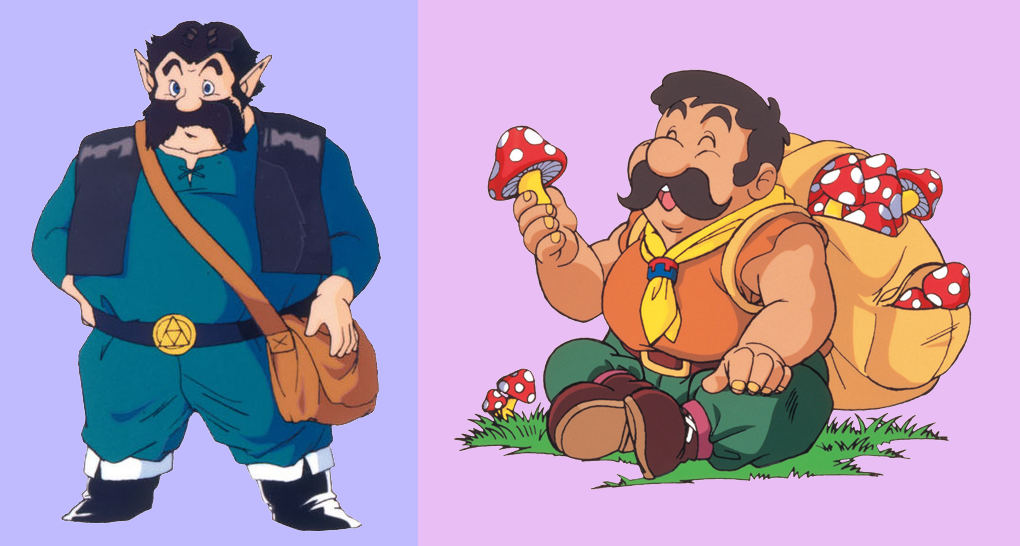
I’ve always thought Tarin looks quite a bit like Link’s uncle from Link to the Past. It might just be that one heavyset guy with a mustache looks like another, but I suppose in the mixed-up, identity-scrambling dream that Link’s Awakening takes place in, his uncle is appearing as someone else’s father figure. Dreams are weird like that.
I’m not sure it works the same as the Marin transformations, but it’s worth pointing out that following Aryll’s debut in Wind Waker, Hyrule Warriors did get a female link in the form of Linkle. The character was initially conceived by Koei Tecmo as being Link’s sister. I assume she’s not, in fact, meant to be Aryll or a version of Aryll, however, because Aonuma apparently didn’t want players to confuse or conflate her with Link’s actual sister. From a 2020 IGN piece on Linkle:
Koei Tecmo first proposed the Linkle character as Link’s little sister for the Wii U version of Hyrule Warriors. However, we felt this conflicted with the concept of Aryll from The Legend of Zelda: The Wind Waker, the only character we had ever had appear as Link’s sister, so we decided not to include that version. In Hyrule Warriors Legends, though, the proposal was to include Linkle not as Link’s sister, but as a girl with heroic aspirations. This was a totally new and unique background for the franchise, and we thought she would add to the game’s diversity, so we decided to include her in this game.
But I suppose this maybe isn’t completely different from Nintendo wanting to make a shout out to Marin in Ocarina of Time but that character ultimately evolving into something different.
Here and there online, you’ll see the speculation that Aryll’s name is somehow a reference to the amaryllis flower, apparently because amaryllises can be red and Aryll has a red flower on her dress. I don’t think there’s any evidence to back this up, however, because the flower on Aryll’s dress is pretty clearly meant to reference Marin’s hibiscus and her name originated as a reference to Marin’s name. Besides, aril is a word that already exists in English, even if I’m pretty sure Aryll’s name sounds like it purely by accident.
Presumably Cremia’s name results from some association with the fact that she works on a dairy farm, but for the life of me, I can’t think of a reason her little sister should be named Romani, much less that their whole ranch should also have that name. I suppose that in katakana, Romani’s name, ロマニー, is a little closer to the name Lon Lon Ranch, ロンロン, but not by much. Anyone?
There’s no shortage of writing about how elements of Link’s Awakening were specifically developed as a result of the popularity of Twin Peaks in Japan. In addition to the preponderance of doubles and the otherworldliness of owls, there are some parallels that fly somewhat under the radar. For one thing, the way dreams work has something in common with the way they’re treated in the original series, in which dreams are physical spaces that you can enter, even if someone else is dreaming. Oddly enough, this idea comes into even bigger play in Twin Peaks: The Return. (As Monica Bellucci says, “We are like the dreamer who dreams and lives inside the dream. But who is the dreamer?”) However, the most striking connection between Link’s Awakening and Twin Peaks would have to be the fact that both open with the discovery of a body next to water. In Twin Peaks, it’s Laura Palmer and she’s dead. In Link’s Awakening, it’s Link being discovered by Marin and nursed back to health. The visuals are surprisingly similar.
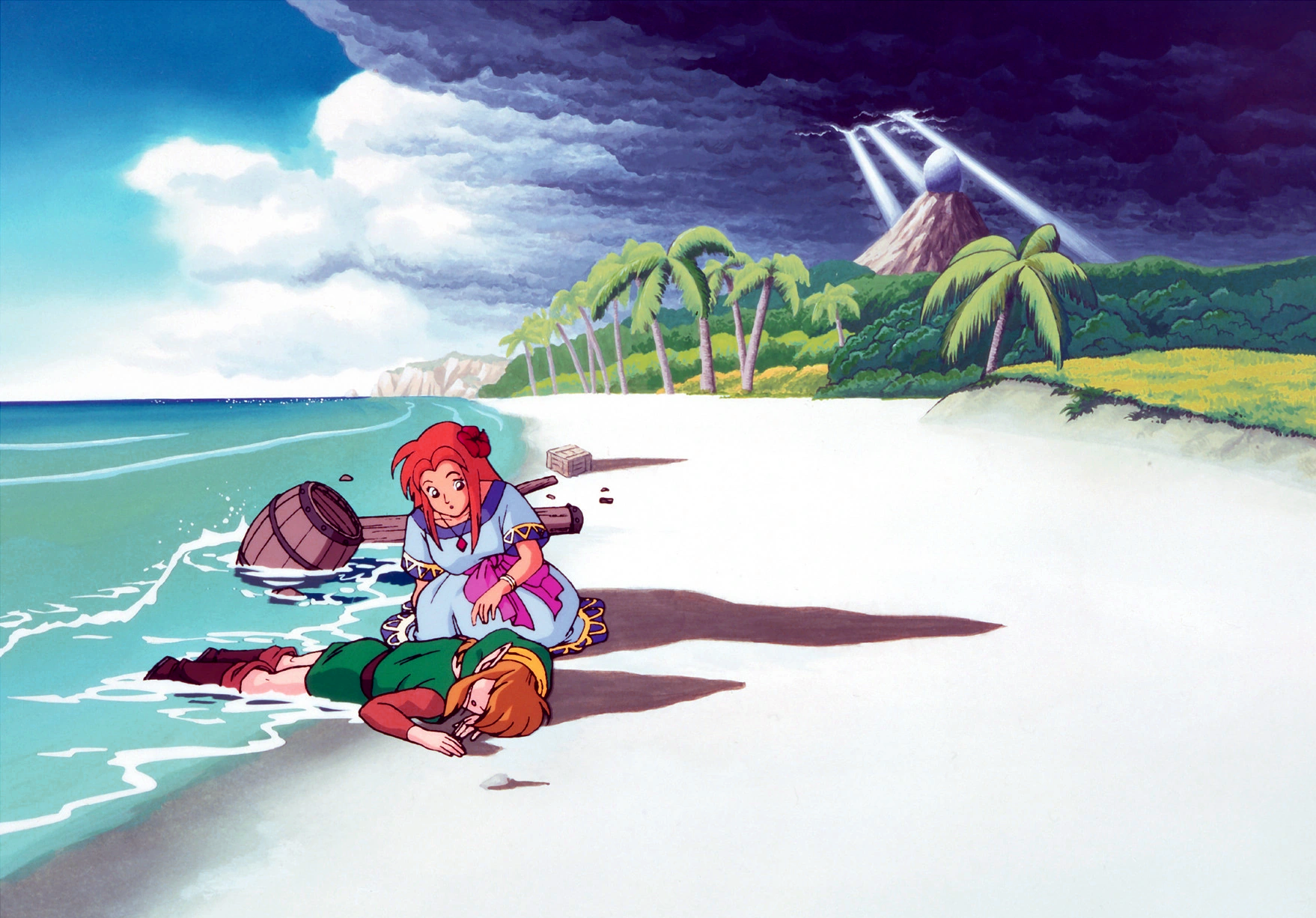
Knowing that the creators of Link’s Awakening have owned up to Twin Peaks being a major inspiration, I’m surprised that Link = Laura Palmer isn’t a thing more widely discussed.