

Did Dhalsim Get His Name from a Curry Restaurant in Osaka?
Early in the lifespan of this site, I wrote about how the original eight Street Fighter II characters got their names. At the time, the outlier was Blanka, just because I couldn’t find an explanation for his rather non-intuitive name. He ended up getting his own post, and in it I argued that he was named after Hama Blanca, a tropical-themed tourist attraction that existed in Wakayama, close enough to Capcom’s headquarters in Osaka that the people who made Street Fighter II would have seen advertisements for it. Although I haven’t gotten any former or current Capcom employees to sign off on this etymology, I’m confident in my detective work.
Today, however, I’m returning to one of the other seven: Dhalsim, who may or may not be named after an Indian restaurant that’s a lot closer to Capcom’s offices than Hama Blanca was. When I wrote the previous Street Fighter II name origins post, I felt like this one was more or less settled. However, I actually think there’s a lot going on here, to the point I’ve tried and failed to write this a few times since the start of the new year.
Discussing Dhalsim’s name gets me into territory that I’ve found myself in more and more often since I started this site: “Oh, the widely shared origin about a given thing might be wrong, so now I have to reconcile this with the fact that more popular, less correct version of the story has been told enough that it still has meaning,” if that makes sense. I have been working on a larger and longer piece about a different video game series that is full of this, with the accepted lore just skips over all the times when someone said something that’s different or maybe even outright contradictory. Instances like these could lead to conversations about issues such as the malleability of memory and the creation of a “truth” that maybe never actually happened, I do realize, and there is certainly a place to have those. But also I’m just a guy who has a website about how video games and their elements came to be, and I want to know why one story ended up being presumed true while another one was cast aside. And as I write this paragraph you’re reading now, I’m not sure where this essay will end up.
This all began with an interaction on Bluesky with Miguel Corti, who until 2022 worked on Capcom’s localization team in the Osaka office and says staffers asserted that Dhalsim really was named after a nearby restaurant. In fact, during a 2021 trip, Corti picked up a business card from this place — Dhall Curry Shop (カレーショップ ダール).
Here is the front and back of that card.
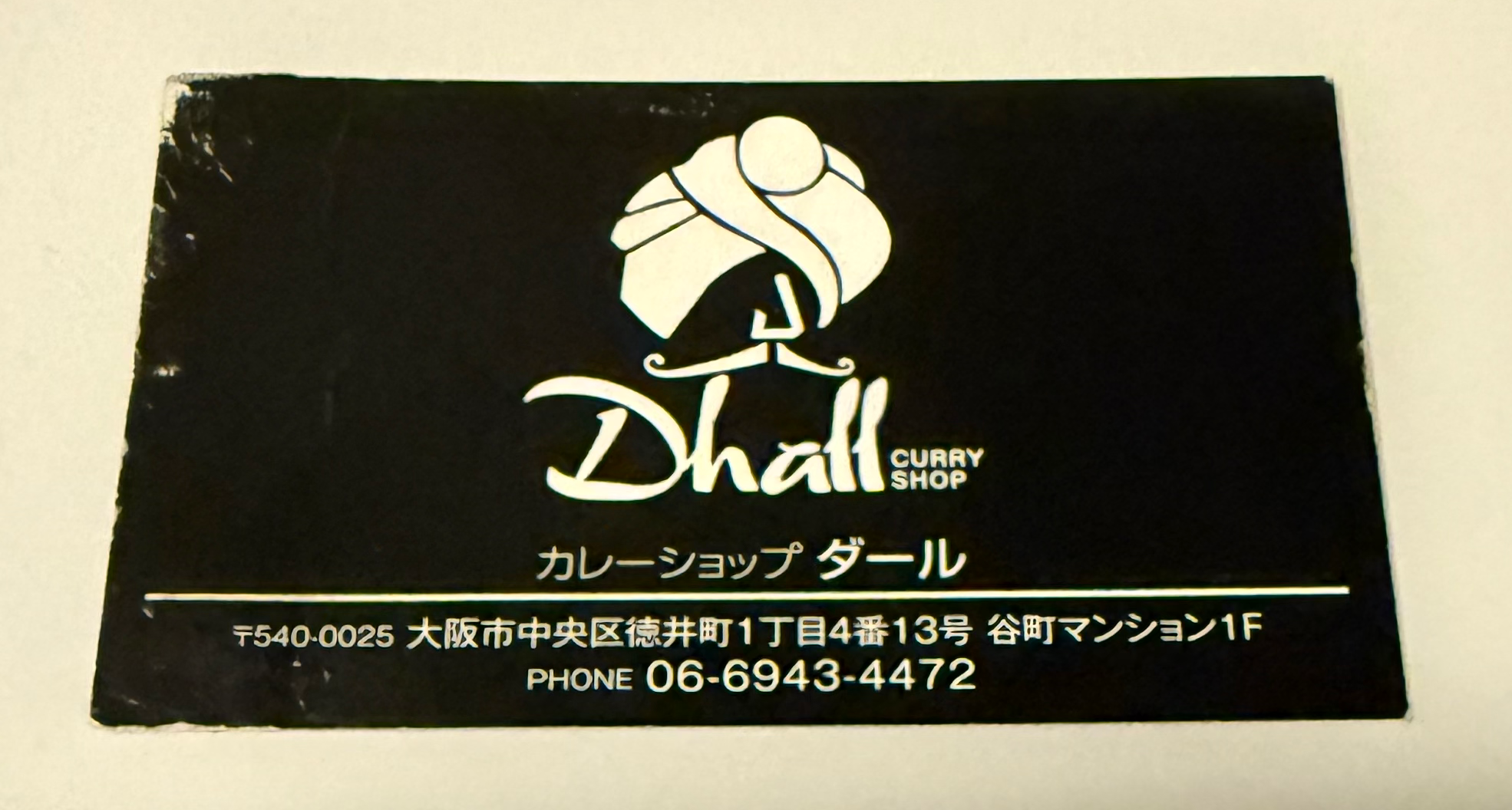
The name of the restaurant as it’s written in romaji on the card, Dhall, and the commonplace Indian dish, dal, are both rendered with katakana as ダール, and there are points in this post where it’s not clear if a Japanese person is talking about the restaurant specifically or the dish generically. For what it’s worth, the Hindi word दाल can actually be written any number of ways in English.
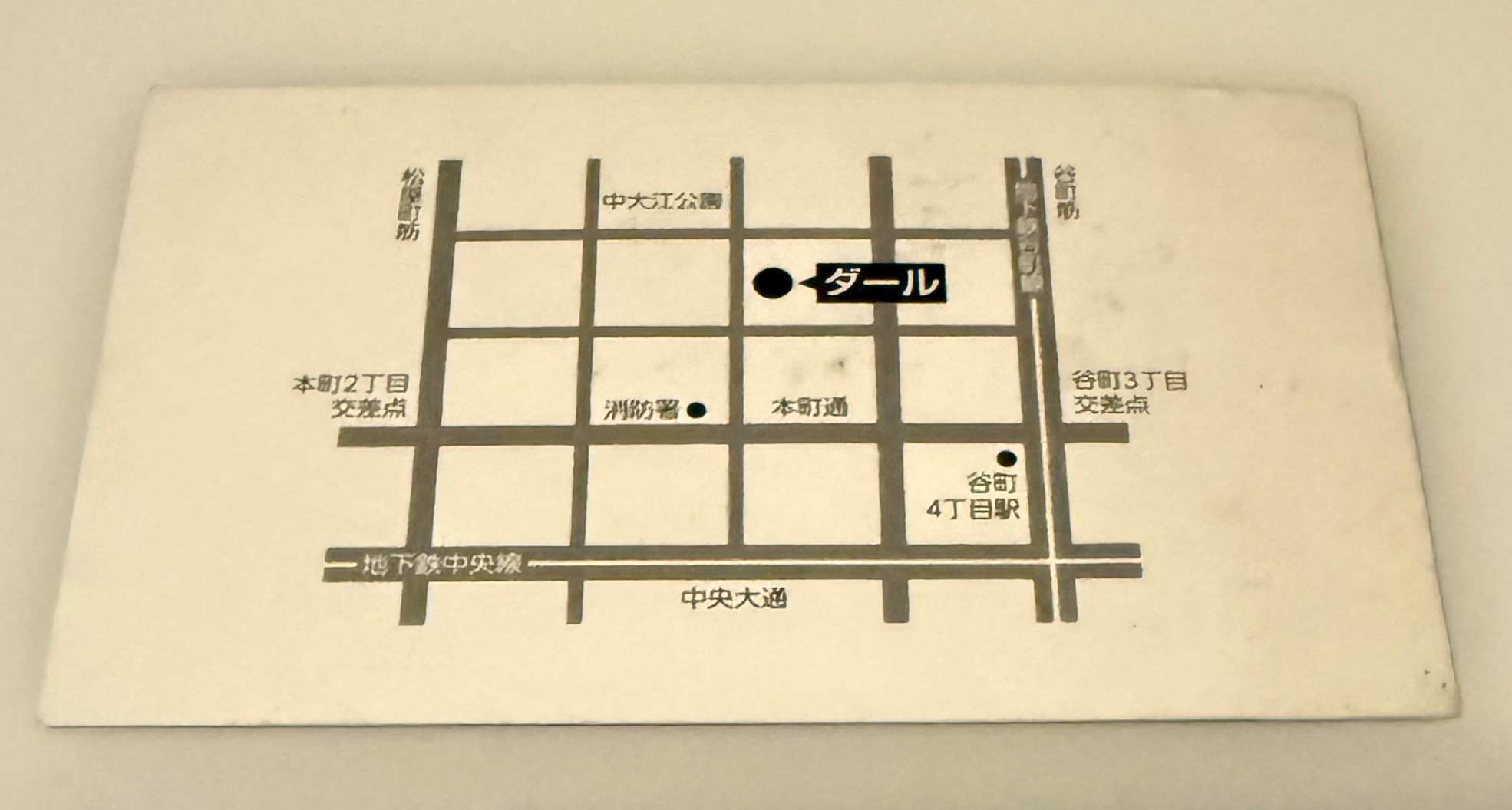
You can see this area in Google Maps here.
This restaurant serves Japanese-style curry, which is arguably a distinct dish from the original Indian version, but there’s nonetheless what looks to be an abstracted Indian man in the logo. This guy doesn’t look much like Dhalsim, but he does look a little like the designs for Great Tiger, the turban-wearing Indian fighter seen in the sketches of the initial eight playable characters planned for Street Fighter II.
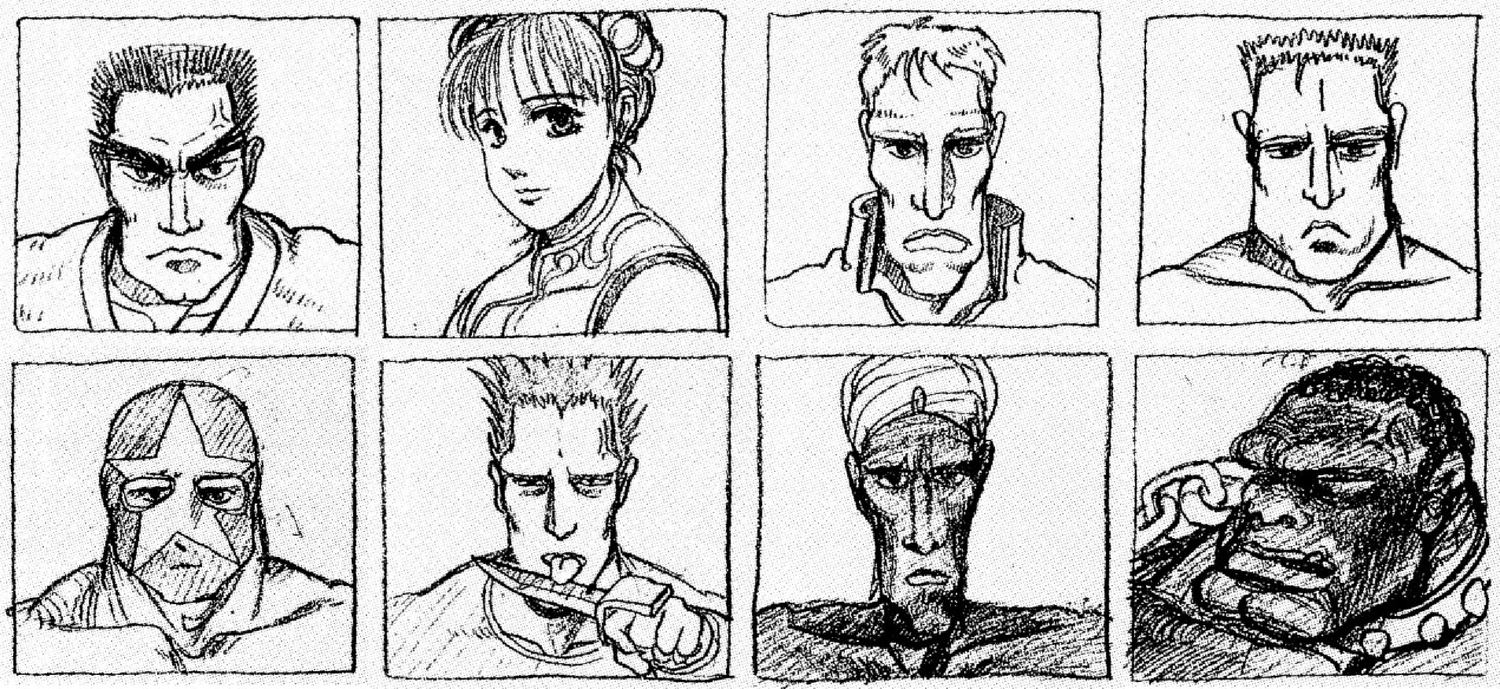
A real bunch of losers! Not a Ryu or a Ken to be found, and even the one who looks like Chun-Li is not actually her. Great Tiger, the proto-Dhalsim, is the second from the right on the bottom row, in between the knife-licking psycho and the racist caricature that eventually became Blanka. It’s complicated. Read about that one here.
You have to wonder if at any point Great Tiger might have had the handlebar mustache seen in the Dhall logo. It’s perhaps worth pointing out that Nintendo’s Punch-Out!! series also has a fighter named Great Tiger, and he looks a lot more like the guy in the restaurant logo.
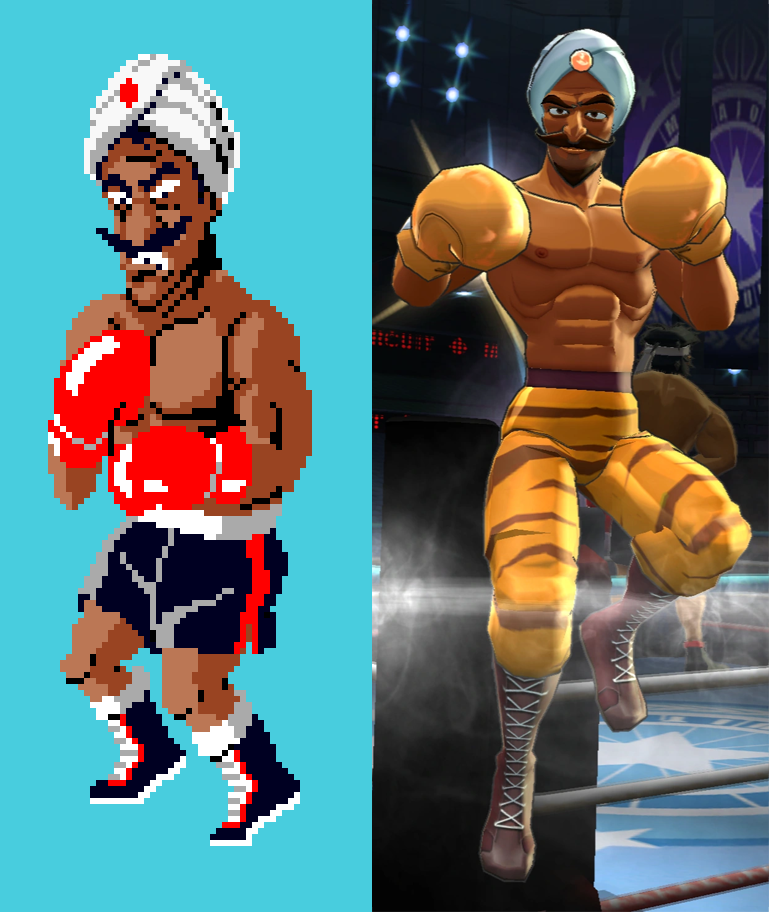
Great Tiger sneering in the 1984 arcade version (left) and looking much more debonair in the 2009 Wii sequel (right).
This Great Tiger debuted in 1984, three years before even the first Street Fighter hit arcades, to say nothing of the 1991 sequel that introduced Dhalsim. But then again, I have to imagine the man in the restaurant logo and the Punch-Out!! character both sport the specific style of mustache for a reason — either as a result of some Japanese stereotype about how Indian men looked or because both were based off some common pop culture antecedent that likely caused a Japanese stereotype about how Indian men looked.
Anyway, the Osaka restaurant is not particularly fancy — it only seats thirty, and all at the counter — but it’s also fairly affordable and only about a ten-minute walk from Capcom’s main office. Given how I think Blanka was named after a now-defunct resort that was an hour’s drive away from that same office, you might presume that I’d be all for the idea of another Street Fighter II character being named for an establishment that’s even closer and an even better match, nationality-wise. And I would be, honestly, if it weren’t for one of those pesky competing origin stories.
Speaking in an October 1991 special issue of Gamest Magazine, Street Fighter II co-designer Akira Nishitani gives a very different account for how Dhalsim’s name came to be.

Translation:
Nishitani: Dhalsim’s name was taken from Dhalsima, an actual fighter from the India-Pakistan area.
Akemi Kurihara: That kind of thing sounds fake even though it’s true.
Nishitani: Zangief is the same. He’s based off a Soviet pro wrestler. This is the pattern we used. We wanted to give E. Honda a Japanese name. First, we thought something like Suzuki or Tanaka, but we figured westerners are more familiar with Honda. Balrog seemed really strong, so we gave him that name. Vega gives off a strong feeling in Japan, but in America, it’s Virgo/the Virgin and has a feminine image. This was pointed out to us later on.
Kurihara: In the overseas version, Bison’s name is different.
Nishitani: Well, Bison is too similar to Tyson and we could get into trouble. Things can be pretty strict over there.
If Dhalsim really were named for a real-life martial artist named Dhalsima (rendered in the original text as ダルシーマ or Darushīma), this would put him in company with Zangief, Sagat and M. Bison, who were named after the wrestler Victor Zangiev, the muay thai practitioner Sagat Petchyindee and the boxer Mike Tyson. Clearly, the Street Fighter II team felt comfortable naming characters after real-life people. Unfortunately for video game lore nuts like me, nobody seems to know who the hell Akira Nishitani was talking about when he named this alleged fighter from the India-Pakistan region. The only results I could find for that name that weren’t directly related to the Street Fighter character were about the dulcimer, as the katakana rendering for this musical instrument’s name (ダルシマー or darushimā) is close enough that western search engines don’t differentiate. Which is to say that in more than thirty years since Nishitani gave this explanation, it’s remained a dead end, with no one apparently being able to connect the mysterious Dhalsima with a real-life person.
EDIT: Or has it?!
The day after I posted this piece, Shivam Bhatt realized who the Indian martial artisit in question likely is: the Indian wrestler Dara Singh, who was a star in his home country, who competed in Japan, and who ultimately came to renown among wrestling fans worldwide. (He also became an actor, playing Hanuman in the 1987 TV series adaptation of the Ramayana.) His public image during the height of his wrestling career has little in common with how Dhalsim, I’ll admit, but he’s actually very close to the two Great Tigers — the one in Punch-Out!! especially.
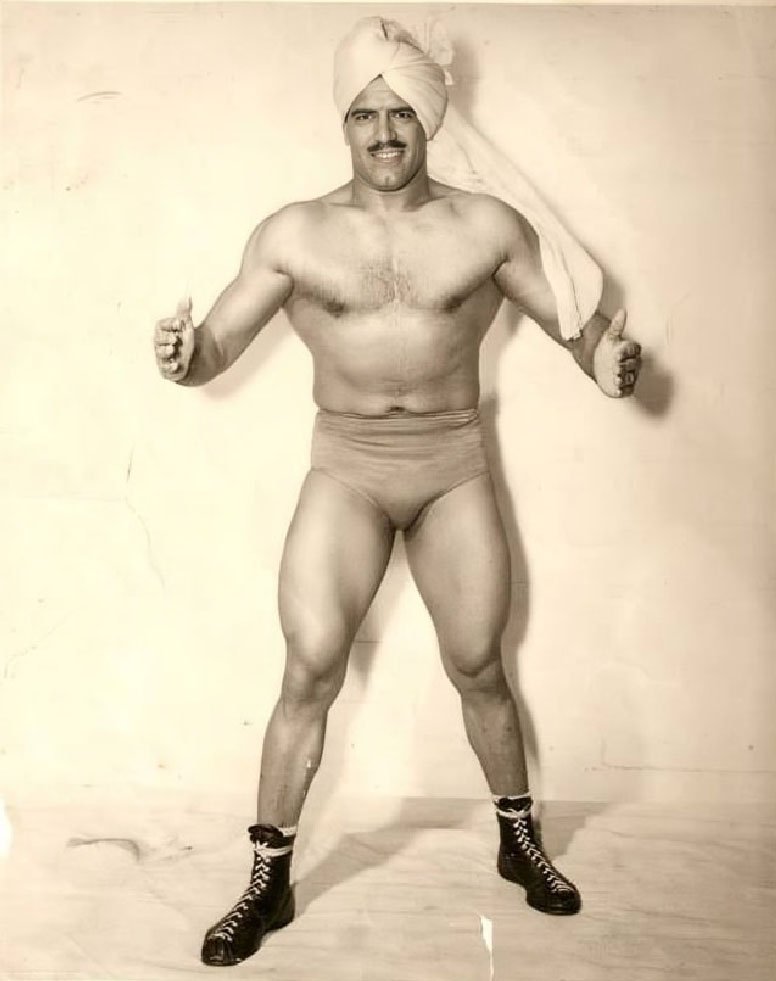
What’s more, the katakana for Singh’s name would be ダラ・シン (Dara Shin), which is close to both Dhalsim’s (ダルシム or Darushimu) and that of the mysterious Dhalsima (ダルシーマ or Darushīma) that the connection seems unmistakable, even if this name would have made more sense attached to the Great Tiger version of the character, but also Singh’s name would have persisted as a kind of shorthand for “strong Indian guy.” And I can think of a number of reasons why this might have been recorded incorrectly in the magazine. It’s possible that Nishitani misspoke the name, for one, and it’s also possible that the reporter or transcriber misheard what name he said. But yeah, I feel pretty confident that this is the mystery athlete that was eluding us.
For what it’s worth, this investigation is not the first instance linking Dhalsim and Dara Singh. There’s an earlier one — perhaps the first? — in a 2010 post on the Spanish-language blog R. Mika’s Training Room. It had never come up in my previous research and I only found it today by searching for Dhalsim’s name and Dara Singh’s together.
In that same Bluesky convo, Victor Perfecto also chimed in to point out that the Punch-Outt!! character Great Tiger might be a reference to Tiger Jeet Singh (no relation), an Indian-Canadian wrestler who was well-known in Japan at the time. Capcom’s pivot from another character named Great Tiger to one named for Dara Singh could be interpreted as them as a “more original” Indian character, even if he was still based on a real-life personality.
According to Corti, his Capcom coworkers during his stint there explicitly identified it as being “partially” responsible for Dhalsim’s name. “People at Capcom believe it to be true,” he told me in a DM. “When I was working on Marvel vs. Capcom 3, the fighting designer, who was the director of Street Fighter III, told me about it. But since he wasn’t around during the original Street Fighter II, it’s hard to say if that was the only source of the name.”
To be clear, I totally believe Corti that people at the company relayed this information as being the real origin of Dhalsim’s name. In fact, that’s probably what they were told, because that’s the kind of story that would get passed around a workplace over the years. Most offices that have existed for a long time eventually get their own internal mythology in one way or another — just more usually about an epically broken toilet or a wild holiday party than something like an iconic video game character.
But assuming the rumor is correct, let’s assume Capcom got the first syllable from the restaurant, which would seem to be named after the lentil dish common in Indian cuisine. Where did the second one come from? One theory traces it to the legume that is called the hyacinth bean in British English but a lot of other names in other parts of the world, including सेम in Hindi, which is usually transliterated as sem. Now, you can make dal from beans or peas in addition to lentils, and there are actually recipes for hyacinth bean dal out there. But I’m not sure if Dhalsim’s name therefore means “hyacinth bean dal,” exactly. And given that the Osaka restaurant actually specializes in Japanese-style curry, I’d bet this dish probably was not on the menu. (Though for what it’s worth, there is a Japanese name for these: 藤豆 or fujimame — literally “wisteria bean.”)
Regardless of where that second syllable comes from, this theory for the origin of Dhalsim’s name would seem to be supported by another similar one, though about a less famous character: Wong Who, a enemy character from the original Final Fight and one of the Mad Gear gang’s “headbutt corps.”
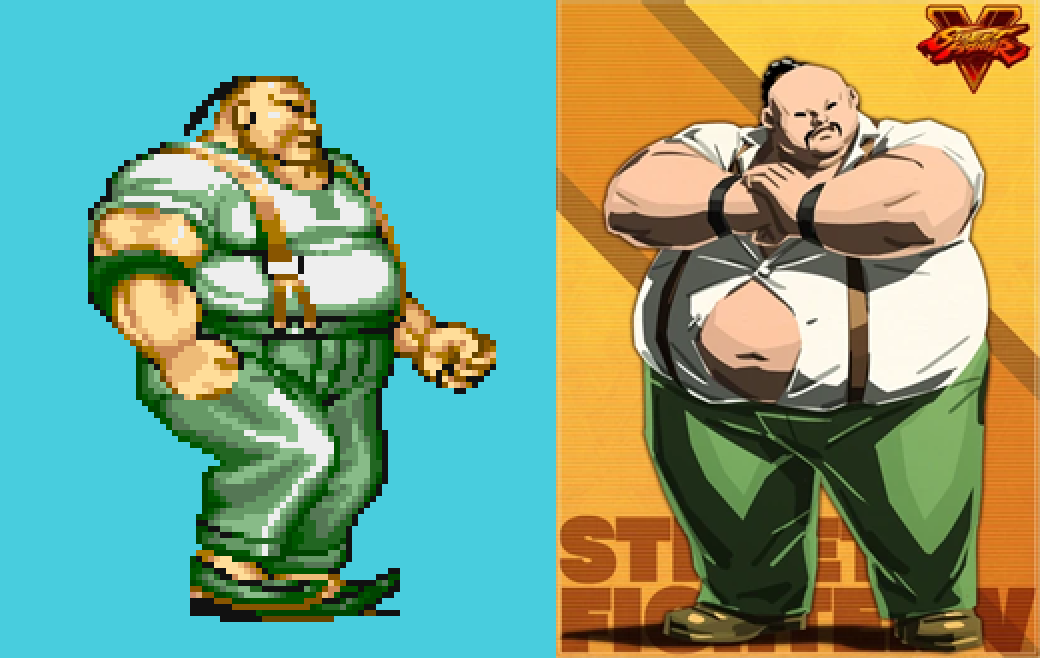
A big boy! Left: Wong Who’s sprite in the original Final Fight. Right: New art done for the Shadaloo Combat Research Institute as part of Street Fighter V.
In the artbook Capcom Design Works: Early Days, it’s explained that a larger old man that staffers saw at an Osaka Chinese restaurant inspired a member of the three palette swaps that comprise the big-bellied headbutt corps. Because the name of the restaurant was Wangfu and because Wong Who’s Japanese name is ワン・フー or Wan Fū, it seems pretty clear to me that he was the result of this inspiration. For some reason, however, it’s noted in both Japanese and English accounts that the inspiration was actually Bill Bull, another of the palette swaps. I actually think Bill Bull is a reference to someone else entirely, but I’ll save that for a future post, to be written I get my hands on that artbook. But either way, it’s an instance of something in a game being inspired by an eatery near Capcom’s office. If it happened once, does that mean it could have happened twice? In theory yes, but Nishitani more or less stuck to his guns back in a 2014 tweet, when he acknowledged it but called it a false rumor. “And yeah, there’s a rumor, but it’s not true. There was a fighter he was based on, and I think his name was Dhalsima,” he wrote.
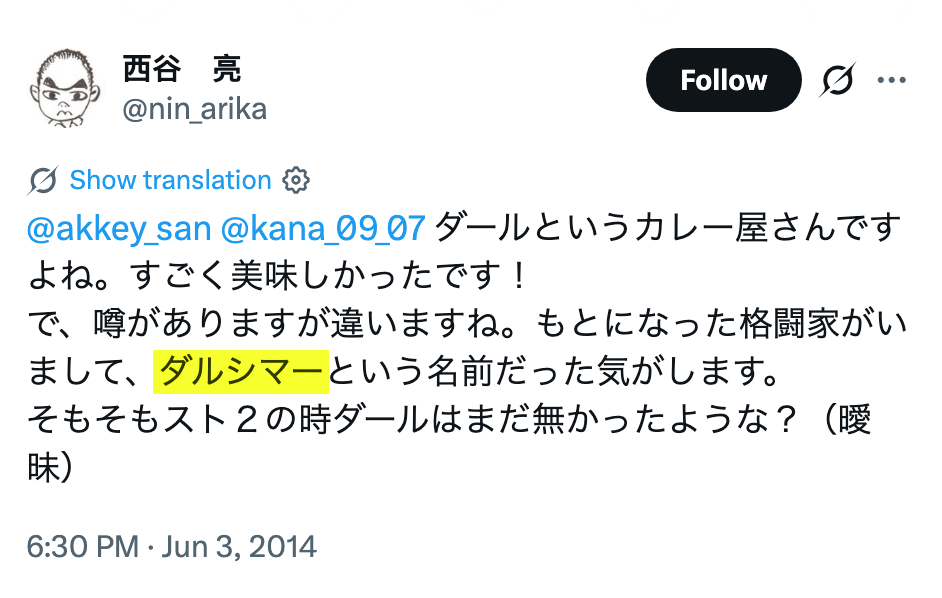
And to be clear, he’s writing something a lot closer to the name he gave back in the 1991 issue of Gamest: not ダルシム (Darushimu, meaning Dhalsim), but ダルシマー (Darushīma, presumably meaning Dhalsima but with a long “a”) whereas Gamest wrote is ダルシーマ (Darushīma, also presumably meaning Dhalsima but with a long “i”). And I presume Nishitani would understand the difference.
While some have pointed to a 2014 tweet from the other Akira — Akira Yasuda, who planned and designed Street Fighter II alongside Nishitani — as some form of confirmation of the curry shop theory, I think it’s just proof that Yasuda passed up the chance to weigh in on it one way or the other. Really, he just admits to enjoying dal.
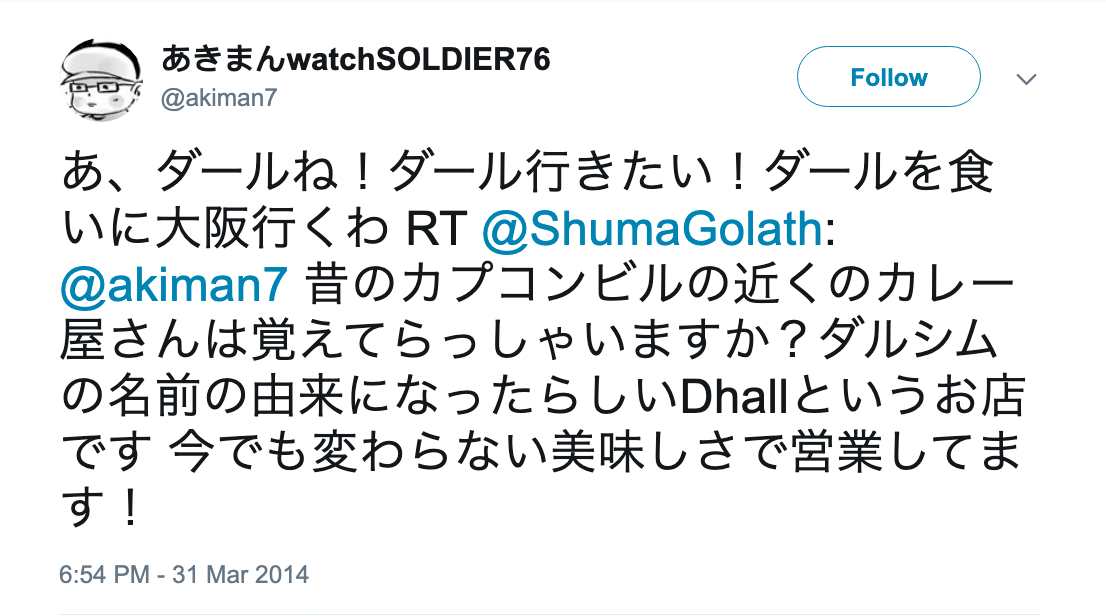
The Twitter user ShumaGolath asks Yasuda if he remembers the dal place near Capcom’s offices and specifically notes that it’s the alleged source of Dhalsim’s name. Yasuda responds, “Oh, you mean Dhall! I want to go to Dhall! I’m going to Osaka to eat dal.”
Yasuda could have said, “Yes, that restaurant is definitely the source of Dhalsim’s name,” but he doesn’t, and he also doesn’t say whether Nishitani original claim is true.
So does this mean that the Dhaslima theory is out of the running? Maybe! Probably? I’m inclined to say yes, but we don’t really know. Because the corporate culture at Capcom has apparently been circulating the curry shop theory for years, it’s entirely possible that this story overwrote some staffers’ memory of how Dhalsim’s name originated. In addition to the fact that memory is faulty and memories change every time we revisit them, we’re also swayed by hearing new information. Even if it conflicts with what we think we know, it can overwrite what’s in our head and make us less sure about how a given thing happened. Perhaps that is what popularized the curry shop theory and ignored any competing evidence. Until someone asks Akira Nishitani if the infamous Dhalsima is actually just Dara Signh, this video game mystery will remain unsolved.
Of course, I did ask Miguel Corti for any insight he could offer on how a company like Capcom comes to agree on a name for a given character. The short answer is that it’s complicated.
“The truth is probably closer to what you found out about Blanka — multiple sources having an influence,” he said. “I’ve been in the room when they decide names, and rarely is it as straightforward as ‘X + Y = Name.’ It's very often an amalgamation of various ideas, and no one remembers the entire brainstorming process, but they’ll remember one salient source of inspiration, like ‘movie X’ or ‘actor Y’ influenced the name and that becomes the de facto truth.”
Of course, this doesn’t help decide if either theory for Dhalsim’s name is true. Perhaps they both are, to an extent.
Miscellaneous Notes
It never occurred to me until writing this that Dhalsim has a weird kinship with Apu from The Simpsons. They’re both representations of India in popular properties that were not made by Indian people at all, and while I’d have to quiz my Indian friends on which one is less accurate, neither seems particularly good at capturing Indian culture. It is notable that while Apu has essentially been relegated to pop culture limbo, Dhalsim is very much still part of the Street Fighter series, though it remains to be seen if adjustments made to his look and characterization have made him any less weird to anyone of Indian descent playing the game.
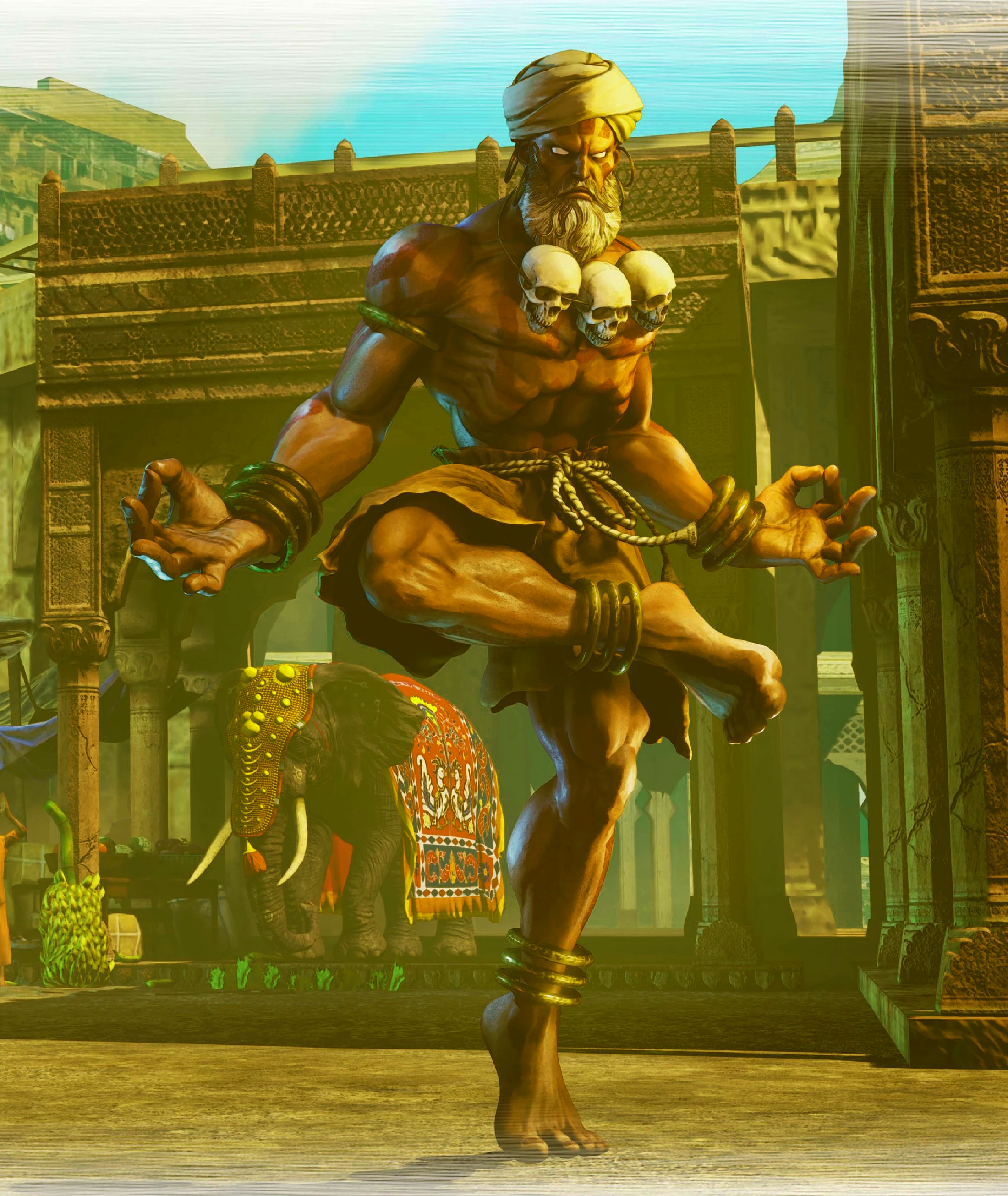
As of Street Fighter V, he’s much more buff, so at least Capcom seemed to realize that sole representation of India didn’t need to look emaciated.
It might seem like a vote in favor of the curry restaurant theory that official Street Fighter materials once credited spicy curry with giving Dhalsim the ability to breath fire. According to some sources, however, this was apparently an invention for that English localization that was not part of the Japanese version of the game, with later entries clarifying that Dhalsim’s pyromancy comes from Agni, the Hindu fire god. Regardless, a Japanese company in 2014 used Dhalsim to promote its home curry, but I guess it’s up to you to decide whether that reflects his origin in a curry house. I think it happened just because he breathes fire.
I know I said earlier that I didn’t think Capcom would name a character something that just means “hyacinth bean curry,” but it’s worth pointing out that Dhalsim’s wife, Sally, is probably just named after the Indian garment. In Japanese, she’s サリー or Sarī. I guess this is like if you named a Scottish character Kilt or a Mexican one Sombrero? I don’t know enough about Hindi to tell if there’s any meaning behind Dhalsim’s son, Datta, being given a name that is close to Naradatta, a name given to another prototype version of the character that became Dhalsim.
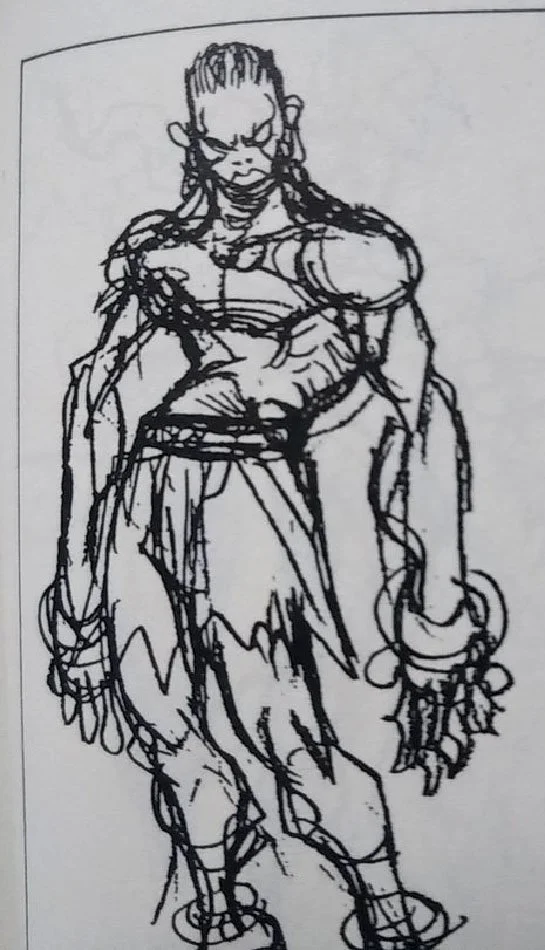
In researching Dhalsim for this post, I happened across Samejima-san, a character that was at one point planned for Street Fighter Alpha 2, which introduced Dhalsim to the mix but which apparently would have also included this character, who had Dhalsim’s body but a new head swapped on it. I’d never heard of him before, and the only art I could find came from this tweet.
And finally, because it’s always useful to point out the times when it seems like something just *has* to be a connection and it just apparently isn’t, Polygon’s awesome oral history of Street Fighter II attempted to refute the rumor that Dhalsim was apparently not inspired by the 1976 movie Master of the Flying Guillotine. The film features an Indian yogi who can stretch his limbs in a way that seems, well, very Dhalsim-like.
But in the oral history, Akira Nishitani claims to have not heard of the film before working on Street Fighter II. Later, he elaborated on this for the 2020 artbook How to Make Capcom Fighting Characters, stating that the idea originated with Zepelli from JoJo’s Bizarre Adventure.
At first, Dhalsim’s arms only stretched out a little bit like the Zoom Punch of Jojo fame, but the next thing we knew, both his arms and legs were stretching all over the place. We imagined India to be a “land of mystery,” so we had fun with that concept when creating Dhalsim. He’s from a land of mystery, so the fact that he can breathe fire and teleport is not so mysterious.
It seems counterintuitive, to be honest, that a character that doesn’t look or act anything like Dhalsim would end up inspiring the thing for which he’s known best, but there’s no reason why Nishitani would be anything other than forthcoming here, especially since he’s copting to taking the inspiration from somewhere else. Right?
EDIT: After the Dara Singh connection came to light, Lucas Kelleher reached out on Bluesky to point out that Street Fighter EX, the 3D spinoff series, features Darun Mister, another Indian fighter who looks and fights a lot more like Dara Singh. He’s specifically a wrestler, after all.
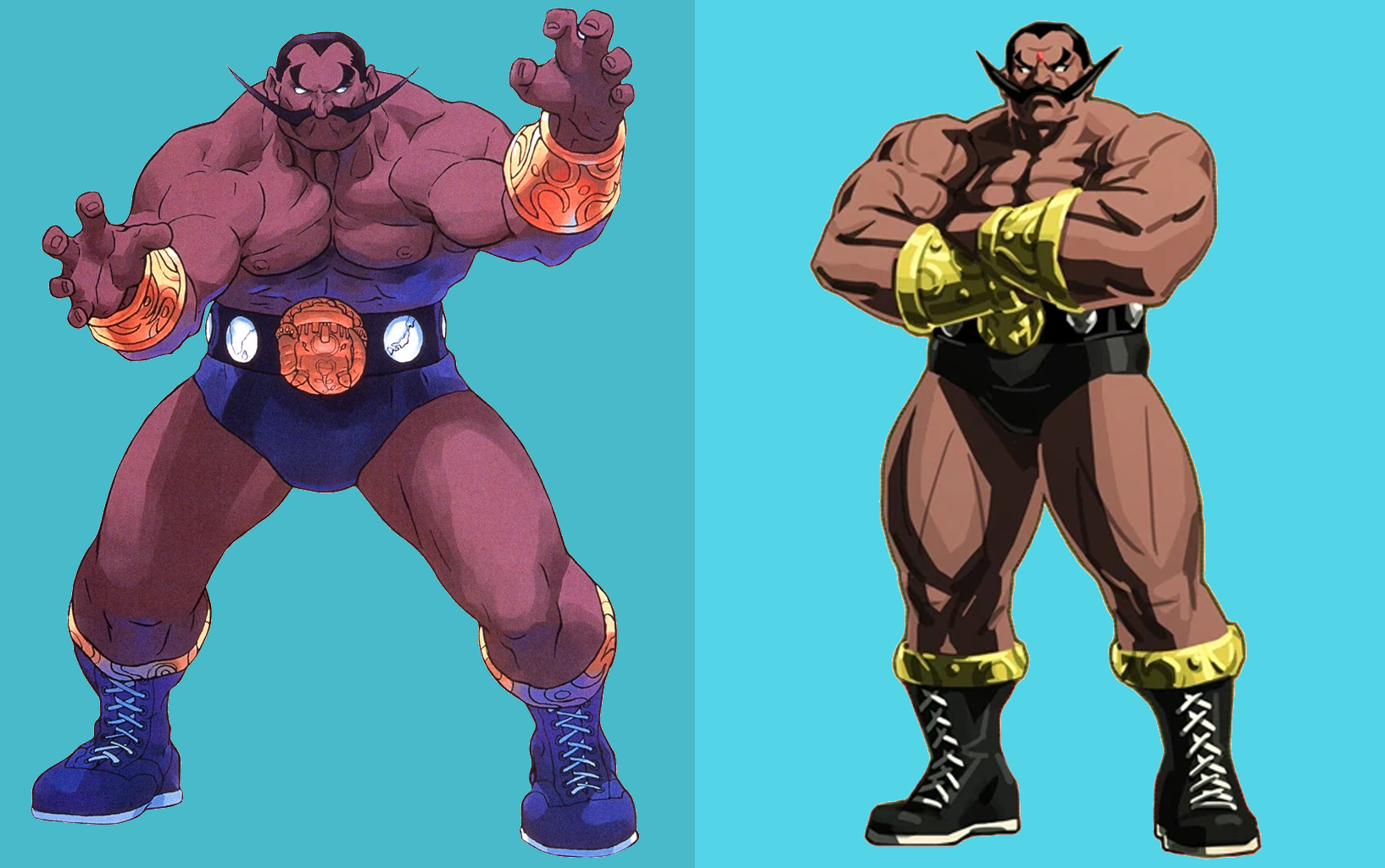
Left: Darun’s art from the first Street Fighter EX game. Right: His art from the Shadaloo Combat Research Institute files.
And while some online liken him more to the Pakistani wrestler The Great Gama, who certainly has a bigger mustache than I’ve ever seen Singh sporting, Darun’s name (in katakana, ダラン・マイスター or Daran Maisutā) recalls Singh’s to an extent. Perhaps it’s also notable that Akira Nishitani headed the development on this game. Perhaps he was trying to create the tribute to Dara Singh that Dhalsim ended up being in name only. I don’t know what it’s worth, but Darun also happens to be one of the only EX characters to be given a role in the mainline series. In Zangief’s storyline in Street Fighter V, he provides a chess piece that is pivotal to the plot, although he is not seen.