The Dream Machine Hiding in Super Mario Bros. 2
More often than not, I don’t think every dream is trying to deliver a message. Some might be, I’ll allow, but a lot of them are just weird and don’t mean much. Why did you dream you were in your grandmother’s house but it was a *different* house and also your kindergarten teacher was getting married there? There might be a reason, but also there might be no reason, especially if this little story your brain told itself was actually a byproduct of a nightly defragmentation process during which random memories flash by and your brain stitches them into a narrative because that’s how humans best understand the world.
My approach to Super Mario Bros. 2 works similarly, not just because this is a game that is very centrally about dreams, but also because not every element in that game is going to give insight about the people who made it.
Take the scary cave at the end of level 6-3. I remember being somewhat scared of it when I first encountered it back in the day, but I don’t think it means anything. Once you go in, it’s a pretty standard desert cave level that leads up to another Tryclyde, the same three-headed snake boss you fought at the end of the first desert world. I think someone just made the entrance look like a face for the hell of it?
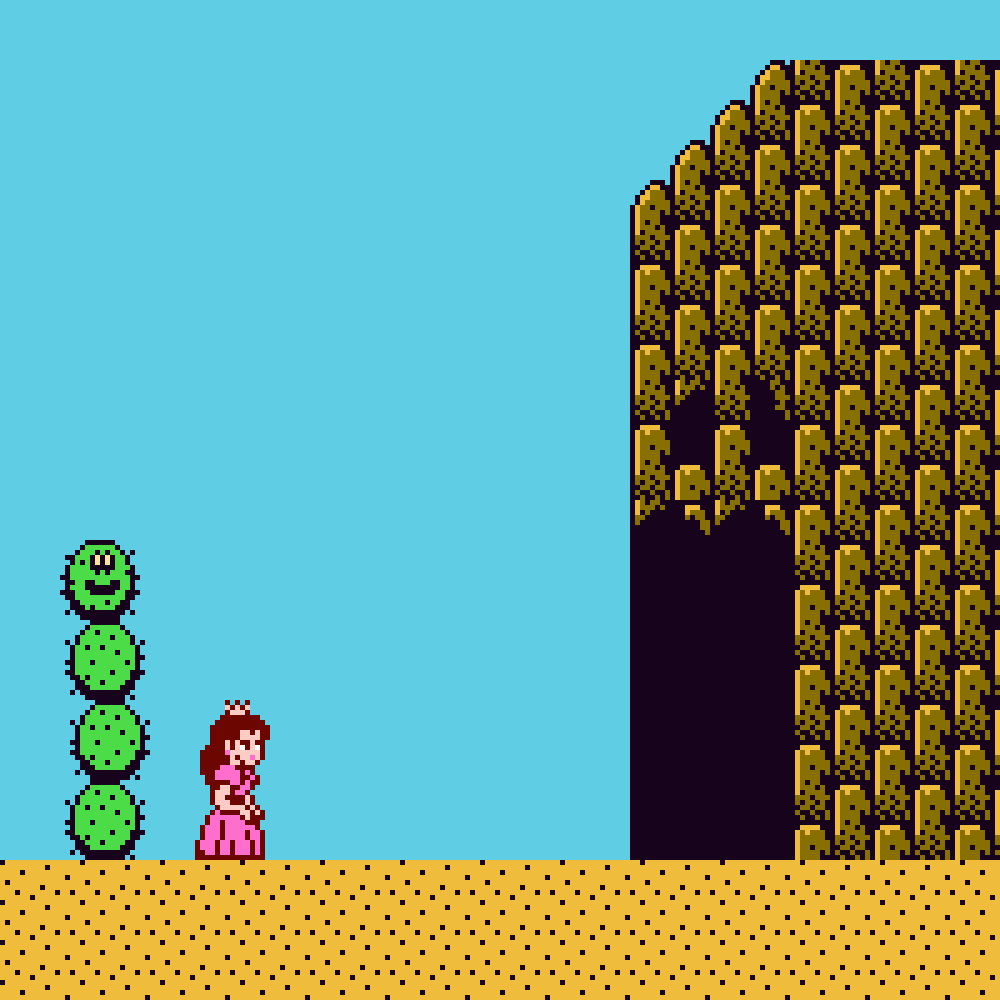
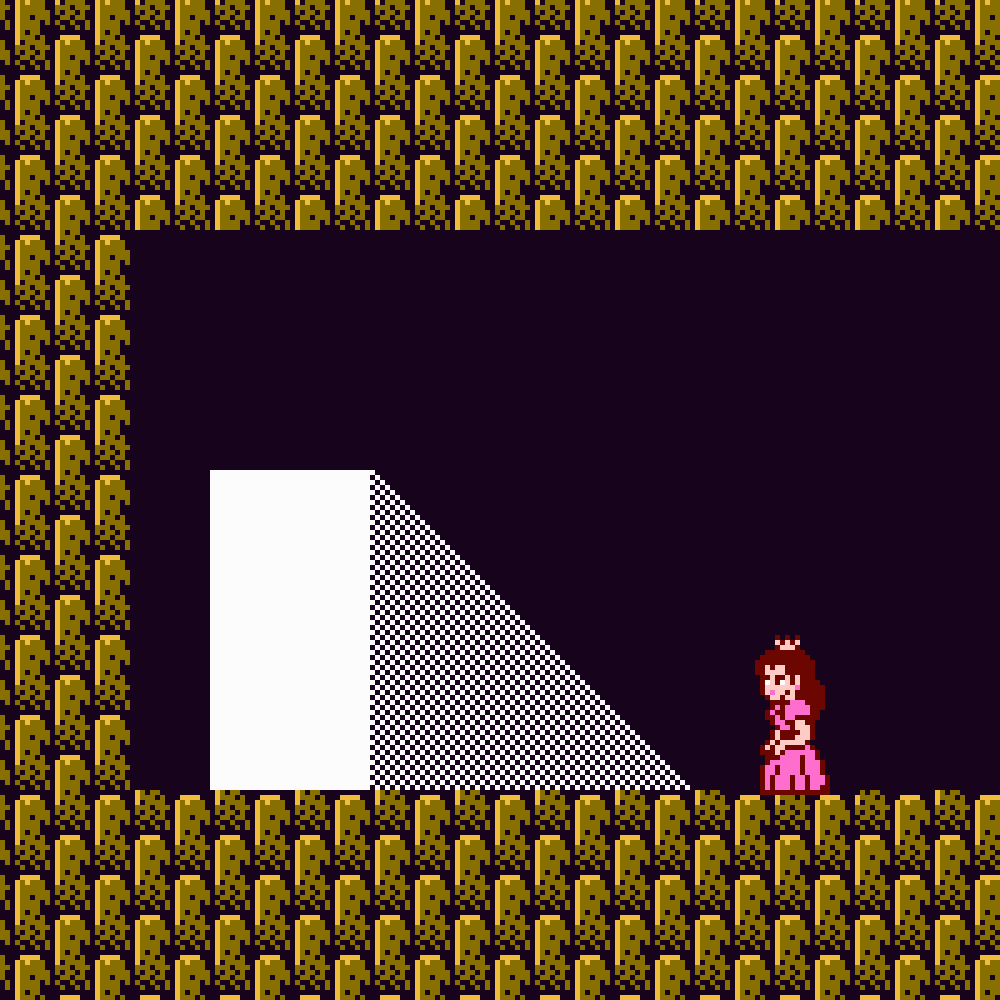
But at the very least, they made the “shaft of light” doorway on the inside appropriately oversized as well. It’s an aesthetic flourish back when those were harder to do.
Or take the Eight Bits. It’s an organization that’s alluded to in the Super Mario Bros. 2 instruction manual, but only twice, in the descriptions for the red Shy Guy and red Snifit.
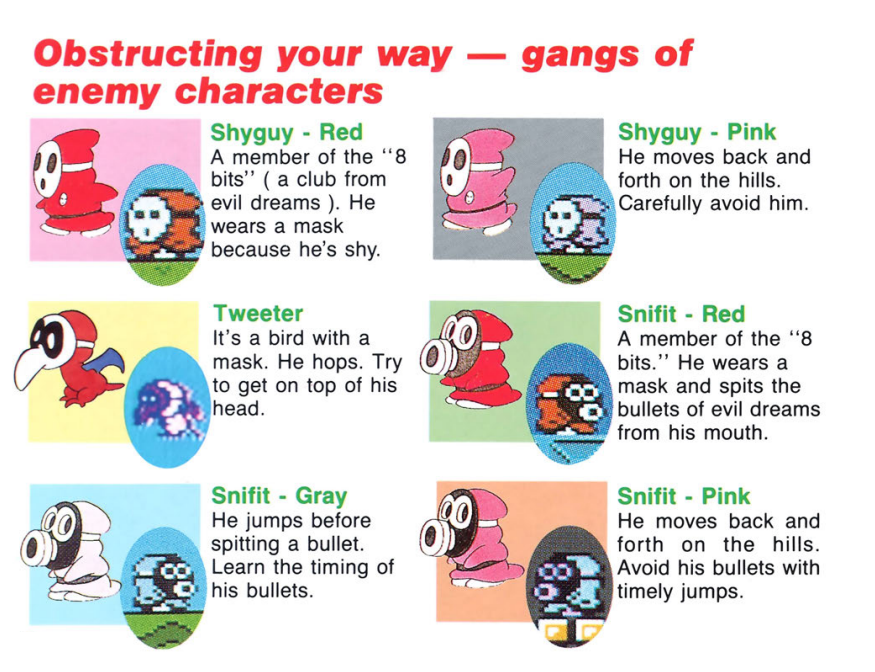
Before I understood that this club name was a reference to the processing power of the system I was playing, I remember thinking initially this actually meant something. Today, I’m fairly sure it’s just a small joke that just got tossed in by the localizer, and that I should not have expected this to be a matter that Super Mario Bros. 2 or any subsequent game would ever invest time in. It’s like the dream about your kindergarten teacher getting married; it doesn’t mean anything, the Super Mario Wiki page notwithstanding. And no, the manual for Doki Doki Panic makes no reference to this group, though it may be the English equivalent of 魔夢族 or Mamū-zoku, basically “Wart clan.”
Because the instruction manual has a few of these throwaway references, I always assumed that the mention of a dream machine had to be one of them. It’s not. It’s “real” in the sense that it’s a plot point in every version of Super Mario Bros. 2, having originating in Doki Doki Panic and maybe even pre-dating it. It just got lost in the translation, not unlike the reason for why the seventh and final world in the game is missing a level.
There are two mentions of any kind of dream machine in the instruction manual. The more important one happens in the description of Wart. Apparently, he’s used this machine to create his army of monsters.
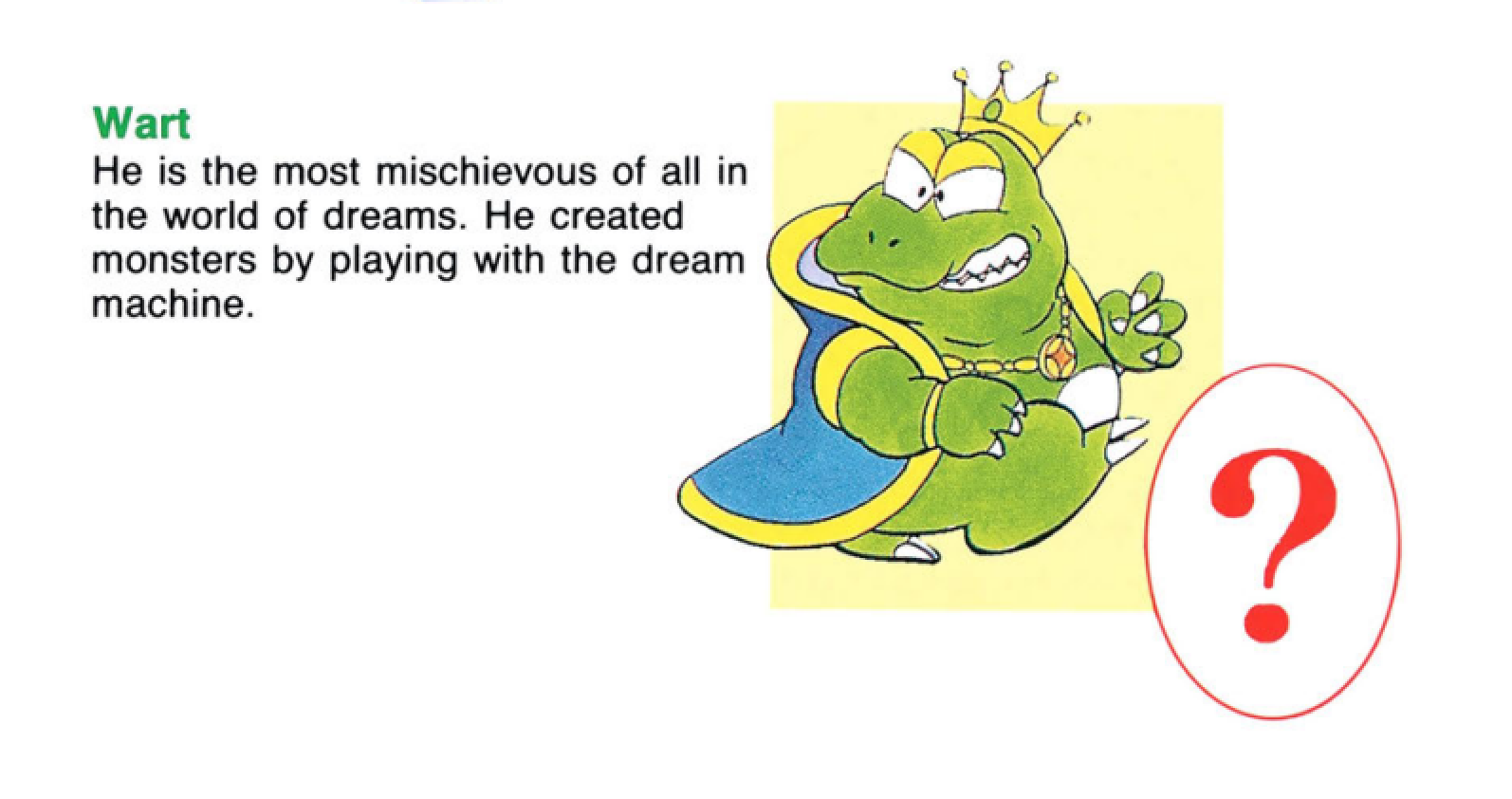
Is it weird how the manual doesn’t show you what Wart looks like even though he looks more or less exactly like the illustration?
For a long time, I assumed that the dream machine was an invention of the English localization in the same way that the Eight Bits club was, but I was surprised to find that the manual for Doki Doki Panic says more or less the same thing.
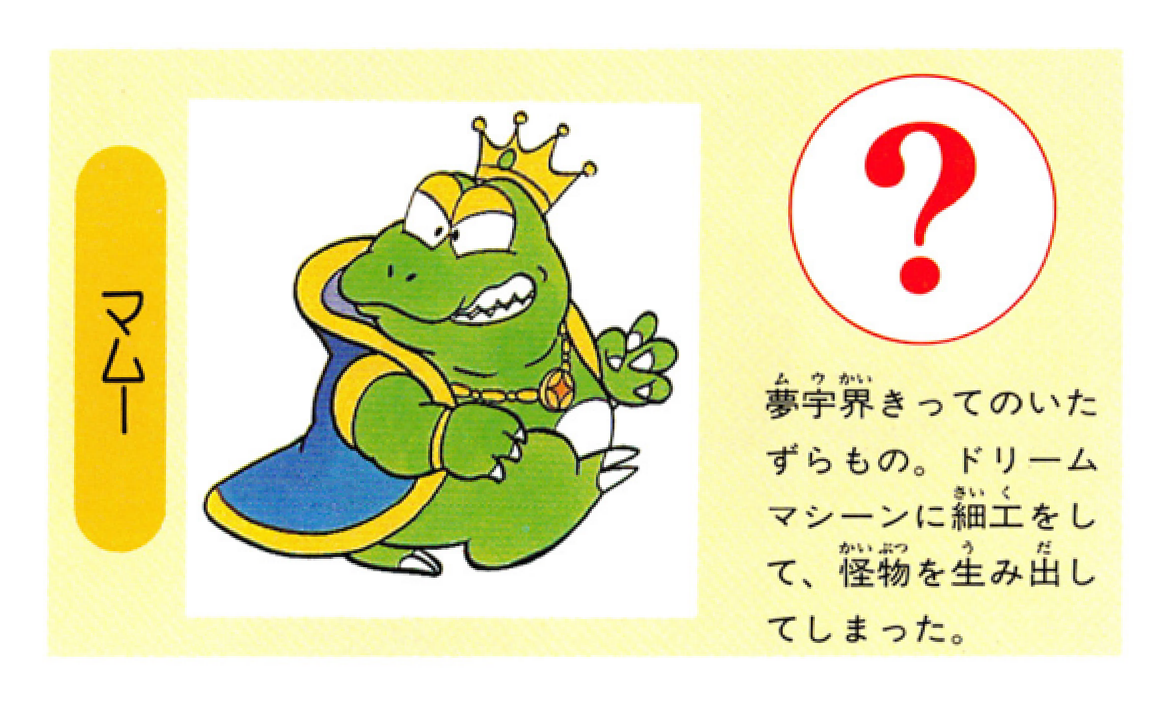
Translation from Fatimah: “The biggest prankster in Dream World. He created monsters by tampering with the dream machine,” with dream machine being written as ドリームマシーン or dorīmumashīn.
As far as the Super Mario Bros. 2 manual goes, the phrase dream machine also appears in the description of the Autobomb, the weird, TV camera-looking devices that shoot fireballs and appear in the ice levels. The text refers to them as “bad dream machines,” but I don’t think this is meant to reference the singular dream machine I’m talking about in this post. I think this is a localization make-’em-up. No such reference exists in the Japanese text, though it does say that they’re nicknamed “the baby stroller of terror” or something thereabouts.
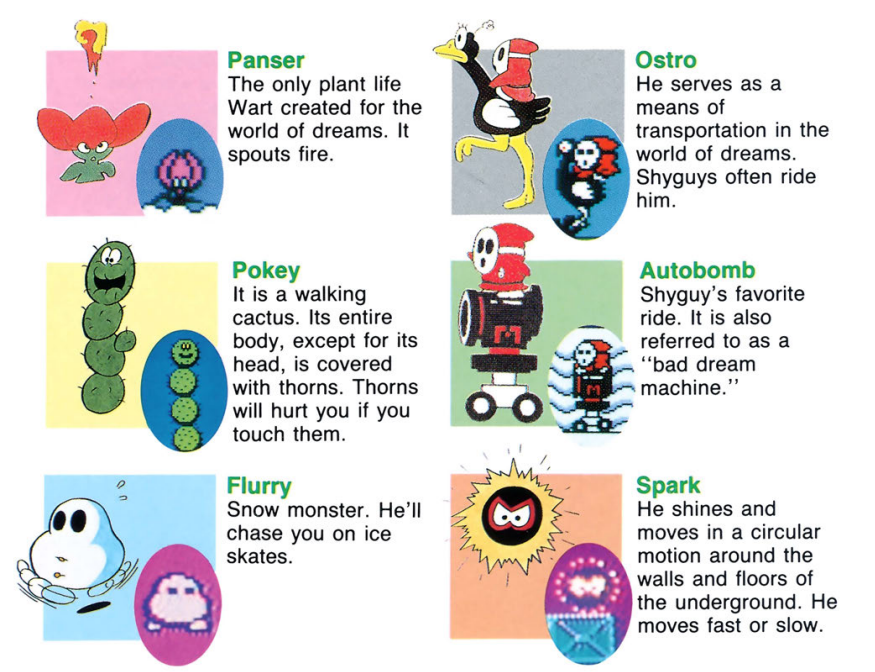
In case you’re wondering, the M that appears on the side is the initial letter of Wart’s Japanese name, Mamū, though when I was a kid, we called this thing “the MTV man.” No, I don’t know why.
Fun bonus fact: The Doki Doki Panic manual lacks an entry for either Flurry or Spark, which means the art for them actually debuted in the Super Mario Bros. 2 manual. I assume that’s why the shading on the Flurry illustration looks better and more detailed than you see on anything that was made for the Doki Doki Panic manual.
Aside from this brief mention in Wart’s description, there is no other reference to the dream machine in Super Mario Bros. 2 or any of the literature associated with the game. It doesn’t appear in the official story in the manual or in the abbreviated version seen in the intro screen. I probably would have forgotten about it altogether if I hadn’t recently happened across HPRshredder’s playthrough of Doki Doki Panic, in which he speculates that the dream machine in question is actually the last level in the game: the floating castle in the sky. (This mention happens at 33:48.)
In all the times I played Super Mario Bros. 2, I had never thought that Wart’s castle was anything other than your standard boss layer, but now that I think about the layout of this level, I see the logic in making this connection. As you enter the castle, you’re beset with conveyer belts moving you the opposite direction you want to go and small pots endlessly spawning monsters. I only ever considered this a platforming mechanic — a new challenge for the final level of the game — and it is that, but it also serves a narrative purpose: It’s the game’s way of representing Wart’s creation of monsters, which is otherwise only mentioned in the story in the manual. The monsters are moving towards you, yes, but they’re also moving toward the front door, presumably to get out and into the world to cause trouble.
I do not, however, think Wart’s castle is meant to be the dream machine itself. That, we’re told in the story offered in the Doki Doki Panic instruction manual, was created by the residents of Mūkai, this game’s version of Subcon, for weather-related purposes, weirdly enough.
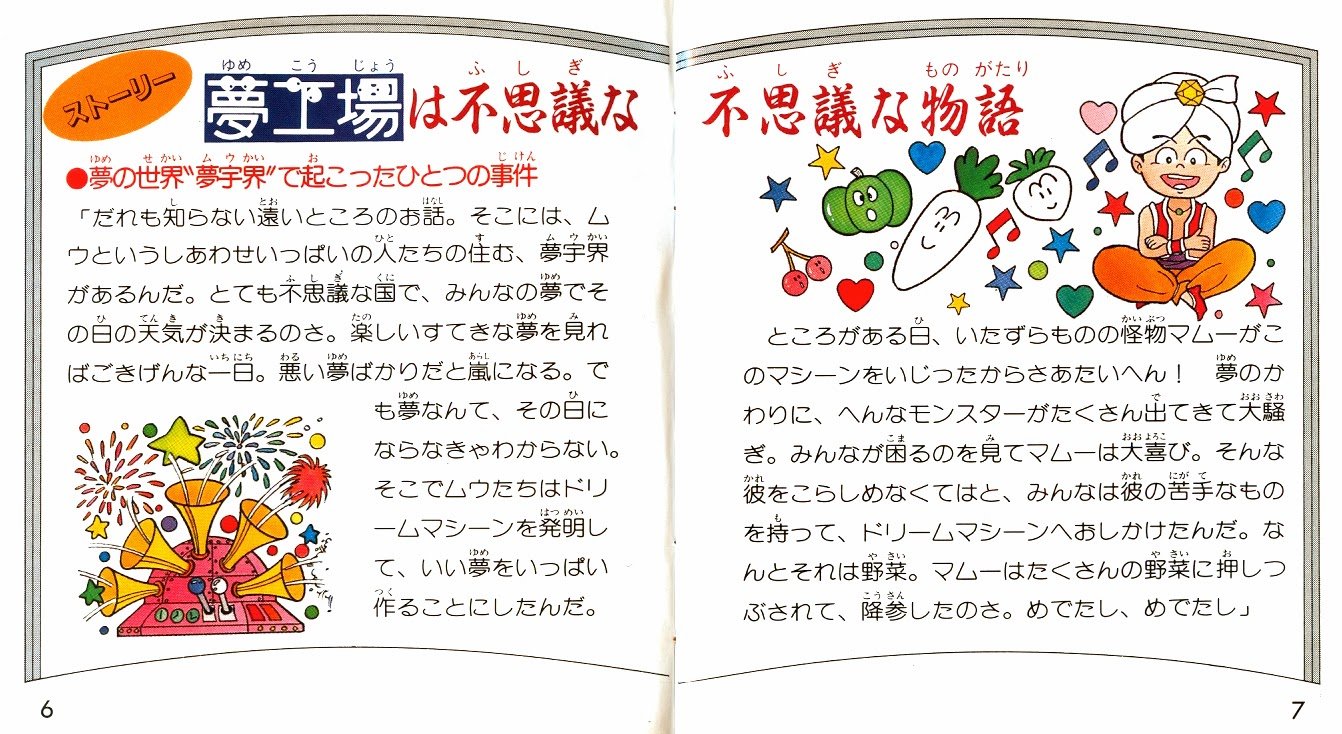
Translation from Fatimah: The Strange, Strange Story of the Dream Factory / Awakening in the dreamland, Mūkai.
This is a tale about a place far away that no one really knows. In the dreamland of Mū, many people live happily. It’s a strange land where the dreams of the residents dictate the weather. With good, happy dreams comes fine weather, while bad dreams bring storms. But who knows what kind of dream will come until the day of. And so the people of Mū invented the Dream Machine to create plenty of good dreams.
However, one day the mischievous monster Mamū tampers with the machine and all hell breaks loose! Instead of dreams, loads of monsters appear, wreaking havoc. Mamū relishes in everyone's distress. To scare him off, they go to the Dream Machine with something he hates: vegetables. Mamū was crushed by all the vegetables and surrendered. And they all lived happily ever after.
If you’ve played Super Mario Bros. 2, you will notice the illustration in the bottom-left corner, which is clearly meant to be a version of the device you see in the final room, where you fight Wart.
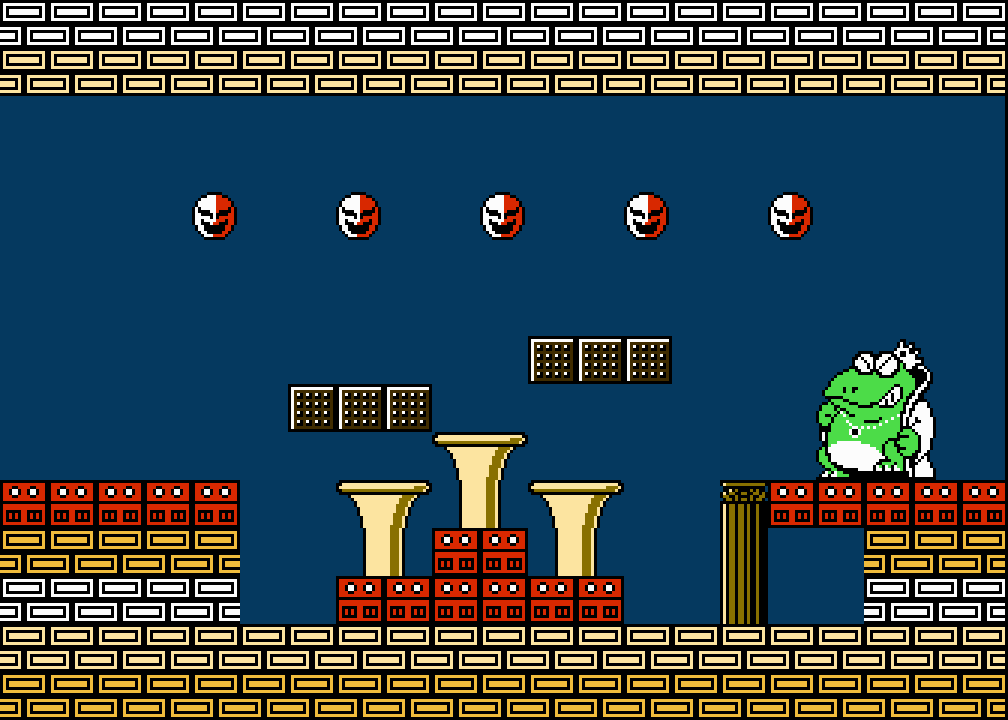
What with all those levels and buttons and doodads, this thing is clearly meant to be a machine — and even if it inexplicably becomes the vegetable-shooting machine during that fight, it certainly has to be the dream machine as well, right?
But the second two pages of the Doki Doki Panic story complicate this a bit by introducing a second thing, the dream factory, which at first glance seems like it might be another name for the first thing, the dream machine.
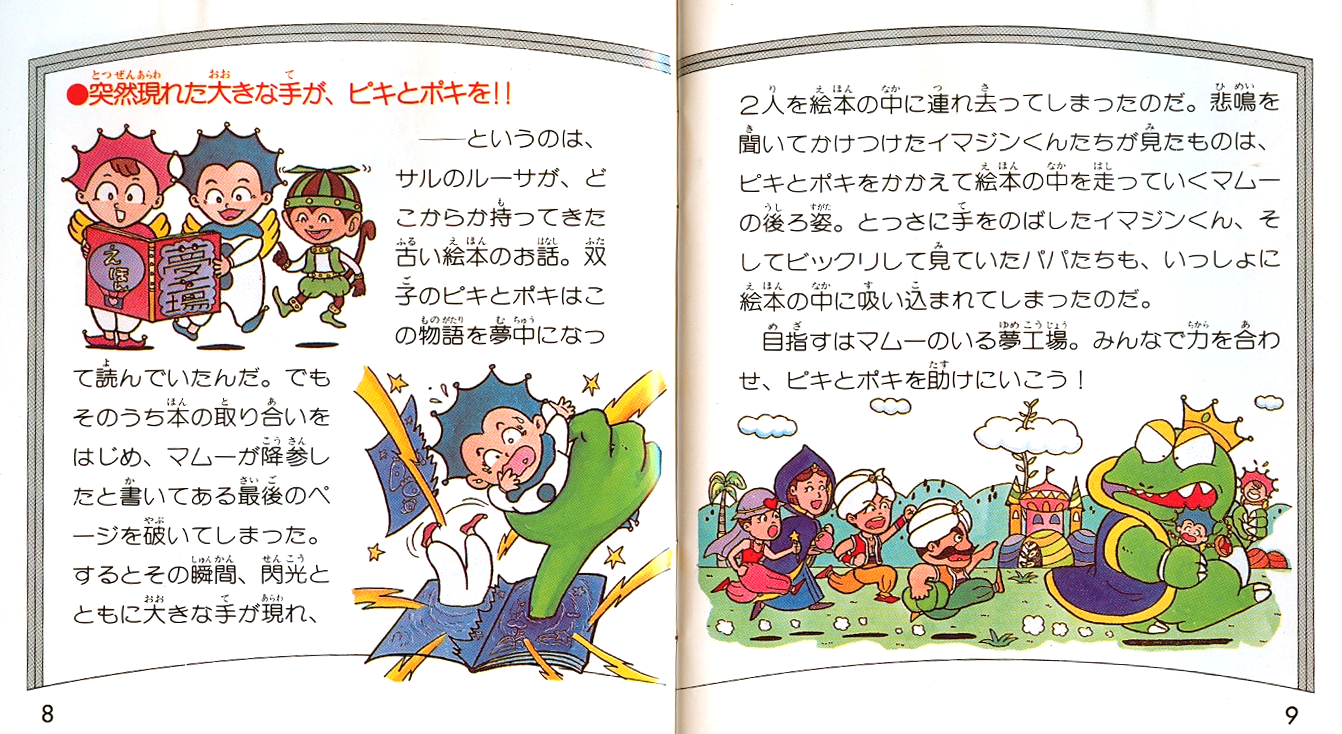
Translation from Fatimah: Piki and Poki and the giant hand that appeared out of nowhere!
This is a tale about when Rūsa the monkey brought an old picture book from somewhere. Twins Piki and Poki were absorbed in the story as they read. But eventually, they started fighting over the book and tore up the last page that said Mamū had surrendered. At that moment, in a flash of light, a large hand appeared and took them both away into the storybook! Imajin and his companions hear their screams and see Mamū running through the picture book with Piki and Poki in his arms. Imajin immediately reached out his hand, and he, along with his father and the others who looked on with surprise, are pulled into the book. Your goal: the Dream Factory, where Mamū resides. Work together to save Piki and Poki!
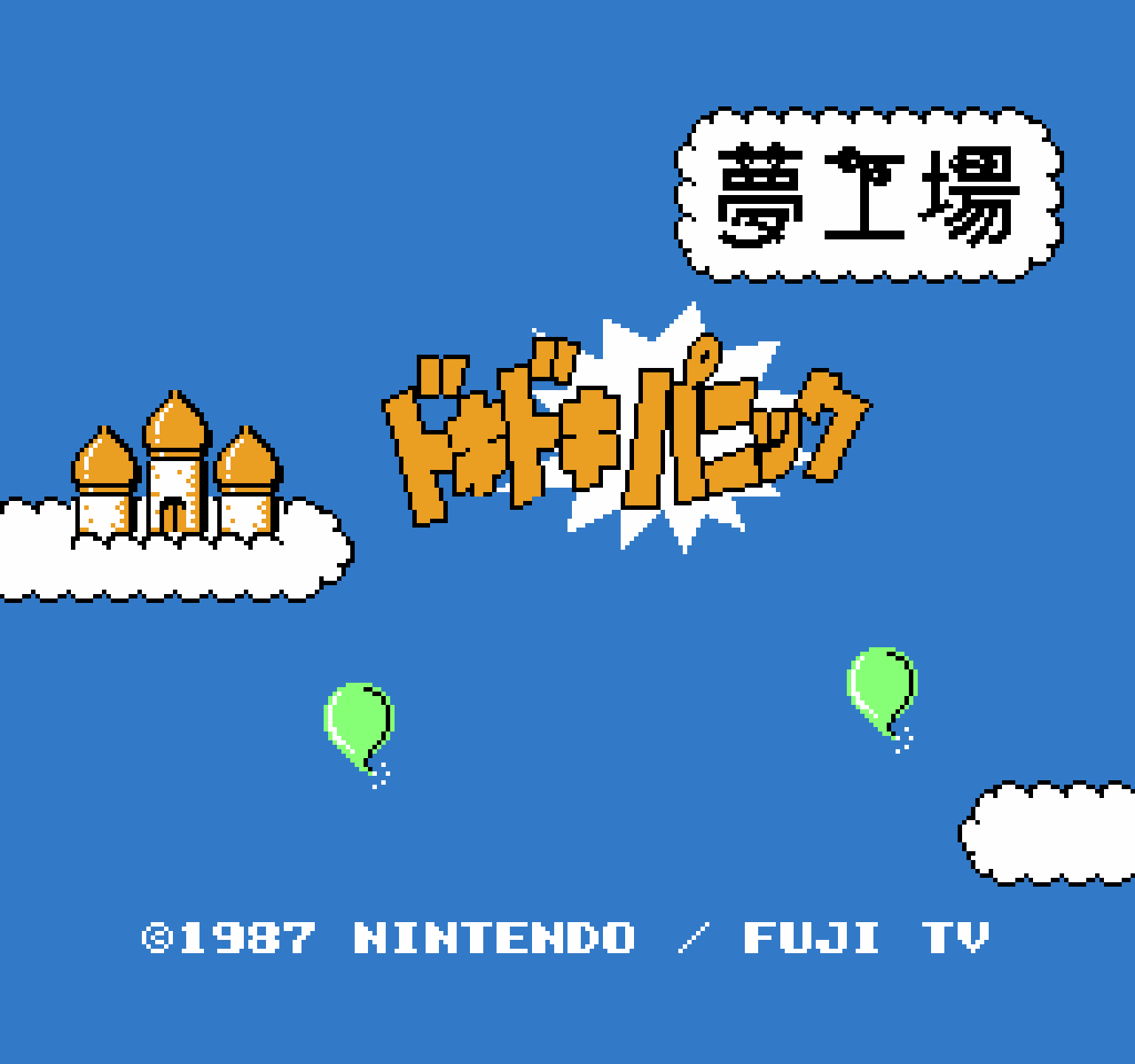
The second to last sentence specifically says that Wart lives inside the dream factory, which it renders as 夢工場 or yumekōjō, with 夢 meaning “dream” and and 工場 meaning “factory” — a compound of 工, “work” or “craft,” and 場, “place.” The difference between a machine that magically creates stuff — dreams, vegetables, probably other stuff, for all we know — and a factory might seem negligible enough that the dream machine and the dream factory could potentially be the same thing, but don’t think this is the case. I think the dream machine is the three-chimneyed doohickey you see in Wart’s room and that it, along with Wart himself, resides in the dream factory. Of course, the full title of Doki Doki Panic is Yume Kōjō: Doki Doki Panikku (Dream Factory: Heart-Pounding Panic), and the game’s title screen would seem to confirm that Wart lives in the actual dream factory. I think that onion-domed building on the left side of the screen is meant to be a simplified rendition of Wart’s castle. Why else show it off on a screen that also features the kanji for “dream factory”?
I get into it in this piece, but all the many versions of this game feature a dream machine and a dream factory because Doki Doki Panic was created to promote Communications Carnival Dream Factory ’87, a sort of World’s Fair-like event held in Tokyo and Osaka in 1987 to celebrate Japanese technology and imagination. As it applies to the real-life event, the name is metaphorical; no one is churning out dreams on an assembly line, so to speak, but then Doki Doki Panic literalized the metaphor, having the game’s big bad reside in a literal dream factory that had been perverted to produce only nightmares. And then within the literal dream factory, there is the dream machine itself, which should be producing good dreams, has been manipulated to produce bad dreams, and apparently also sometimes vegetables.
This is a really weird game! And it’s layered in a way that, like a good dream, leaves enough evidence for you to put together a working theory for why it exists the way it does. No, the dream machine is not an invention of whoever wrote the manual of Super Mario Bros. 2, even if it might seem like one. And because you can tie it back to the Dream Factory ’87 event, it actually pre-dates Doki Doki Panic in a way. It’s fundamental to all versions of this game. It’s just impossible to realize this just playing Super Mario Bros. 2 on its own, and if it weren’t for that one stray reference in Wart’s bio, I would have never put any of this together.
Miscellaneous Notes
I don’t think this could ever merit its own post, so this seems like as good a place as any to mention a Super Mario Bros. 2 mystery that I can’t solve. It is a vegetable mystery, which is the best kind, in case you did not know. In the fight against Wart, the dream machine shoots out three types of vegetables: the wider version of the turnip seen throughout World 7, what I’m guessing is an onion and finally what is clearly a tomato.
Both the onion and the tomato are unique to this part of the game and you don’t encounter them in any other part of the game. Doki Doki Panic features basically the same lineup of vegetables, only the wider turnip is a longer, meaner-looking thing that I think might be a daikon? But those also appear throughout World 7 the way the wider turnip does in Super Mario Bros. 2.

In the Super Mario All-Stars remake, the tomato doesn’t appear. It’s swapped out for what I’m guessing is either a bell pepper or a pumpkin. (Fatimah says green pepper. In the NES version, it’s orange, but the Super NES version colors it green, so I thought maybe it’s a kabocha?) You’d think maybe Nintendo was attempting to reduce the number of vegetable sprites needed for the game by having the dream machine spit out only ones that exist in other areas of the game, but the onion shows up here too. And you can actually see an updated version of the tomato in the game’s code. For whatever reason, it was just not implemented.

Super Mario Advance, however, ditches the unique vegetables altogether. It’s just the turnip and the pumpkin that shows up in this version of the Wart battle. I am the only game historian brave enough to ask why. I demand to know why the tomato ever existed in the original versions of the game and why Nintendo attempted tilted toward an anti-tomato agenda. This is a mystery that haunts me to this very day.
Speaking of weird aesthetic connections between Super Mario Bros. 2 and Doki Doki Panic, there is a scene in the latter’s intro screen that may explain the “shaft of light” doorways I mentioned earlier. In the opening to Doki Doki Panic, you see the scene play out in which Piki and Poki get abducted into the story book. In the background, there is light coming in from a window, and the way this is drawn is very similar to how these strange doorways are drawn.
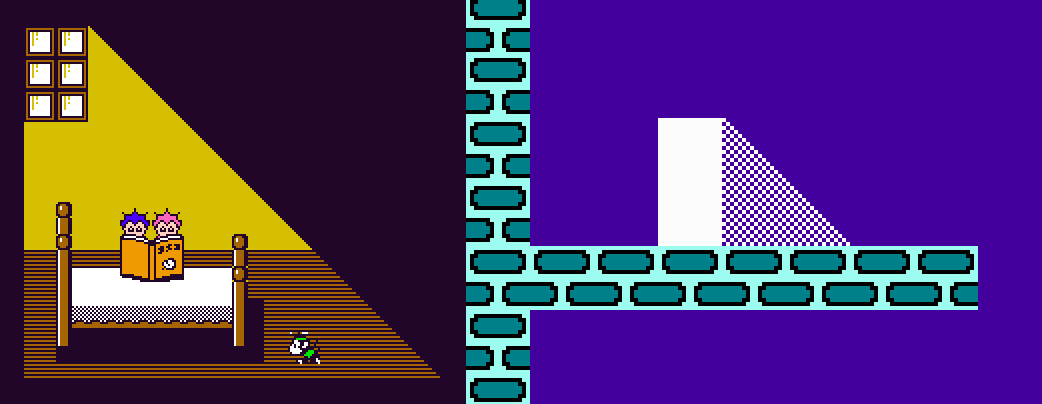
I feel like the doorways are meant to echo this intro screen design, but I can’t actually think of a reason why this would be.
Among other strangeness in the Doki Doki Panic instruction manual is the assertion that there exists a a gray Shy Guy who will chase your character, as opposed to the red one that just walks forward in a straight line and the pink one who paces back and forth, turning around after reaching the edge of the platform it’s on.
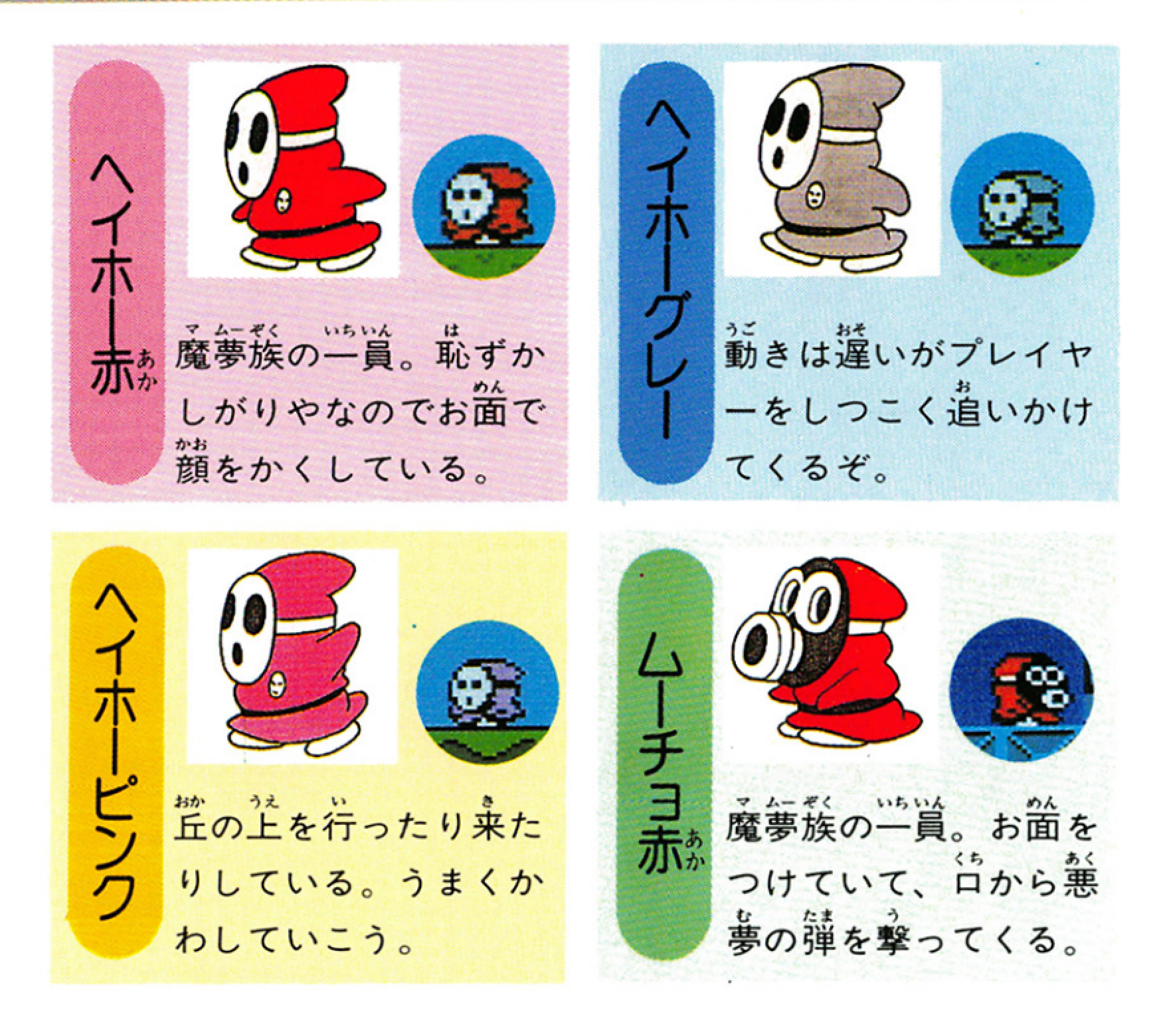
Translation from Fatimah: Shyguy (Red) / A member of the Wart clan. Hides their face behind a mask because they’re shy. // Shyguy (Gray) / Is slow, but will chase you relentlessly. / Shyguy (Pink) / Moves back and forth on top of the hills. Make sure to avoid them. // Snifit (Red) / A member of the Wart clan. Wears a mask and shoots nightmare bullets from their mouth.
No such gray Shy Guy exists — in Doki Doki Panic or Super Mario Bros. 2. We can only conclude that this was meant to exist in the game but was pulled late in development, after the manual had been printed. The roster of enemies lacks any mention of the Tweeter, the hopping bird enemy, so it could be that the gray Shy Guy was switched out for the Tweeter. I actually didn’t know this until I read it on Super Mario Wiki researching this post, but apparently Tweeter will eventually turn around and start following your character, provided it remains onscreen long enough, so I guess that checks out?
Along similar lines, the Doki Doki Panic manual only offers one listing for the Snifit, even though three different color variations show up: red, pink and gray. The gray Snifit stays in one spot and hops, shooting bullets at two different trajectories. The pink Snifit acts like a pink Shy Guy, “patrolling” a given platform and not walking off ledges. The red Snifit functions like a red Shy Guy, walking forward in a straight line, but curiously, there’s one single instance of this enemy in the whole game: in the dungeon part of level 3-3. Back in the day, there was a page on the website Progressive Boink dedicated to the solitary red Snifit.
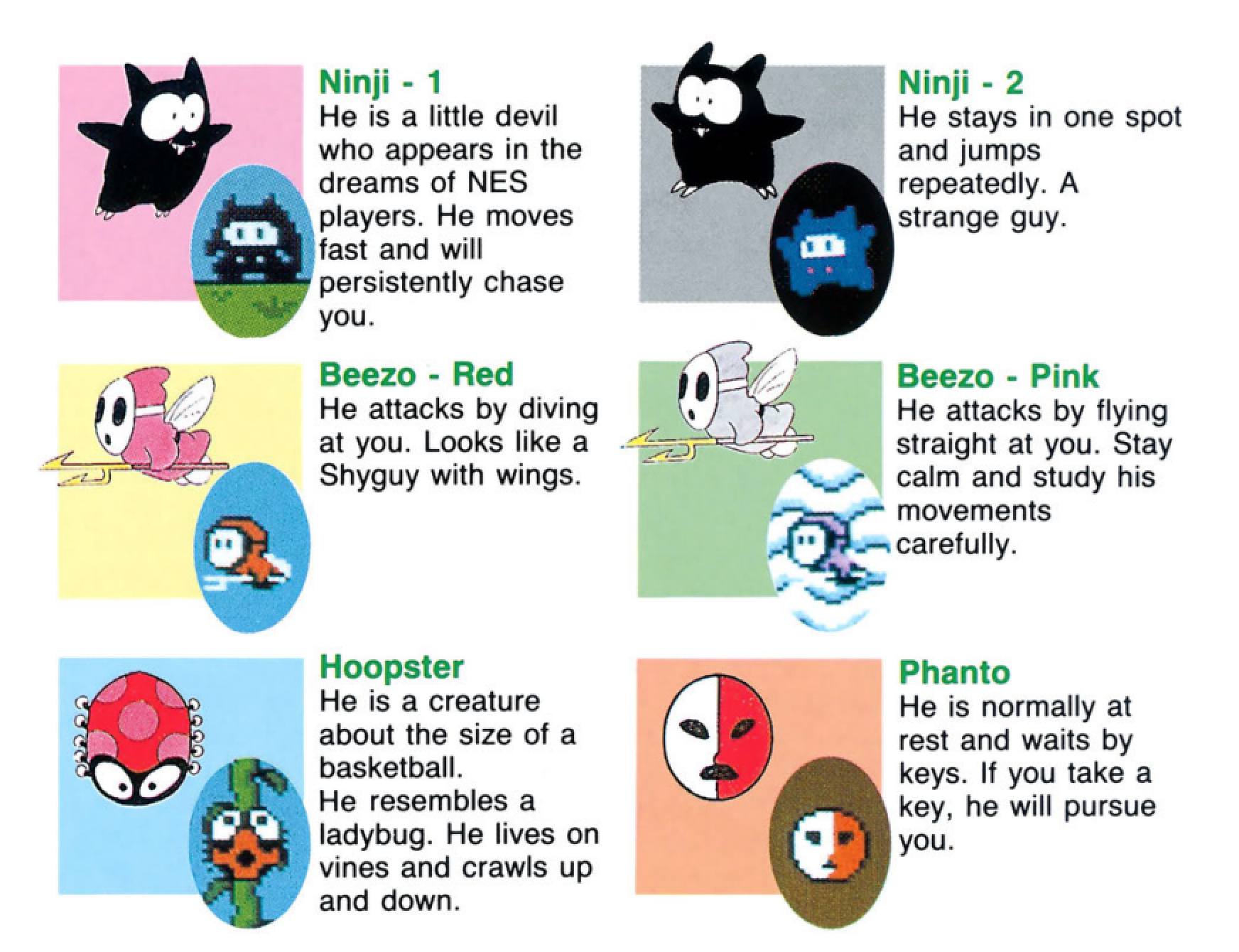
At some point in development, Doki Doki Panic may have had three color variations of the Beezo enemy as well. The manual lists two, one red and one gray, but in the released version of the game, no gray Beezo appears — and in fact, the manual features a screenshot of the pink version.
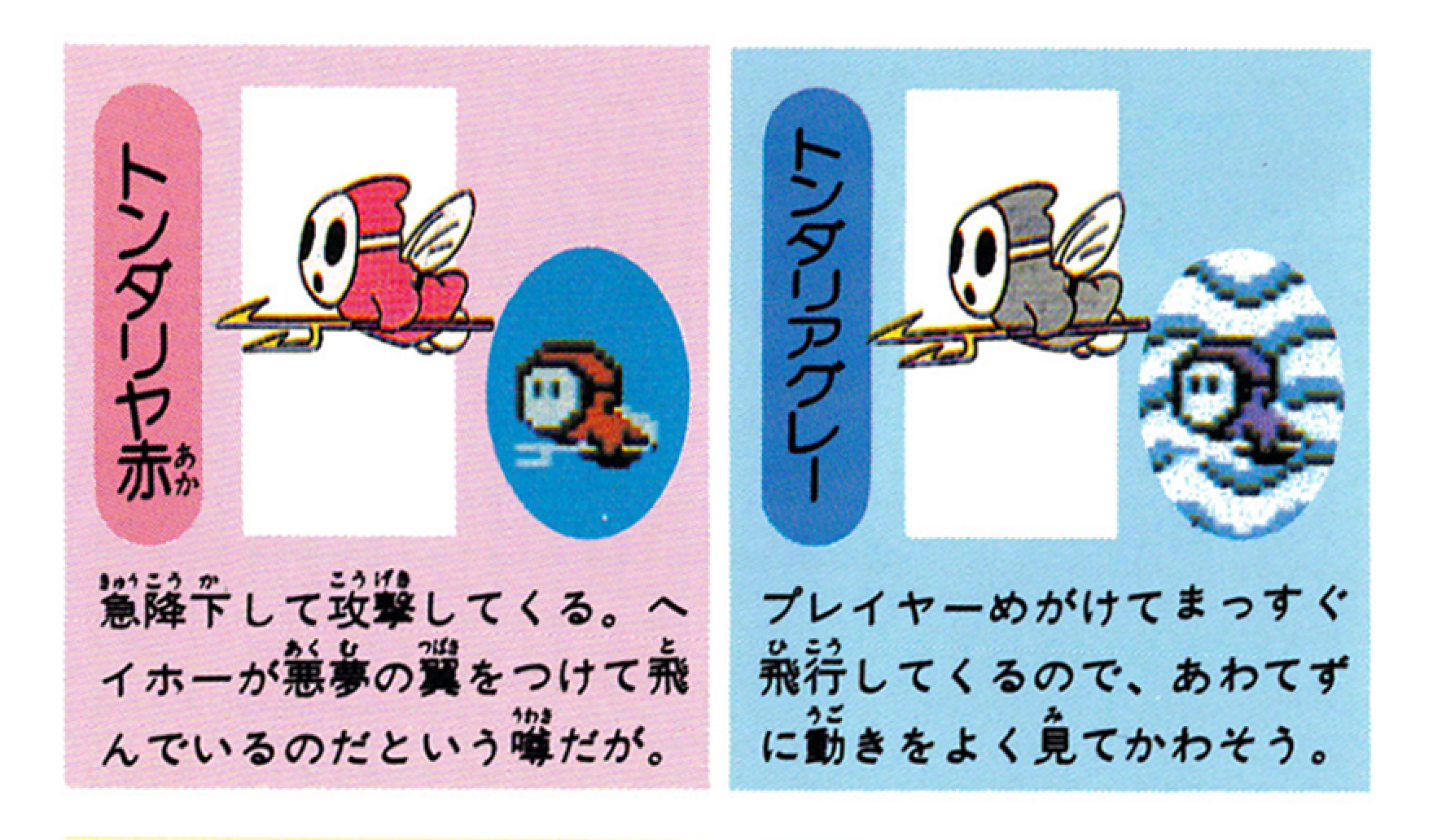
Translation from Fatimah: Beezo (Red) / Will nosedive to attack. Rumor has it that they're Shyguys flying around with nightmare wings. // Beezo (Gray) / It'll fly straight at you, so stay calm and watch its movements to dodge it.
Weirdly, the manual for Super Mario Bros. 2 repeats the mistake, despite the fact that this document utilized new art that did not exist in the Doki Doki Panic version.
Note: Phanto looked less demonic in Doki Doki Panic, but this version is still scary.