

If you’ve played much of Art of Fighting or its sister series, Fatal Fury, you probably know that South Town is the SNK answer to Capcom’s Metro City. They’re both big, dirty metropolises rife with crime as well as martial artists who fight crime. But while Metro City only became central to Street Fighter with the most recent installment, most Art of Fighting or Fatal Fury games revolve around South Town and one of its many crime bosses. The major exception is 1996’s Art of Fighting 3, which takes place in Mexico.
On a surface level, this might seem like a weird choice for what ended up being the swan song for the Art of Fighting series, but a little bit of research will help explain why this decision was made. For one thing, the Japanese title of this game, Ryūko no Ken Gaiden (龍虎の拳 外伝 or Fist of the Dragon and Tiger Gaiden), makes it clear that it’s not a true sequel so much as a side story, hence why the main character is not the usual lead, Ryo Sakazaki, but his partner in punching, Robert Garcia. Despite what that last name might make you think, Robert’s family is not canonically Mexican or Mexican-American; he was born in Italy, and his father is always described as an Italian businessman. The distinctly Spanish-language last name has never been explained, but Robert gets associated with Mexico nonetheless. For example, in the first King of Fighters game, released in 1994, Robert appears on a team next to Ryo and Ryo’s father, but they’re representing Mexico, the only explanation I can think of being that Robert must have some connection with that country because the Sakazakis surely don’t.
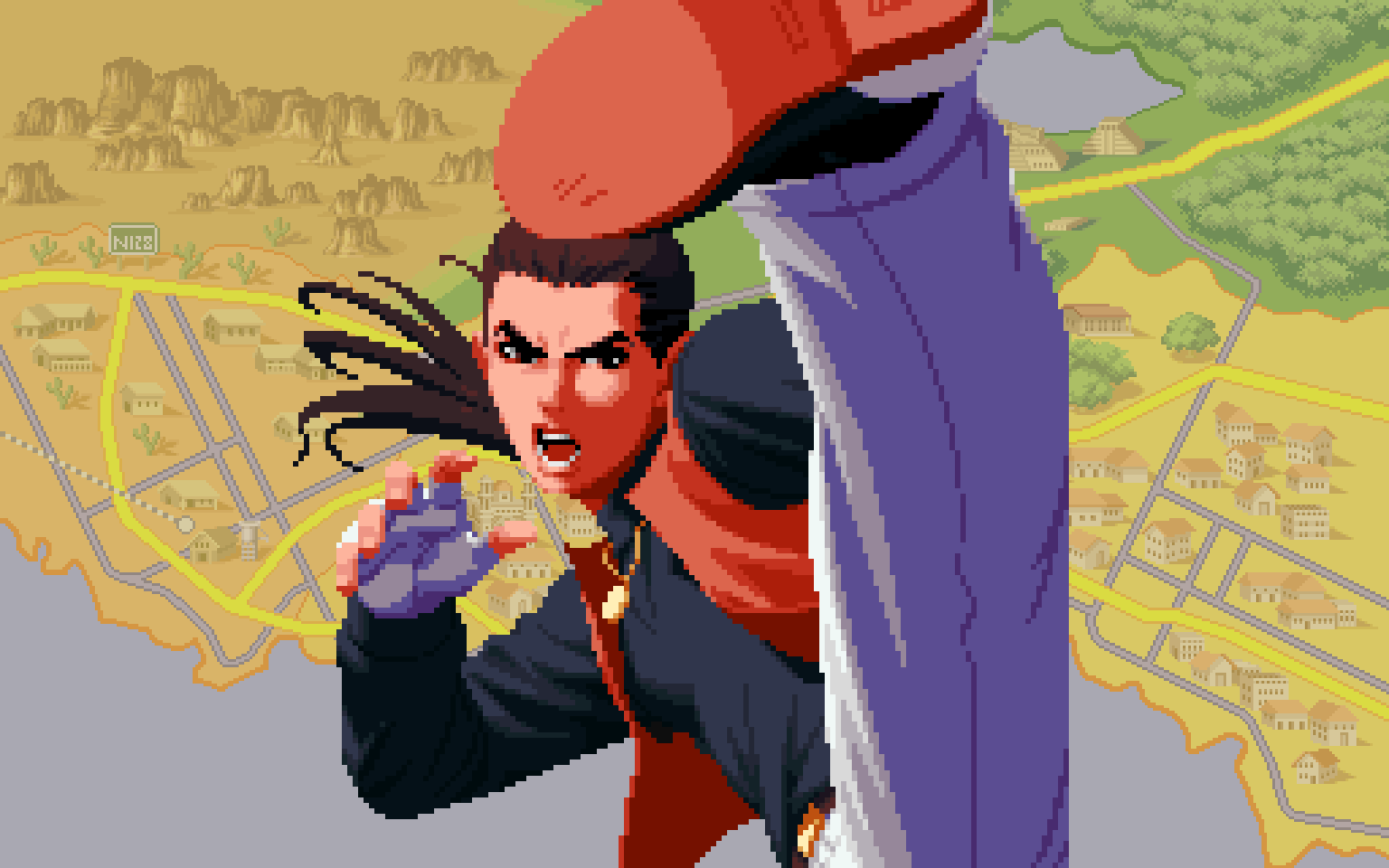
Although I could not locate the specific issue, it was apparently stated in the Japanese gaming magazine Neo Geo Freak that Robert’s look resulted from some combination of Steven Seagal, Crockett from Miami Vice and Andy Garcia. While the last one is almost surely where Robert gets his surname, Andy is actually Cuban-American.
The backstory to Art of Fighting 3 also suggests some kind of vague Mexican connection. Robert heads there to help a childhood friend who’s being pursued by Wyler, the game’s big bad, so it’s implied that Robert perhaps grew up there, but it’s never explicitly stated. Whatever the reasons for heading south of South Town, the game does a decent job of making this collection of stages feel like a departure. Nearly every background reflects some kind of Mexican flavor, and it’s not necessarily the kind of stereotypical version of that you see in fighting games, where, let’s say, an Australian character might hypothetically get a background full of boxing kangaroos and barefoot drongos playing knifey-spoony, if you understand what I’m saying.
< Support this site: on Patreon! • on Kofi! >
At least according to sources at SNK, what you see in Art of Fighting 3 was inspired by the real-life cities in the state of Sonora: Agua Prieta, on the U.S.-Mexican border, and Guaymas, further south, on the coast of Gulf of California. Someone who actually lives in Mexico can better weigh in on whether these capture anything authentic about either city.
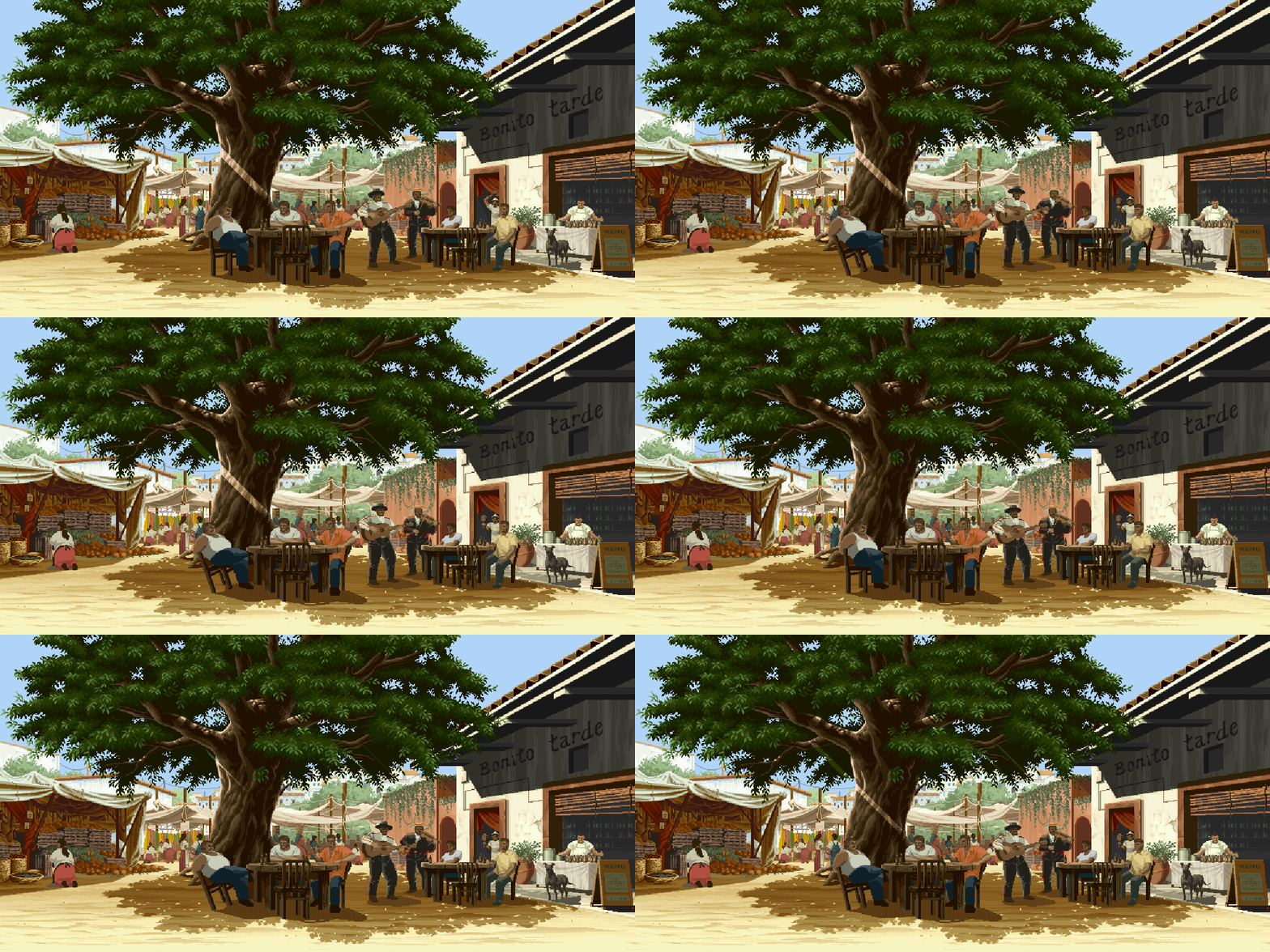
A location that’s called Sieste Cafe. I’m pretty sure it was meant to be Siesta Cafe, but I won’t argue with the afternoon vibes.

Quixotec Temple, which apparently comines Olmec, Mayan and Aztec motifs in one place. I’m not sure if that’s something that happens at real-life sites anywhere in Mexico, but at the very least it’s a nice aesthetic.

This stage is called Cinco de Mayo, and I think it’s supposed to depict the local celebration of that holiday. But because you’re an out-of-towner, you’re seeing it from afar, in the back alleys.

Cactus Gas Station, apparently on the U.S.-Mexico border. I don’t know what country the cities of Nmbos and Aeedles are supposed to be in, however.

An abandoned train yard. What I dig about this stage is that it makes sense in the world that the game is creating for this fictional town, but the artist didn’t feel the need to insert stereotypical representations in here to remind you that you’re in Mexico. You already know that.

Bar Santana, where locals can bet on amateur fights. You think they’d be more interested in your fight, but I guess not?
(All of these gifs come from the SNK Wiki, BTW.)
What’s odd about this game is that the attempt to create a sense of place ends with the stages. Let’s start with the name of the fictional town in which they purportedly exist: Glasshill, which… could not sound less Mexican, although it’s sometimes stated as Glasshill Valley, which I think I prefer just because it’s an inherently ridiculous name. (Is it a hill? Or is it a valley? Because those are actually opposites.) I have no idea where this name comes from, but I’m guessing nowhere that people were speaking Spanish. The TV Tropes page for Art of Fighting 3 guesses that the name “might have been influenced” by the name of Calexico, a California city on the border and next to Mexicali, a considerably bigger Mexican city, but I haven’t figured out how that might be. In Japanese, Calexico would be something like カレクシコ or Karekushiko, while the katakana rendering of this fictional location is グラスヒルバレー or Gurasuhirubarē.
Beyond the strangeness of the setting, not a single member of the game’s almost entirely new cast seems Mexican or has a Mexican-sounding name. The in-universe explanation for this is most of the fighters are arriving from the U.S. for the same reason Robert and Ryo are: to investigate the shady goings on involving Wyler. But you’d think an installment that moves the setting to Mexico would include at least one Mexican character, right? Nope.
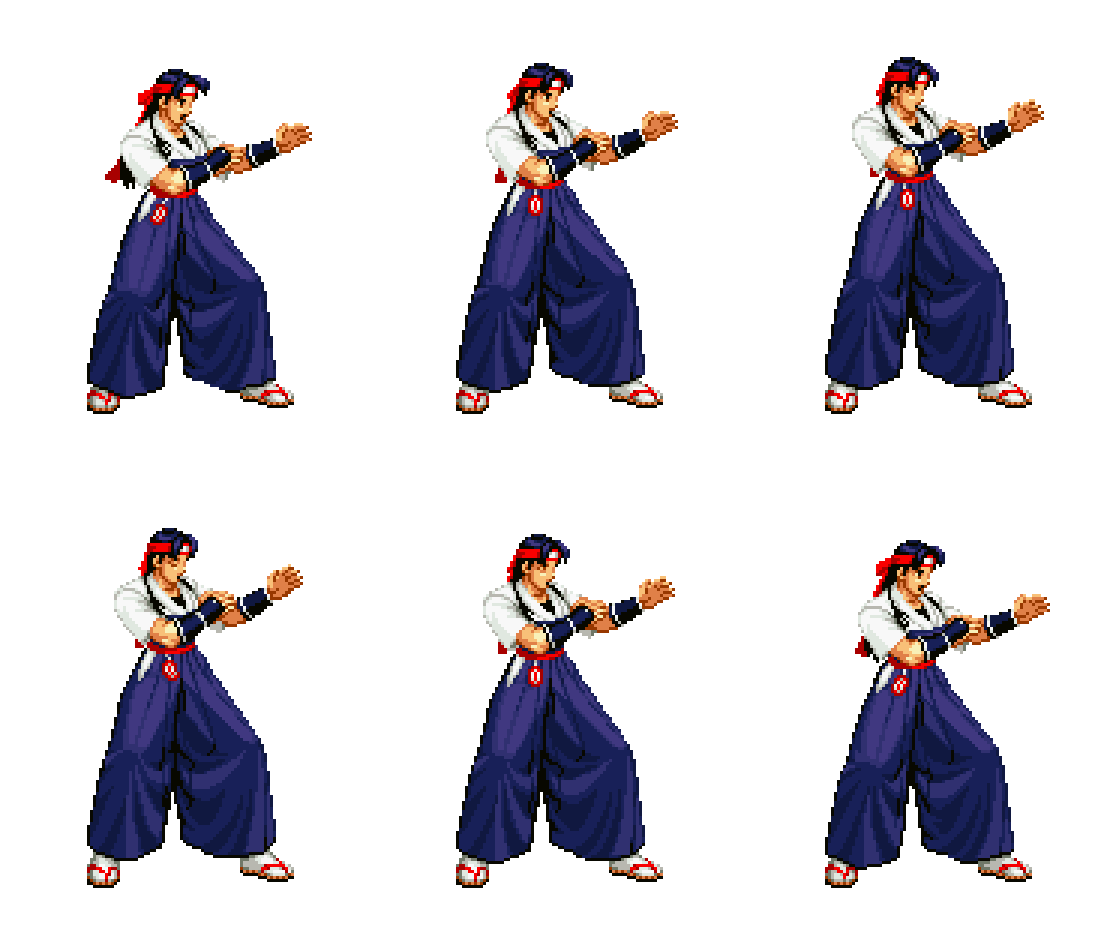
The two stand-outs for me are the female fighters. There’s Kasumi Todoh, the daughter of Ryuhaku Todoh, an opponent from the first Art of Fighting. She’s actually arrived in Mexico looking for her dad. Kasumi would end up recurring through the King of Fighters game, where a running gag is her lousy English requiring her to look up something to say in a Japanese-to-English phrasebook. That’s not yet established in Art of Fighting 3, where Kasumi seems like she can communicate just fine, though you’d have to imagine she also speaks lousy Spanish.
EDIT: It was pointed out to me on Bluesky that Kasumi does, in fact, use the phrase book in this game. Her win screen quotes are rendered in flawless English, but she does apparently look up her win pose quote, “Come back when you grow up.”
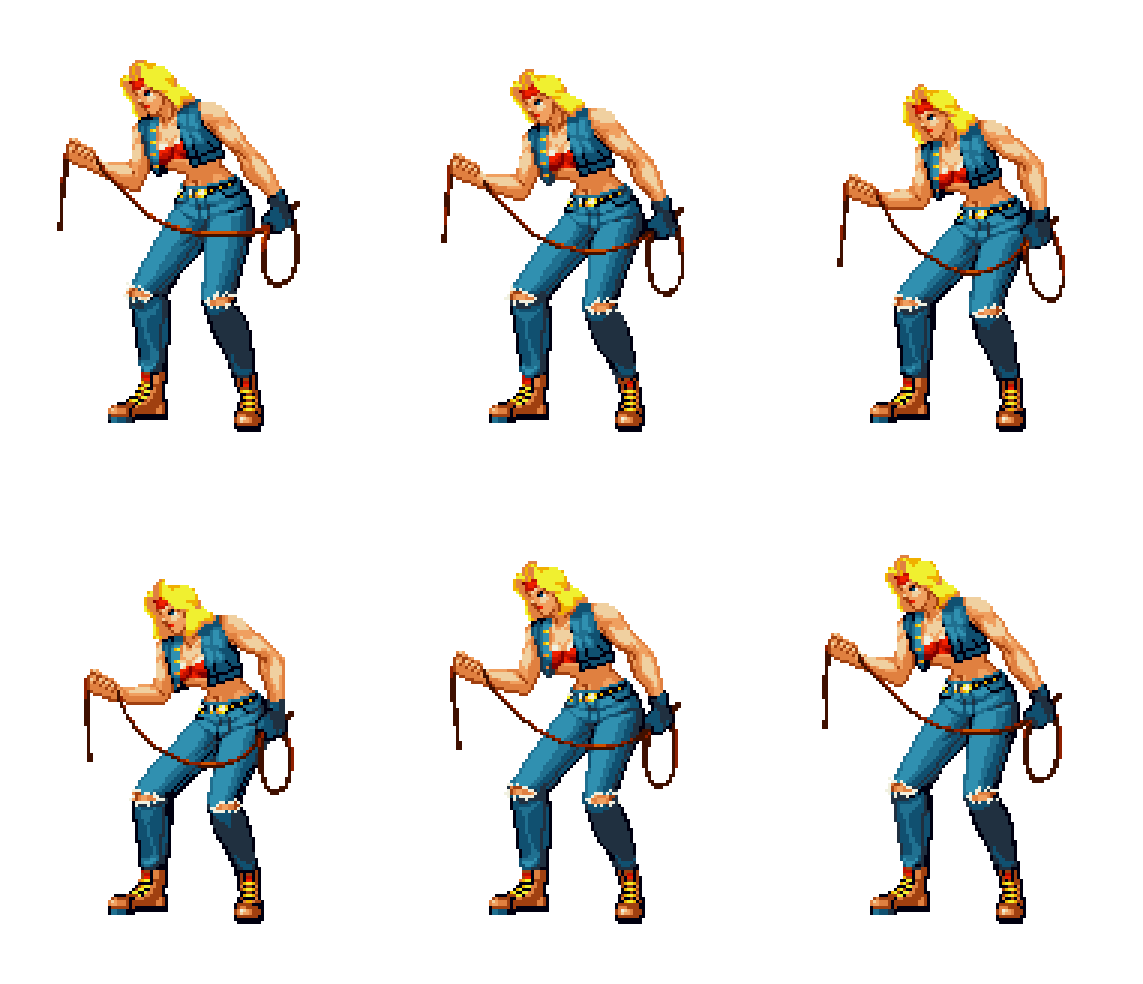
And then there’s Lenny Creston, an improbably named American fighter who fights with a whip and is apparently a struggling freelance journalist. I feel like SNK accidentally predicted how rough American journalists would have it.
The rest of the cast includes Karman Cole, a longtime Garcia family employee who is essentially following Robert like he’s his au pair; Rody Birts, a tonfa-wielding ex-cop teaming up with Lenny for some reason; Jin Fuha, a former disciple of Eiji Kisaragi from Art of Fighting 2; Wang Koh-San, a Taiwanese weirdo traveling with a pet pelican and somehow connected to Lee Pai Long from the first Art of Fighting; and finally Sinclair, the subboss, a sword-wielding woman who may be Indian but who I prefer to think of as being named for the Living Single character. All of this is to say not a single character that takes advantage of the new location. Even Robert’s “back home” friend and a major NPC in the game’s story is the very non-Mexican-sounding Freia Lawrence.
It seems like a missed opportunity not to have at least one Mexican fighter, especially considering how beloved SNK fighting games are in Mexico and throughout the rest of Latin America. According to a few sources — including this Kotaku article, this Reddit discussion and this video — there are very real economic reasons why SNK series in general and King of Fighters in particular ended up beating out Street Fighter, Mortal Kombat, Tekken and the rest in this part of the world. I only found out about this when I’d do SNK-themed episodes of my old VGM podcast and notice an influx of listeners in Mexico, Central America and South America. Back when I was on Twitter, my Samurai Shodown episode kept getting retweets from Spanish-language users long after other episodes fell by the wayside.
Of course, SNK would eventually introduce representatives of Mexico in later games. In 1999, the Fatal Fury follow-up Garou: Mark of the Wolves introduced the masked luchador fighter Tizoc, and versions released outside Japan even give him the name of an Aztec king. (He’s merely The Griffon Mask in Japan.) He’d go on to appear in the King of Fighters games, but the 2001 installment of that series also introduced Ángel, and I was as surprised as anyone that the katakana rendering of her name, アンヘル or Anheru, accurately reflected the Spanish pronunciation and not the English one, which would be エンジェル or enjeru. Ángel recurred in later games, and it’s not surprising that she did, because she is very much the type of SNK-style bombshell who attracts a following. What’s more, she doesn’t read as stereotypically Mexican in any way that I can see, stereotypes having long been a problem in fighting games. And then King of Fighters XIV put her on a Team Mexico whose members all actually hailed from that country, alongside luchadors Ramón and King of Dinosaurs, who actually may be an alternate heel persona of Tizoc’s. (It’s still debated.)
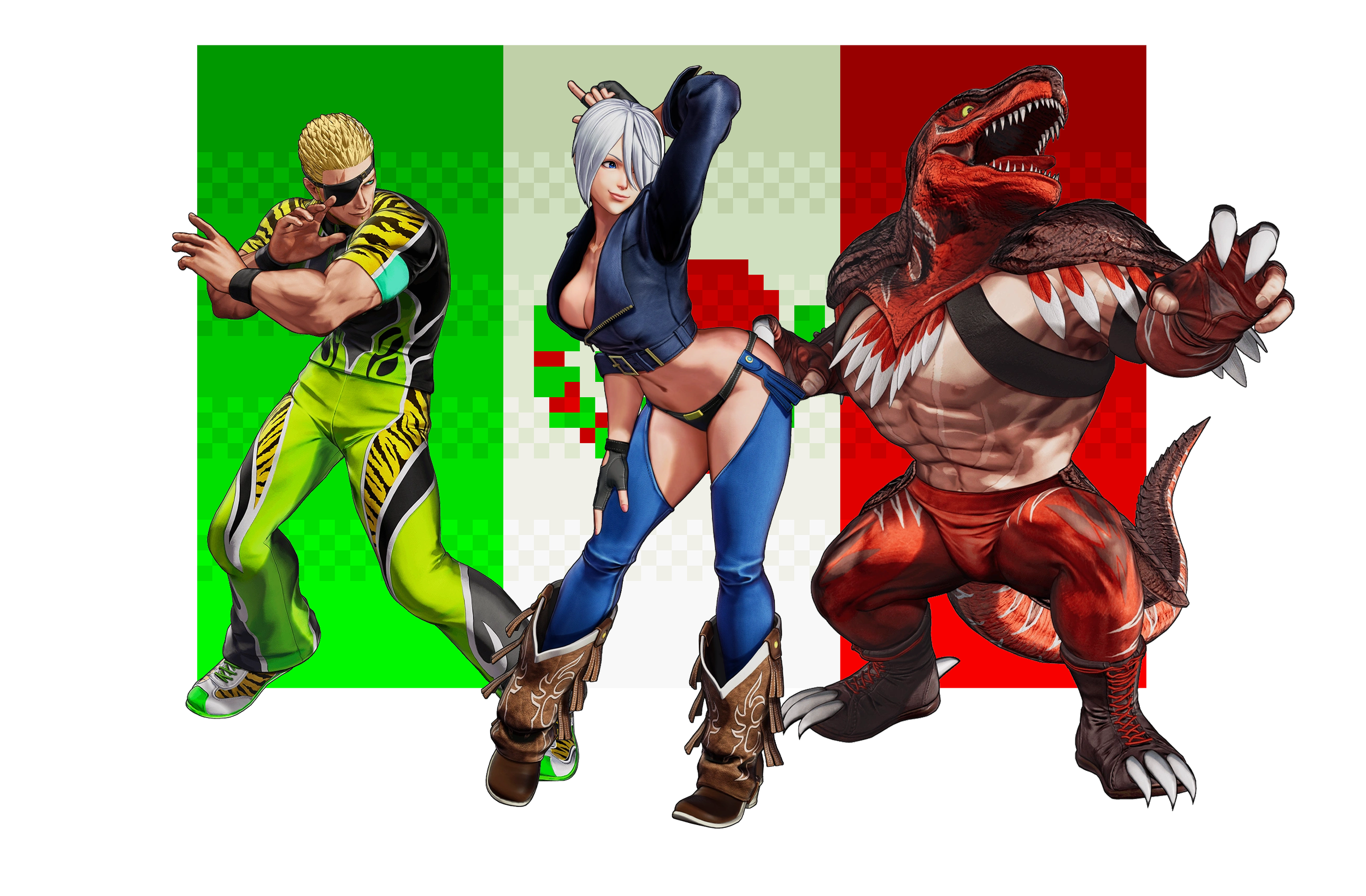
Yes, they’re color-coded.
More than a few fighting game buffs point to the instances like this “real” Mexican team in Art of Fighting XIV as tips of the hat that a company can make to players in specific geographic regions; in this case, SNK is acknowledging a strong fandom in a given part of the world with in-game representation, not unlike how the new Filipina fighter in Street Fighter 6, Yasmine, has been viewed as Capcom nodding to the series’ popularity in the Philippines. This sort of trend may be why I feel like it’s odd that Art of Fighting 3 doesn’t feature Mexican characters if it’s making such a specific effort to create a Mexican setting. But in writing this piece and wondering why Art of Fighting 3 turned out the way it did, it did occur to me that I was perhaps misreading the situation. Could it be back in 1996 video game companies didn’t know as much about what countries were especially into a given series? And this early on, were any companies in the habit of deciding a fighting game roster based on what countries were playing it?
For the sake of argument, let’s say SNK didn’t set Art of Fighting 3 in Mexico as a result of an impassioned fandom there. Could there be another reason?
Yeah, actually: El Mariachi.
Released in theaters in 1993, El Mariachi is the first feature by director Robert Rodriguez. Though it’s a Spanish-language film, it’s actually an indie American production. It also takes place in towns on the U.S.-Mexican border, though in the state of Coahuila, not Sonora. The film was a smash success, bringing in almost $2 million on a budget of only $7,000 and also bringing Rodriguez a lot of attention in Hollywood, to the point that when the sequel, Desparado, was released in 1995, the title character was recast and played by Antonio Banderas. El Mariachi was released theatrically in Japan in 1994, and while I can’t find figures indicating how successful it might have been there, it is very much the kind of movie that would end up inspiring a fighting game in one way or another. If my description earlier of South Town and Metro City recalled any number of late ’80s or early ’90s action movies, that’s because a lot of them ended up in these games. (See my post on the origins of Art of Fighting’s King if you want proof of that.) To put it as bluntly as possible, yes, I totally believe that people who worked at SNK back in the day would have seen El Mariachi and liked it enough to pay homage to it in a video game that came out in 1996.
Again, I can’t prove it, but if that were the case, I suppose it might explain why Art of Fighting 3 didn’t throw in a handful of Mexican fighters into the mix. Perhaps that sort of quid pro quo thing — “your country likes this game so we’re putting someone from your country in the next installment” — hadn’t come around by that point, and therefore maybe Mexico exists in this game as a setting, a vibe and a backdrop because that’s also what it is in El Mariachi. But I’m not mad that SNK decided to go in a new aesthetic direction based on a specific location. It makes this installment feel unique within the Art of Fighting series and within the landscape of 1990s fighting games in general, since so many of them went the opposite way, with Street Fighter II-style tournaments that spanned the globe.

Wyler Mansion, where the theming is slightly more sutble.
I wish more fighters had gone the “buy local” route, honestly.
Miscellaneous Notes
I’m a big SNK guy, but I had forgotten that Art of Fighting 3 was set in Mexico until I read Diamond Feit’s column on Art of Fighting 3 earlier this year. Would recommend supporting on Patreon to Diamond read the column every week.
According to this piece, King of Fighters ’94 was translated into Spanish for its release in Mexico. It apparently was bad Spanish, but that’s still something — and it would seem to indicate that even back then, SNK was aware of its fanbase there.
English : Engrish :: Spanish : _______? And I’m not talking about Spanglish; I’m talking about weird Spanish via Japanese culture. Surely this must be a thing?
I skimmed way too much of a Wang Koh-San playthrough of Art of Fighting 3 to see if his pet pelican, Hoeh-Hoeh, actually is put to use in the game in the style of Banjo-Kazooie. The answer is yes — the screenshot you see below comes at the 15:03 mark — but I have to say that I wanted more pelican action.
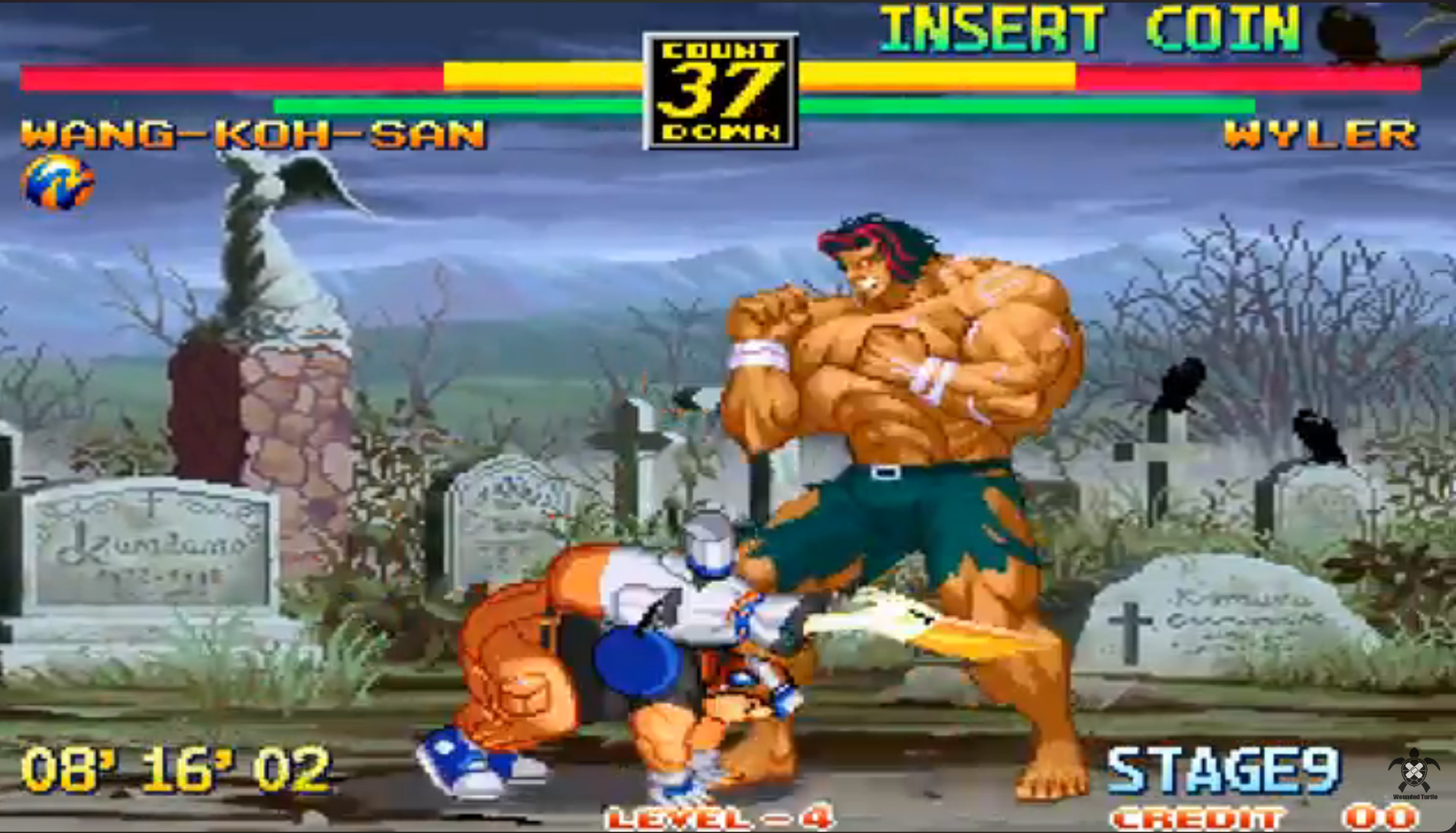
Also don’t keep your pet pelican in a rucksack. That’s bad pelican stewardship.
As it turns out, the timing of this post is fortuitous because just last month a remaster of Art of Fighting 3 was announced. Among other changes, it adds both King and Yuri Sakazaki to the roster, and that’s something I’m always in favor of, because enjoy making video game love interests fight each other.
This means this version of the game will have all of the female characters ever to appear in an Art of Fighting game. It’s only four — King, Yuri, Kasumi Todoh and Lenny Creston — and yes, it is wild to see how few female characters this series had, especially considering that it’s still more than Fatal Fury had in its classic run, which is three: Mai Shiranui, Blue Mary and Li Xiangfei.
Finally, with official art like this one, by Shinriko, I am kind of surprised we never saw Lenny after this and the far more modest Kasumi took off as a King of Fighters regular.
