Super Mario Bros. and the Legend of ‘Drain Man’
We’ve got a new Super Mario Bros. movie upon us. You probably knew this. In fact, it would be really weird if you were a reader of this website and this had somehow gotten past you.
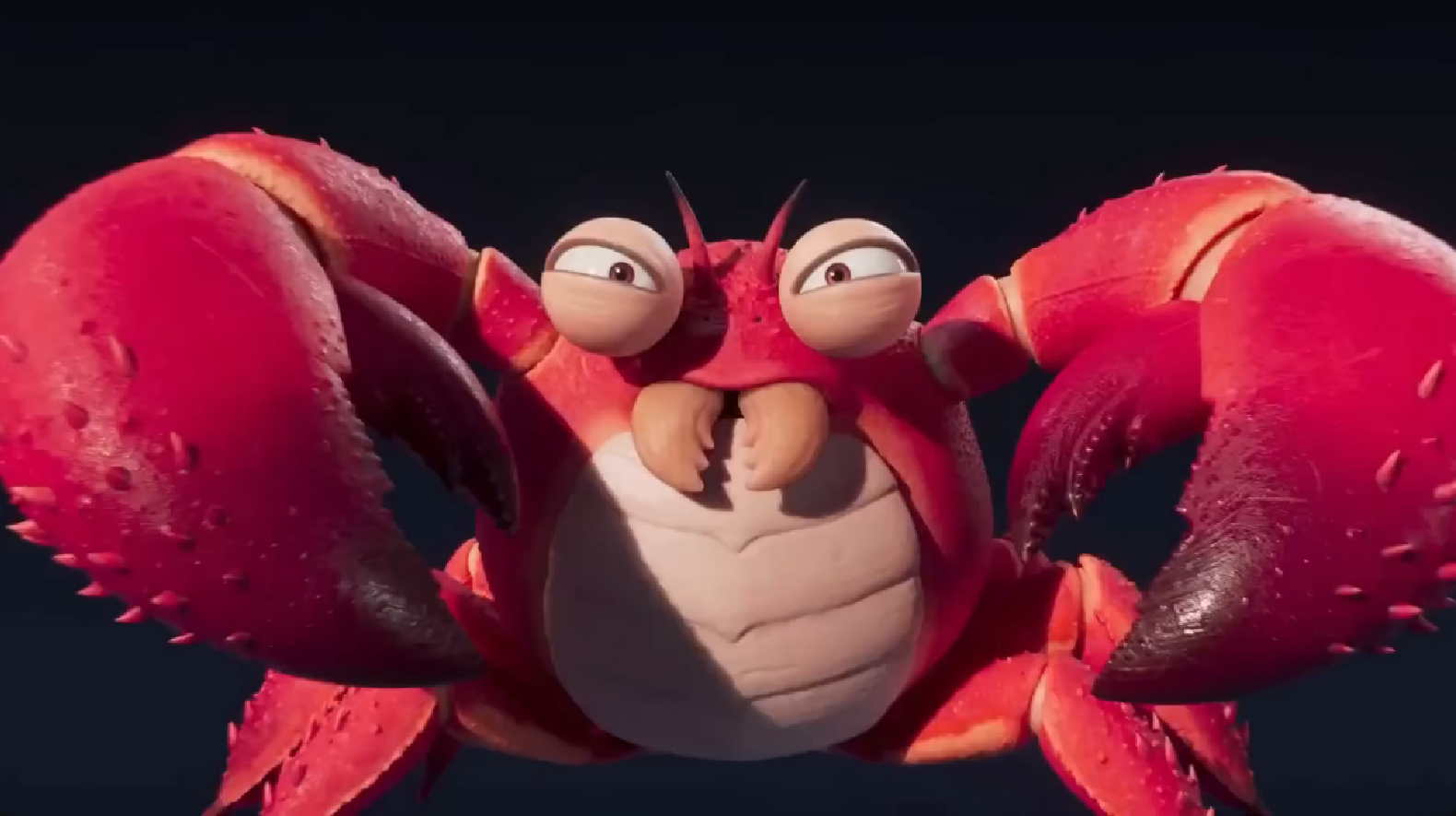
Myself, I am seeing the new movie this week — mostly because I’ve been asked by two different podcasts to discuss it. If I’m being honest, however, I’d probably have gone to see it anyway. I wouldn’t say I loved the 2023 one so much as I disliked it less than most people my age did, but based on the fact that this new one has Super Mario Bros. 2 content in the form of Wart, Birdo, Mouser and Clawgrip, I feel like I’m obligated to go.
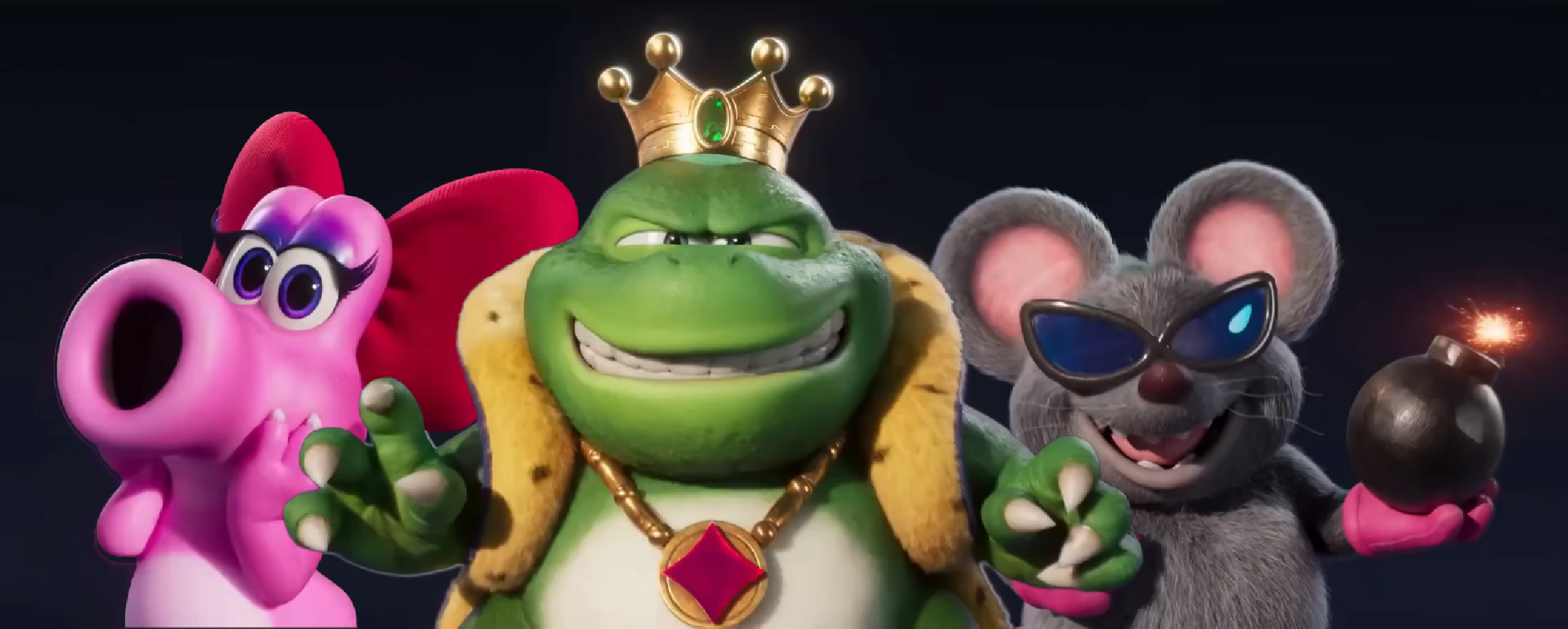
Not pictured: Clawgrip, because he didn’t fit.
I’m writing here today, however, about the 1993 Super Mario Bros. movie — the live-action one, which I saw in theaters and which I enjoyed about as much as any eleven-year-old who was experiencing his first taste of dystopic science fiction. Even back then, I thought it was impressive that anyone could turn the Super Mario games into such a *weird* movie that managed to reference the source material without ever once exhibiting any affection for it. It was a Super Mario movie that wasn’t actually interested in being a Super Mario movie, I decided. As I got older, I began to think it was almost as if someone said yes to making a Super Mario Bros. movie and then made a dark and not especially kid-friendly neon grunge epic about fossil fuel, oligarchs, Catholicism, evolution, and fascism, only to discover that that’s basically what Rocky Morton and Annabel Jankel did.
Today, there is a new episode of the Super Mario Moment podcast discussing the film — with the actually no. 1 best guest any podcast could hope to book for a discussion of this particular work: Anthony Oliveira.
Anthony is a great podcast guest, and we actually had him on my podcast Gayest Episode Ever twice — both times to discuss Frasier. He’s a man of varied interests.
The element I’m bringing up in this post, however, comes from a podcast that I’ve never been on but have enjoyed over the years: The Best Movies Never Made. It’s hosted by Steven Scarlata, producer of the 2013 documentary Jodorowsky’s Dune, and Josh Miller, co-writer of the Sonic the Hedgehog movies. Like the title implies, it’s all about the various versions of movies that never made it to screen, including very popular properties — there’s one in there about an early version of Halloween 4 featuring a kaiju Michael Myers — and some less so — there’s an analysis of David Lynch’s abandoned film project, Ronnie Rocket.
In 2020, the podcast did a four-part series on the various scripts that led up to the 1993 Super Mario Bros. movie.
And here are parts two, three and four. There is also a video version of the podcast, but it doesn’t seem embeddable for whatever reason. In each of them, the hosts are joined by the other Sonic the Hedgehog writer, Patrick Casey, as well as Sonic Boom writer Alan Denton.
As far as I know, the Best Movies Never Made series is the most in-depth discussion of the various scripts written for the 1993 Super Mario Bros. It clocks in at more than four hours total, but if you’re curious about the history of this film, it’s well worth your time. I’m sure the various scripts that led up the final one can be found here and there online, but I am even surer that I would never take the time to track all of them down. It was interesting to me to hear these four do all this work for me, walking through the various drafts and discussing what they did right, what they missed and what from the games they pulled in.
The most surprising thing I learned about from listening to the series involves Barry Morrow, who ended up writing the first Super Mario Bros. screenplay that we know of. It’s fairly well-known now that when he took this job, Morrow was hot off the success of Rain Man, the 1988 road trip movie that starred Tom Cruise and Dustin Hoffman as brothers, the latter of whom is an autistic savant.
Rain Man was not only successful in terms of box office and accolades but also was also immensely influential. It shaped the way many filmgoers perceived autistic people — incorrectly, it turns out, as most autistic people aren’t savants — but it also infiltrated popular culture in a way that might surprise someone who wasn’t paying attention at the time. It’s been pointed out more than once on the Talking Simpsons podcast that imitating Hoffman’s character was often used as a shorthand not only for autism but also developmental disabilities throughout the 1990s. Indeed, kids’ shows like The Tick and Animaniacs both had characters who were voiced to sound exactly like Hoffman’s character as a means of telling the viewer that they were intellectually different.
Notably Runt on Animaniacs was voiced by Frank Welker, whereas Sewer Urchin on The Tick was voice by Jess Harnell, who voiced Wakko on Animaniacs. BTW, did we collectively know that Rita on Animaniacs was voiced by Bernadette Peters?
Now, most people who know a thing or two about the 1993 Super Mario Bros. movie know about Morrow’s early involvement. The joke around Hollywood at the time was to call Morrow’s treatment “Drain Man,” not only because it also sent its main character brothers on a road trip like the one in Rain Man, but also because the dynamic mirrored the one between the leads in that film. Mario was the caretaker for little brother Luigi, who was more childlike. Marilyn Beck’s syndicated column on Hollywood news reported it first in December 1990. Here’s the version that ran in the New Rochelle Standard-Star on December 12.
[Morrow] says that Danny DeVito has already expressed interest in playing one of the Marios. He also says that he and producer Roland Joffe hope to have the film in production in 1991. “There’s an urgency about this project,” he notes. “As with all good ideas, certainly the sooner you act on them, the better your chances of keeping them alive and exciting.”
As he explains it, “the premise is rather simple: two Italian-American brothers living in New York, who work as plumbers. As in the game itself, there will be an odyssey and a quest. I’m taking as many elements from the game as I can, but I’m also trying to write it as a motion picture that has its own integrity for those who’ve never seen the game. I think it’ll be inherently funny in that the brothers are a study in contrast, like Lauren and Hardy or Abbott and Costello.”
Or, you know, like Charlie and Raymond Babbitt in the Oscar-winning movie Rain Man.
Of course, the script was re-written and re-written many times over, with at least five other names in the mix before the finalized script, which credits Parker Bennett, Terry Runté and Bill & Ted writer Ed Solomon. As a result, there’s no accounting for how much of Morrow’s original take remained so many versions later. That said, the Best Movies Never Made series alleges that the dynamic we see in the movie — with Bob Hoskins’ Mario being distinctly more paternal toward the much younger Luigi, played by John Leguizamo — is a reflection of the Rain Man-esque vibe that was there from the beginning. Not having read every script myself, I can’t say that this is true, especially because this is a relationship later writers could have arrived at on their own, just imagining how an older brother and a younger brother might interact.
What often gets left out of the story, however, is the fact that even Rain Man was an echo of a story Morrow had told before, in the script for a previous movie. The 1981 CBS TV movie Bill starred Mickey Rooney as the title character, a 60-year-old man who has an intellectual disability and who is befriended by a Hollywood writer named… Barry Morrow, who’s played by Dennis Quaid.
Yes, the film is autobiographical, based on Morrow’s actual friendship with Bill Sackter. Morrow even wrote a sequel, 1983’s Bill: On His Own, which happens to be a road trip movie. And in the audio commentary for Rain Man, Morrow admitted that Sackter was an inspiration for Rain Man in addition to “megasavant” Kim Peek.
As someone interested in how Hollywood pushes creatives down one path or another, I think it’s worth examining how Morrow was so moved by his friendship with Bill Sackter that it ended up shaping his scripts for years. Maybe that’s just what he writes best. Maybe he kept returning to the idea that proved successful. Maybe he never realized that all his projects draw from the same well. I don’t know. But whether Morrow was aware of it or not, Rain Man seems to have influenced the way he wrote Mario and Luigi in the first script for the first Super Mario Bros. movie — and just maybe, in a way that even made it to the final version that was committed to film.
I think today we more often think back on the 1993 movie as a weird outlier in Mario’s history — not all good or all bad but most definitely weird in a way that still boggles the mind three decades later. As it’s stated on the Super Mario Moment podcast, it’s a movie that would never be permitted to be made basically any time afterward, especially not at that size and scale and certainly not with such a liberal interpretation of Nintendo’s most iconic characters.
Bizarre though it might seem in 2026, the 1993 Super Mario Bros. movie also may have shaped the games too. In the early days, Mario barely had any characterization aside from being cheerful and heroic. Luigi had even less, with adaptations such as The Super Mario Bros. Super Show! and Super Mario Bros.: The Great Mission to Rescue Princess Peach! filling in the blanks created by the video games. It is perhaps notable that it’s only after the 1993 movie came and went that the games start to feature a Luigi who’s less courageous and less sure of himself. Granted that would happen years after the fact, in Paper Mario, which released in 2000, and Luigi’s Mansion, which released in 2001, but that’s very much the official dynamic now, as well as the one seen in the 2023 Super Mario Bros. movie.
Again, it could be that later Nintendo employees just stumbled into what is a very real older brother-younger brother dynamic, and writing Luigi this way would evolve naturally out of the need to differentiate him from Mario. But also give credit to the 1993 movie, which doesn’t often get credit for much of anything, because this dynamic was very much in place there before it trickled into the games. If it ended up shaping the source material in any real way, it would have to be this.
That should be the natural stopping point for this essay, but I actually have one more point — and I’m almost embarrassed to say that this hadn’t occurred to me until recently. It involves the other live-action movie that put Mario on the big screen: 1989’s The Wizard.
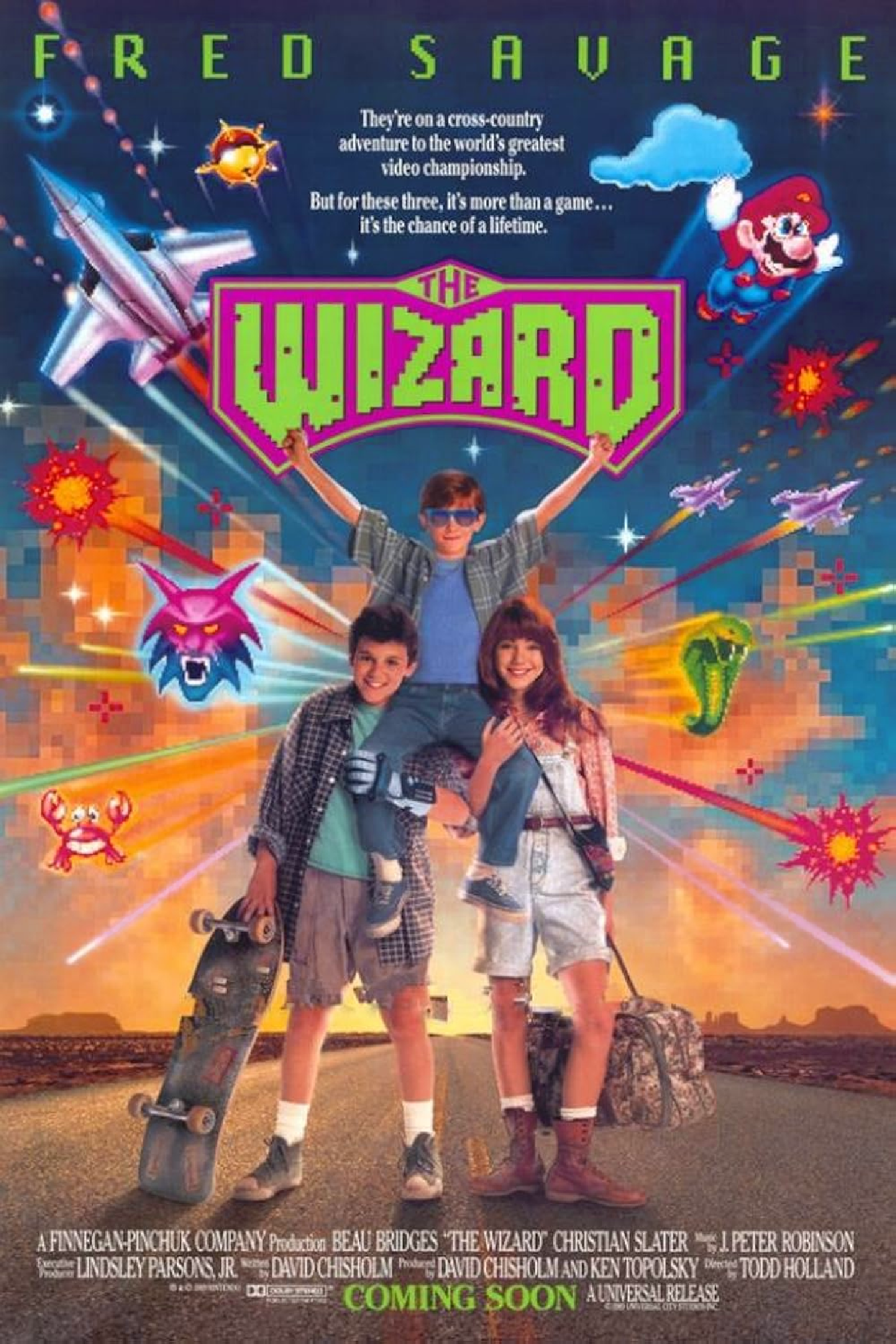
What a fun poster! What a fun, misleading poster!
Considering how Morrow’s Super Mario Bros. script was teasingly nicknamed Drain Man, it was wild to step back and consider how closely The Wizard also hews to this story structure. Written by David Chrisholm (and not by Barry Morrow in any way), The Wizard is also a story about two brothers going on a road trip, ultimately ending up at a video game tournament at Universal Studios. They’re kids, but it’s still twelve-year-old Corey (Fred Savage) acting as the guardian for nine-year-old Jimmy (Luke Edwards). Also Jenny Lewis is there.
Today, The Wizard is remembered as the movie that let westerns get a first glimpse of Super Mario Bros. 3. (It had been available in Japan for a full year, we’d later realize, but it was a chance to see a game that was still months off regardless.) However, there’s something much darker at the heart of the plot. As the movie explains to us, Jimmy is borderline non-communicative because he’s suffering from grief and post-traumatic stress from the drowning death of his twin sister. However, because the movie also shows Jimmy to be preternaturally good at video games, his depiction can be easily misread as that of an autistic child. In fact, that is how I remembered the film. I’d only seen it once — in the theater, because I was that excited for Super Mario Bros. 3 — and even though the script does not call him autistic, he really does fit in with a certain depiction that’s common in western movies and TV. He’s bad at “typical” human stuff but *really* good at this one specific thing. In fact, the TV Tropes page on The Wizard has a term for it: Hollywood Autism, which more often presents the condition as a negative one that needs to be fixed.
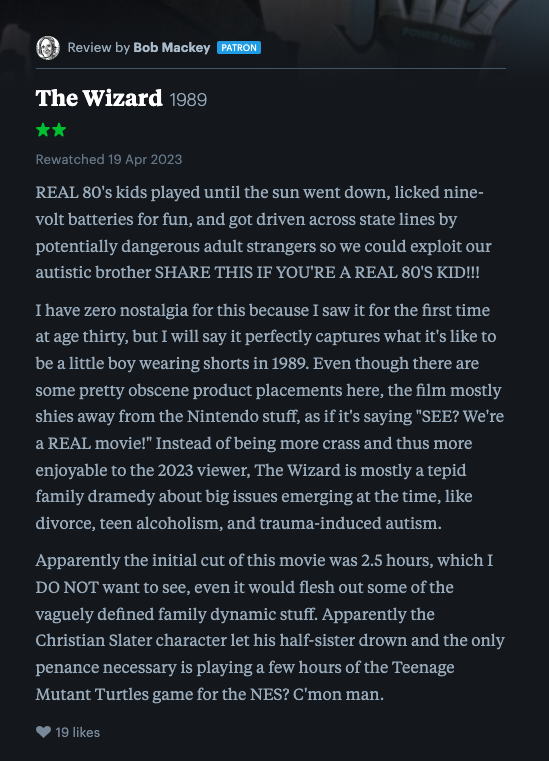
I think I enjoy the phrasing by Bob Mackey in his Letterboxd review of The Wizard, in which he describes Jimmy as having “trauma-induced autism.”
I don’t have an explanation for this one, honestly. I just think it’s really weird that Rain Man manages to connect to the two different big-screen manifestations we got of Mario back in the day. It’s possible that Rain Man’s success helped shape The Wizard, I suppose, but the latter opened in theaters almost exactly a year after the former did, and that timeline makes it difficult to point to a direct cause-and-effect relationship, especially considering how long it takes to go from writing the first draft of a script to getting a movie up on a screen. It might just be a wild coincidence, but if that’s the case, it’s just as surprising to me as if Rain Main did somehow make The Wizard happen.
I already thought Rain Man’s pop culture footprint was unduly large, but the fact that I saw echoes of it two different times in the theater makes me think its impact was even more profound — until it wasn’t, of course. The film may be forever crystallized in imitations of Dustin Hoffman’s character in kids’ cartoons, but the time during which we collectively agreed that Rain Man would be something we’d remember ended up being relatively short, despite the Best Picture win. For a variety of reasons, it just doesn’t get mentioned all that often — except improbably on a video game history blog, by a guy who is confounded by the idea of it intersecting with his favorite video game series at all, much less twice.
Miscellaneous Notes
Yes, Super Mario Moment also covered The Wizard. The thumbnail art makes their overall take immediately clear.
I was recently on an episode of Retronauts about the first Super Mario movie, the 1986 anime. It’s behind the Patreon paywall, but I encourage you to support Retronauts at the $5 level. It’s well worth it for the extra episodes that don’t appear on the main feed. I actually have two different posts in process that were inspired by the conversation we had in this episode, so look forward to those as well.
The Gaming Historian also did a great video on the production history of the 1993 Super Mario Bros. movie.
And finally, a 1992 L.A. Times piece on the production of Super Mario Bros., states that it was thought at one point that it could be a blockbuster along the lines of the 1989 Batman. I kind of actually see the logic there, because Tim Burton’s darker imagining of that material was so different from what some people would have remembered from the 1966 Adam West TV series. It’s just that the darkness was always there in Batman, whereas it was never present in the Super Mario games.
The initial capture came from Morrow, who brought aspects of his work on Rain Man to the plumbers. That first draft established Mario Mario as the elder brother, Luigi as the naive sibling. Together the blue-collar team formed a dysfunctional family relationship. Their story would be a prequel relating the adventure that led to the Mario brothers’ “super” video game status. Although Morrow’s original script established the characters, “it was more of a serious drama piece as opposed to a fun comedy,” remembers co-producer [Fred] Caruso. “We were looking for the same audience that enjoyed E.T as well as Ghostbusters as well as Terminator II and Batman.
That’s probably why the box office stopped just short of making back its $48 million budget.
Okay, fine. Here’s Clawgrip. He’s a big boy.